Tiger Cave Temple: 10 Things I Wish I Knew Before Visiting (2026 Guide)
All products and services featured on Be Free and Travel are independently selected by Anna Freitag. However, when you buy something through one of the featured links, we may earn an affiliate commission at no additional cost to you.
When most people think of Tiger Cave Temple (Wat Tham Suea) in Krabi, they picture the famous climb up 1,260 steep steps to a giant golden Buddha overlooking southern Thailand. The views from the summit are spectacular—but they aren’t what made me fall in love with this place.
What surprised me most was everything before the climb.
The colorful pagoda at the base of the mountain completely captivated me with its intricate architecture, dazzling artwork, and peaceful atmosphere. Add in sacred caves, curious monkeys, towering limestone cliffs, and one of the best viewpoints in southern Thailand, and Tiger Cave Temple becomes far more than just another tourist attraction.
It becomes an experience.
I visited during the hottest time of year, climbing all 1,260 steps in 97°F (36°C) heat after already spending two weeks exploring Thailand. Along the way, I discovered that some of the information you’ll find online is outdated, made a few mistakes you can easily avoid (including an unfortunate encounter with a very determined monkey), and explored parts of the temple complex that many visitors completely miss.
In this guide, I’ll share everything you need to know before visiting Tiger Cave Temple, including current entrance fees, opening hours, dress code, how difficult the climb really is, and why I think you shouldn’t rush straight to the stairs.
Visiting the Tiger Cave Temple is a great activity even for budget travelers. Check out my Budget Thailand Travel Guide for more ideas to keep your trip within budget.
Is Tiger Cave Temple Worth Visiting?
Absolutely. Tiger Cave Temple was one of my favorite places I visited in Krabi. The climb to the summit is unforgettable, but the temple complex itself is just as impressive. Even if climbing 1,260 stairs isn’t for you, I still think the stunning pagoda, sacred caves, and peaceful atmosphere make it well worth the trip.
Why Trust This Guide?
I recently explored the entire Tiger Cave Temple complex, from the colorful pagoda at the base to the giant golden Buddha at the summit. Every photo in this guide is from my own visit, and I’ve updated the information with what I found on the ground—including a few details that many online guides still get wrong.
Tiger Cave Temple at a Glance
| Location | Krabi Province, Thailand |
| Thai Name | Wat Tham Suea (Tiger Cave Temple) |
| Opening Hours | 6:00 AM–6:00 PM daily* |
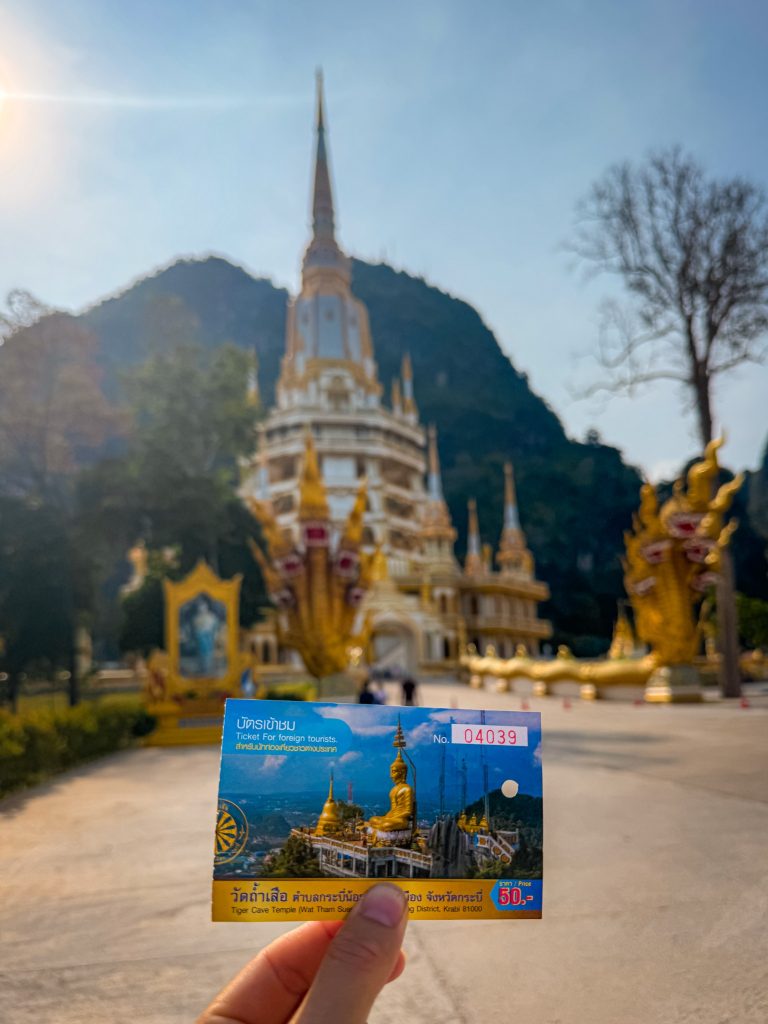
| Entrance Fee | 50 baht for foreigners |
| Parking | Free |
| Steps to the Summit | 1,260 |
| Climb Difficulty | Moderate to strenuous |
| Time Needed | 2–3 hours |
| Summit Height | 278 m (912 ft) |
| Best Time to Visit | Early morning or late afternoon |
| Dress Code | Cover shoulders and knees |
*Always check current opening hours before your visit, as they may change.
What Is Tiger Cave Temple?
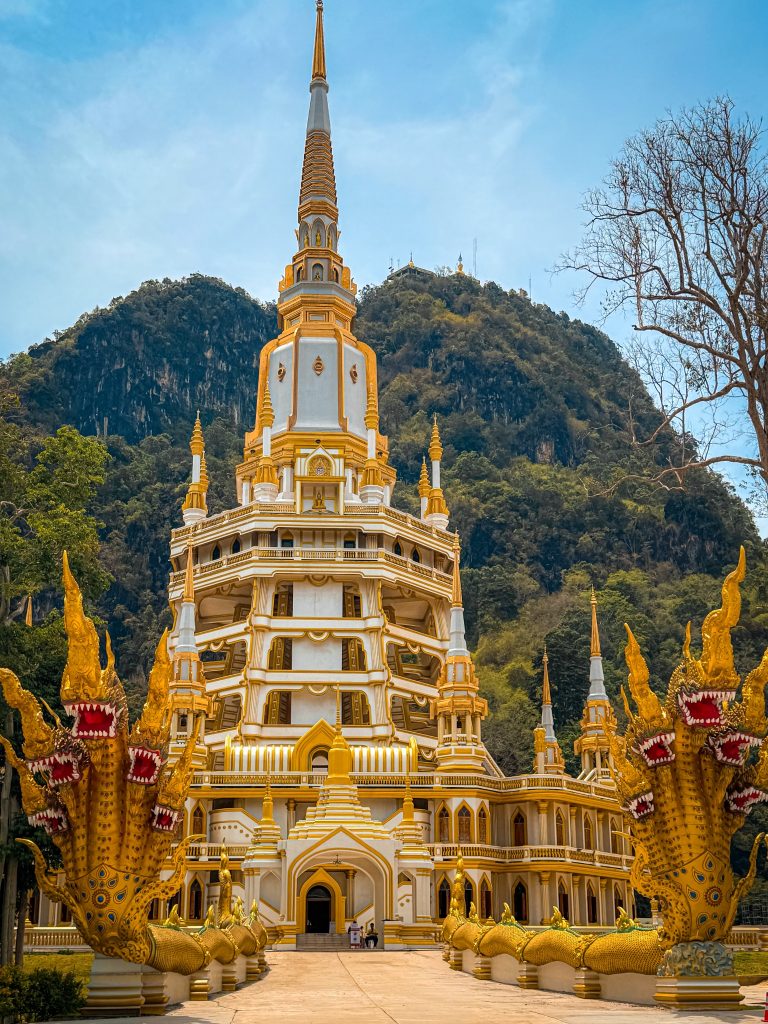
Tiger Cave Temple, or Wat Tham Suea, is one of southern Thailand’s most famous Buddhist temples. Located just outside Krabi Town, it’s best known for the challenging climb to a giant golden Buddha overlooking the province.
But calling it a single temple doesn’t really do it justice.
Tiger Cave Temple is an entire temple complex built around a limestone mountain. Within the grounds you’ll find an enormous pagoda, sacred caves, jungle paths, meditation areas, shrines, towering Buddha statues, and several smaller temples.
The temple gets its name from a cave where, according to local legend, tigers once sheltered. Although there are no tigers here today, the cave remains an important place of worship and one of the highlights of the complex.
If you’re only planning enough time to race up the stairs and back down again, you’re missing what makes Tiger Cave Temple so special.
A Brief History of Tiger Cave Temple
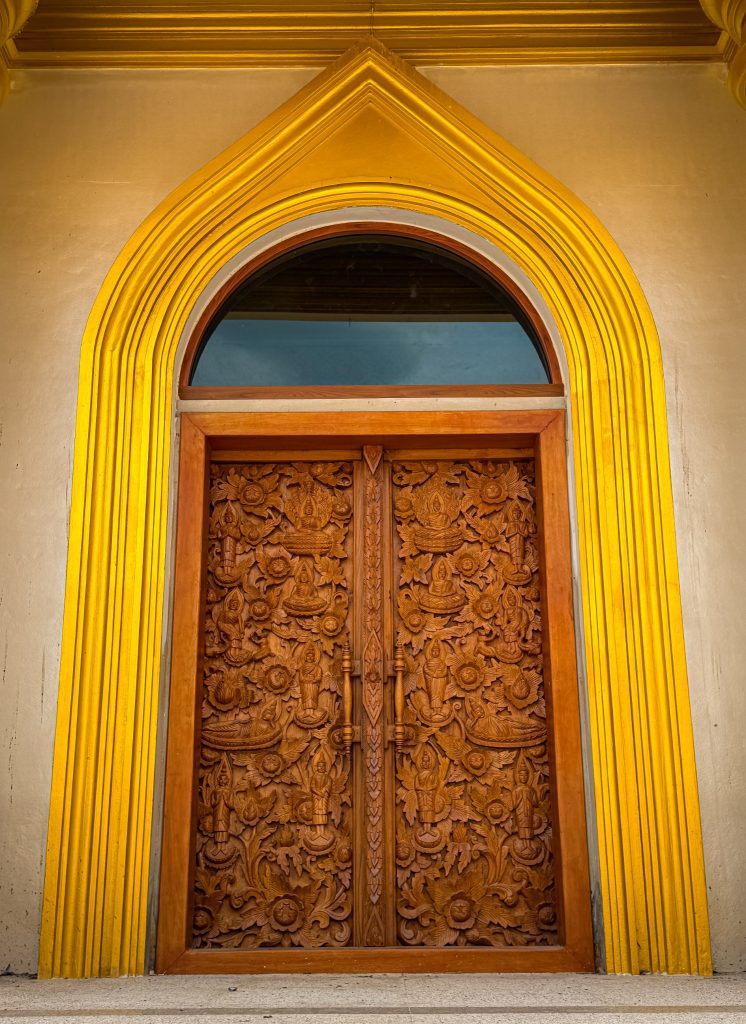
Tiger Cave Temple was founded in 1975 by the meditation monk Luang Pu Jumnean Seelasettho. According to local tradition, monks discovered tiger paw prints inside the cave, inspiring the temple’s name.
Over the decades, it has grown into one of Krabi’s most important Buddhist temples, attracting both pilgrims and visitors from around the world. Despite its popularity, it remains an active place of worship, so you’ll likely see monks praying, locals making offerings, and families visiting to pay their respects throughout the day.
First Impressions of Tiger Cave Temple
Like many visitors, I expected Tiger Cave Temple to be all about the climb.
I couldn’t have been more wrong.
Google Maps accidentally led me to an old entrance at the back of the temple complex instead of the current main entrance. Rather than turning around, I decided to enjoy the unexpected detour.
As I walked beneath the towering limestone cliffs, I passed rows of small huts where Buddhist practitioners stay while praying at the temple. Several women dressed in white smiled as I walked by, clearly surprised to see a tourist coming from that direction. I smiled and waved before continuing toward the main entrance.
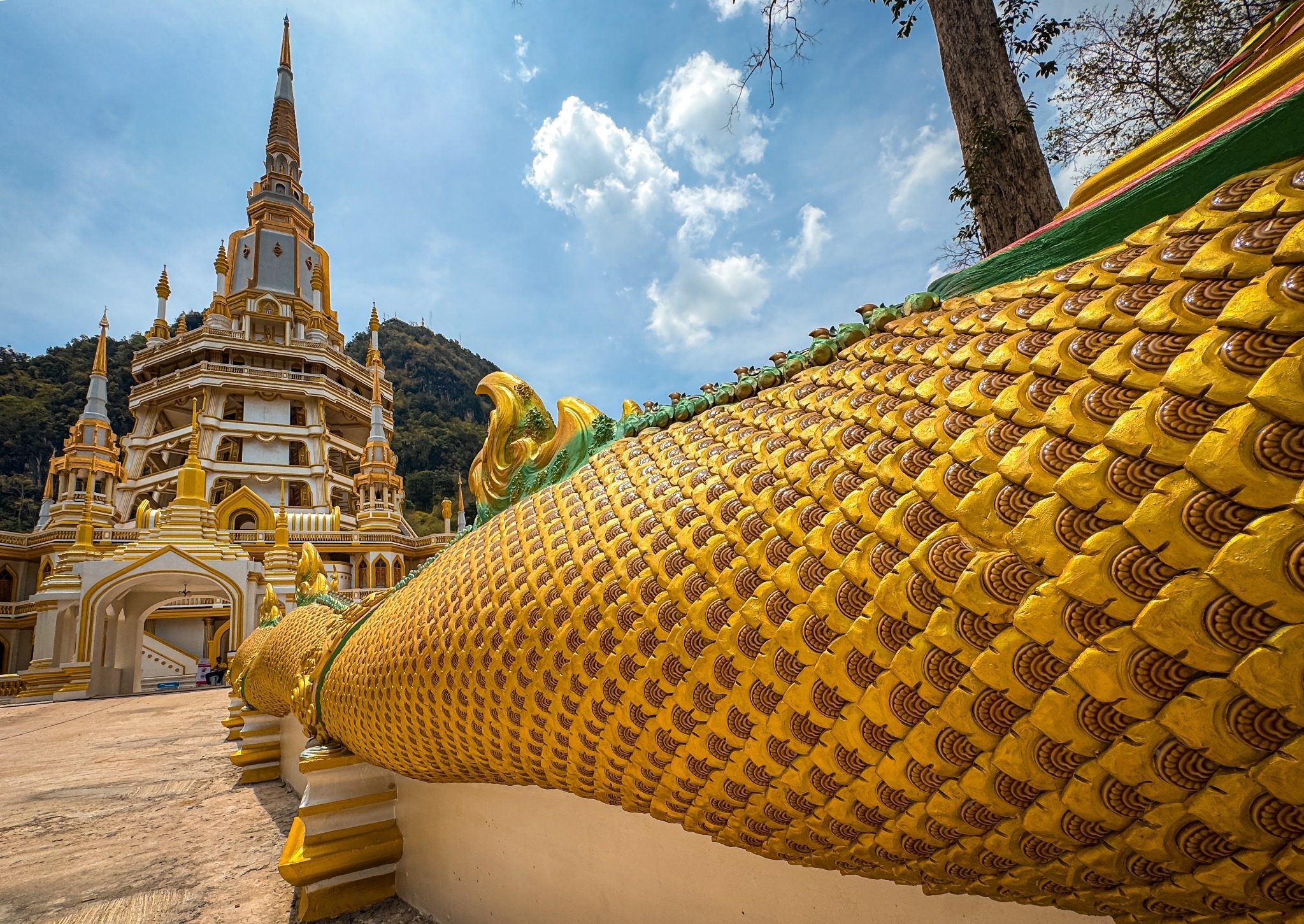
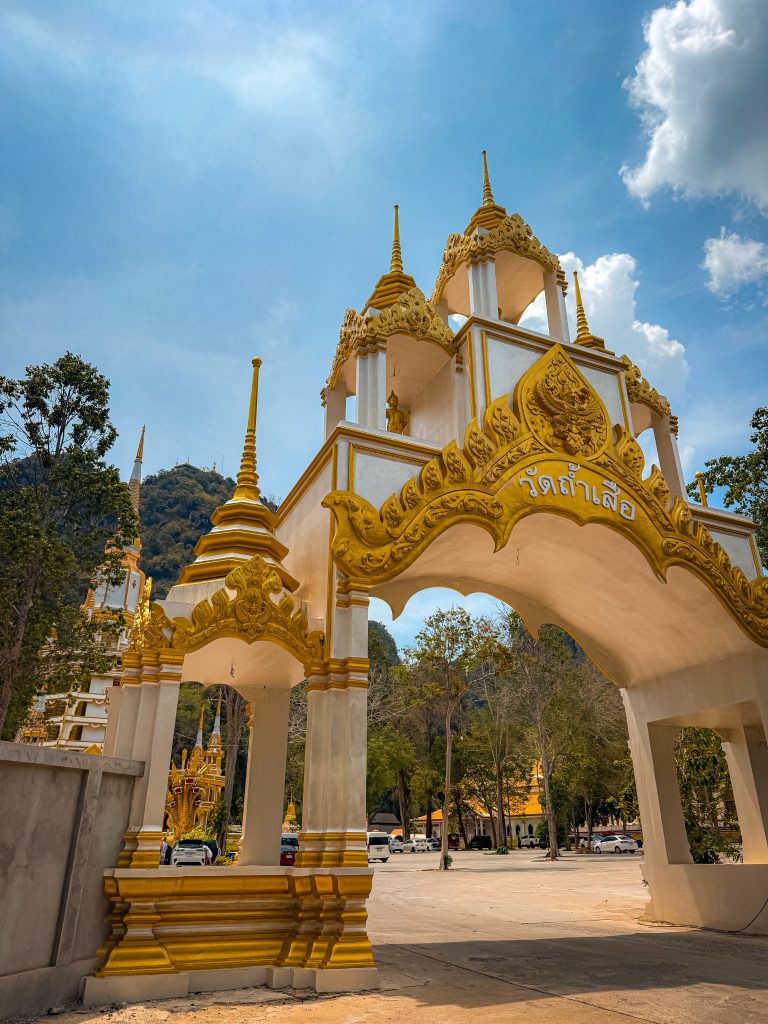
After buying my ticket, I stepped through the gates and was immediately greeted by two enormous five-headed naga sculptures leading toward a magnificent white pagoda.
I stopped in my tracks.
With the dramatic cliffs rising behind it and the peaceful atmosphere all around, I knew this was going to be much more than a staircase leading to a viewpoint.
Explore the Giant Pagoda Before You Climb
If you’re eager to conquer the famous hike to the summit, I understand. I was too.
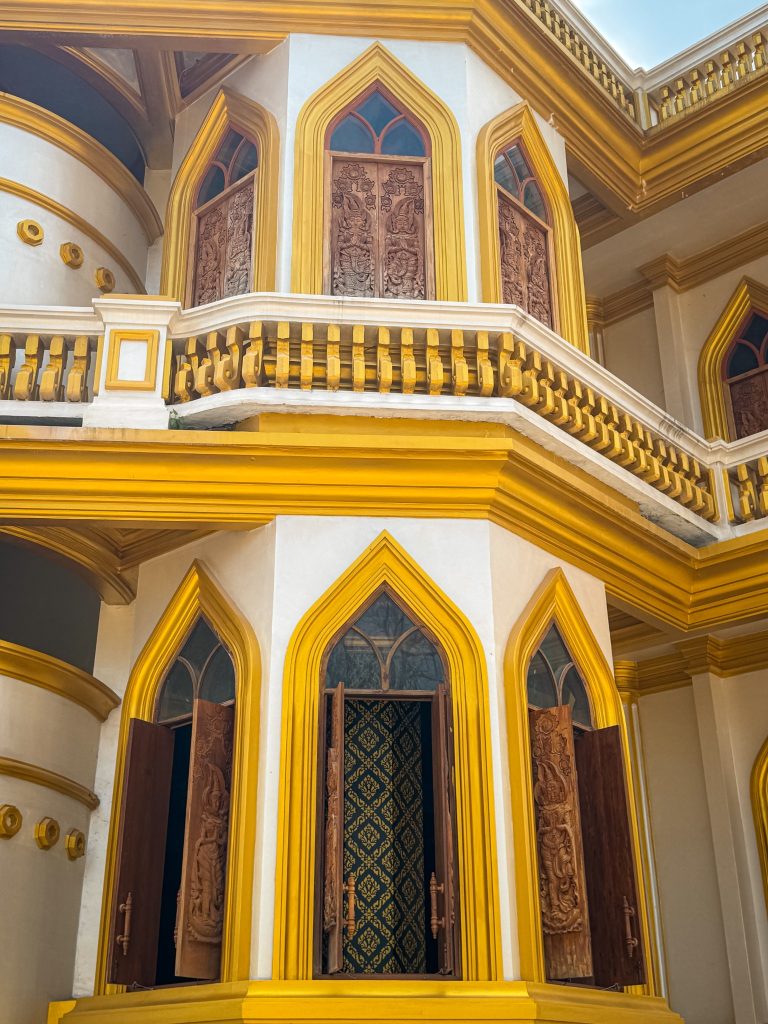
But before you start climbing, spend some time exploring the enormous pagoda at the base of the mountain. It ended up being my favorite part of the entire temple complex.
An Interior That Took My Breath Away
Like all Buddhist temples in Thailand, you’ll need to remove your shoes before entering.
The moment I stepped inside, I forgot all about the mountain outside.
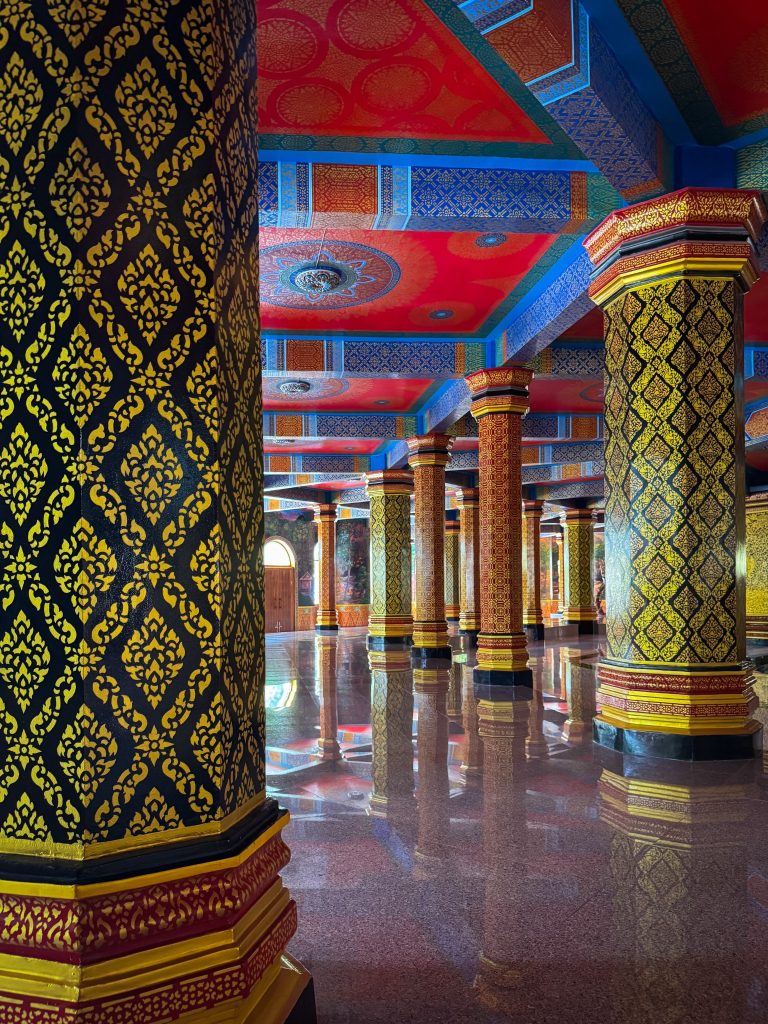
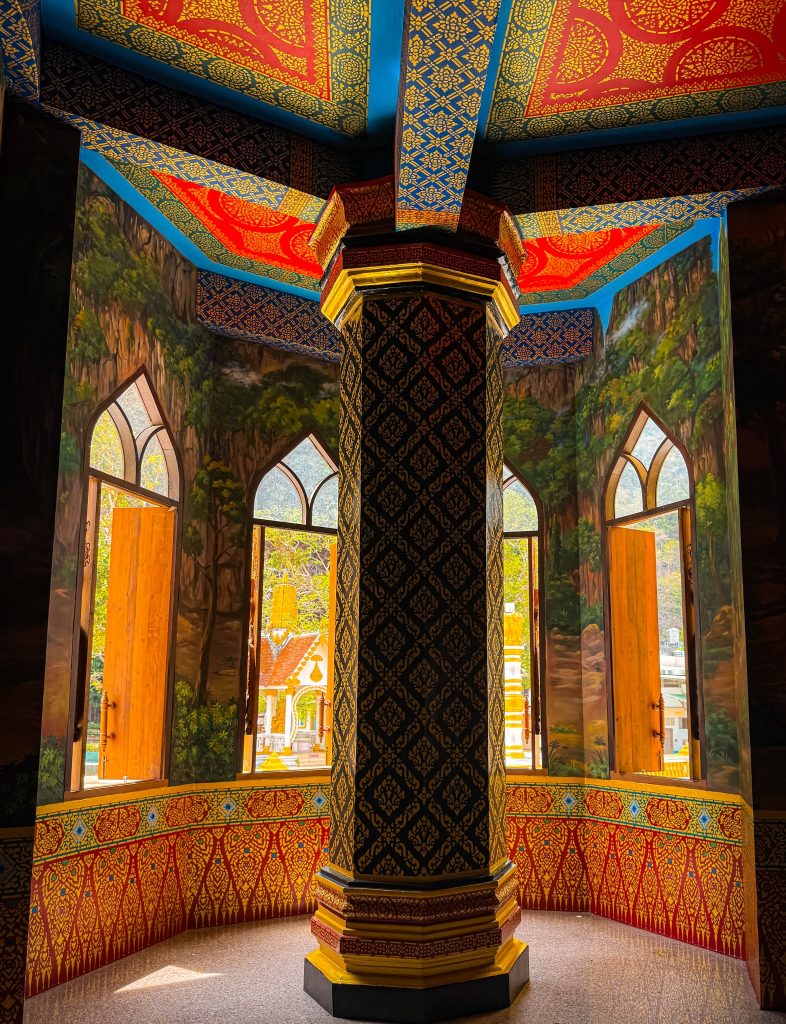
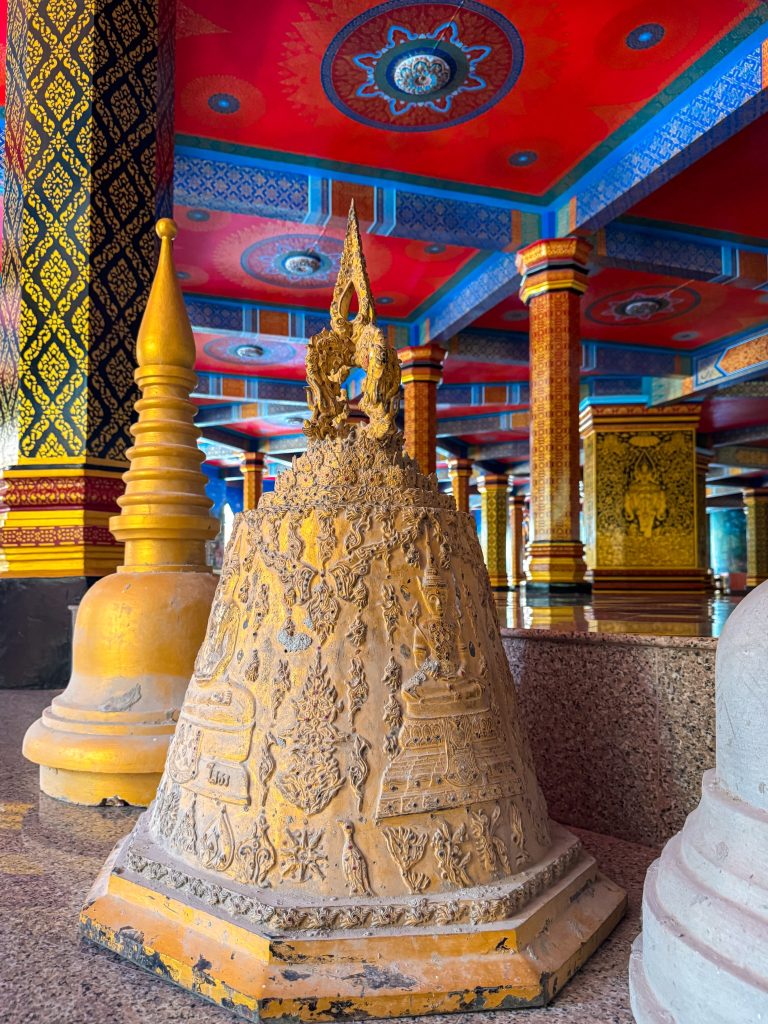
Brilliant crimson ceilings covered in intricate gold patterns stretched overhead, framed by rich sapphire-blue beams that made the colors seem to glow. Every direction revealed another breathtaking detail, from towering guardian statues beneath carved naga canopies to ornate gold columns reflected in the polished marble floor.
Slow Down and Look Around
The longer I wandered, the more details I noticed.
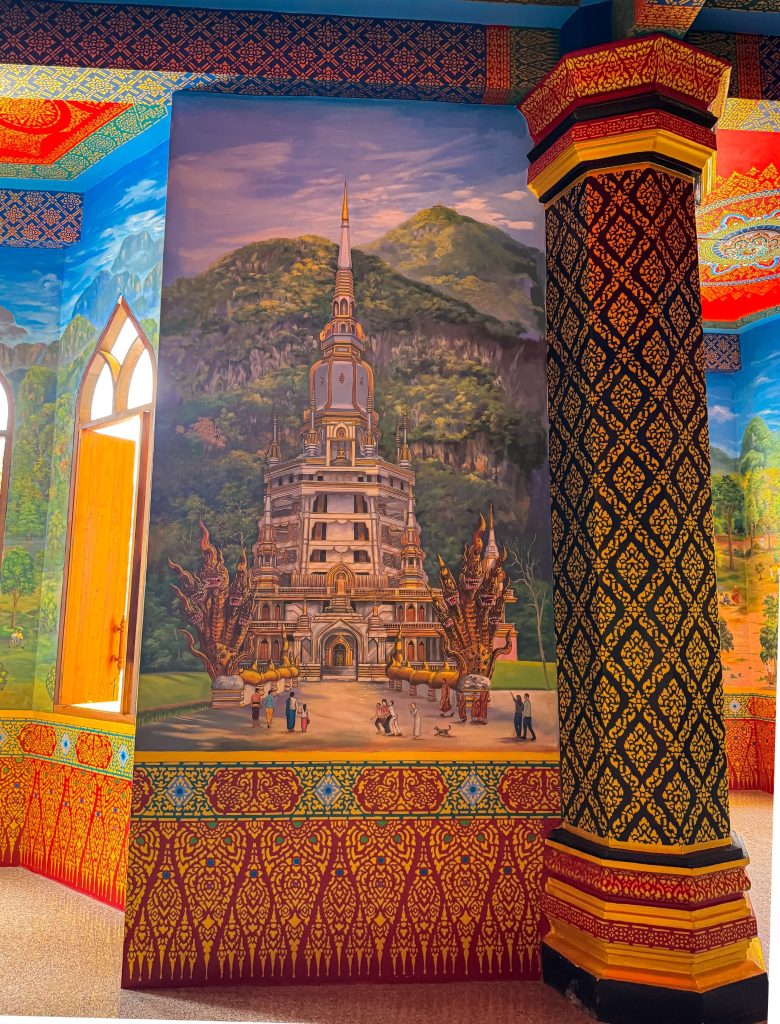
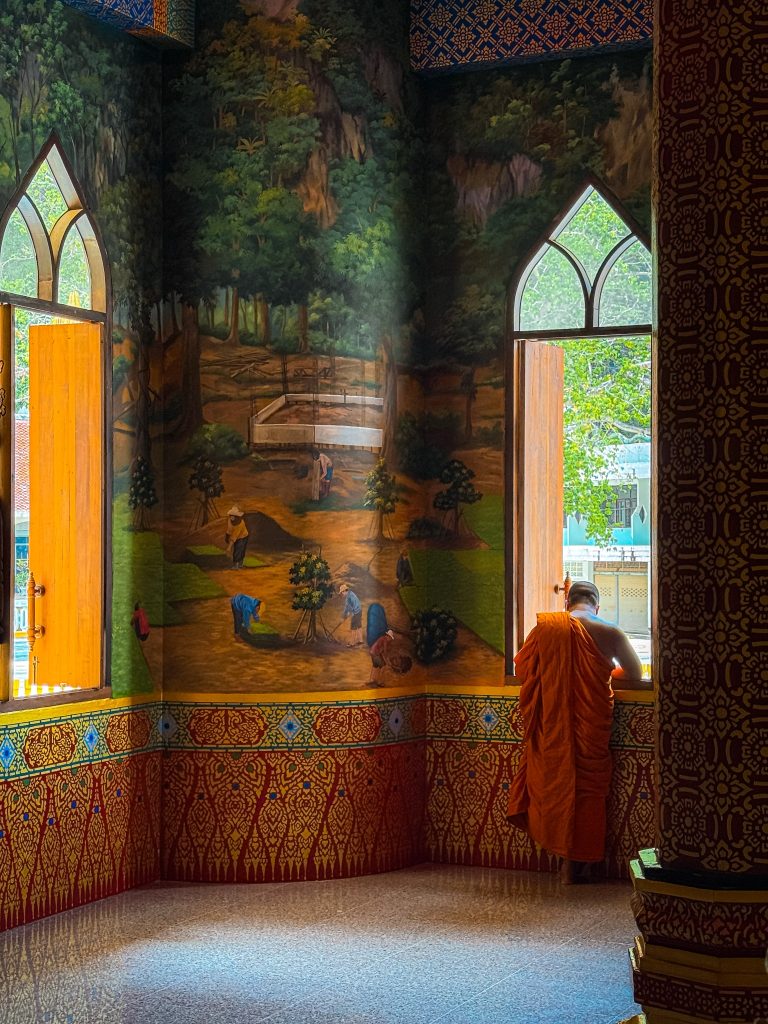
The walls were covered in murals depicting lush forests, limestone cliffs, and scenes from Buddhist tradition. Every lap around the pagoda revealed another carving, another painting, or another architectural detail I’d somehow missed before.
Despite the explosion of color, the atmosphere was remarkably peaceful. Families quietly lit incense while monks in bright orange robes moved silently through the temple. At one point I noticed a monk standing beside an open window, gazing toward the mountains while another knelt in prayer nearby.
Don’t Skip It
Most visitors come to Tiger Cave Temple for the climb, but I think that causes them to overlook one of the most beautiful temple interiors in Thailand.
Even if climbing a ton of uneven mountain steps isn’t for you, I think this pagoda alone makes Tiger Cave Temple worth visiting.
Visit the Tiger Cave Before You Climb
As you leave the pagoda, the atmosphere begins to change. The ornate architecture gives way to towering limestone cliffs, shady trees, and birdsong echoing through the forest.
Before tackling the 1,260 steps, make one more stop.
The Cave That Gave the Temple Its Name
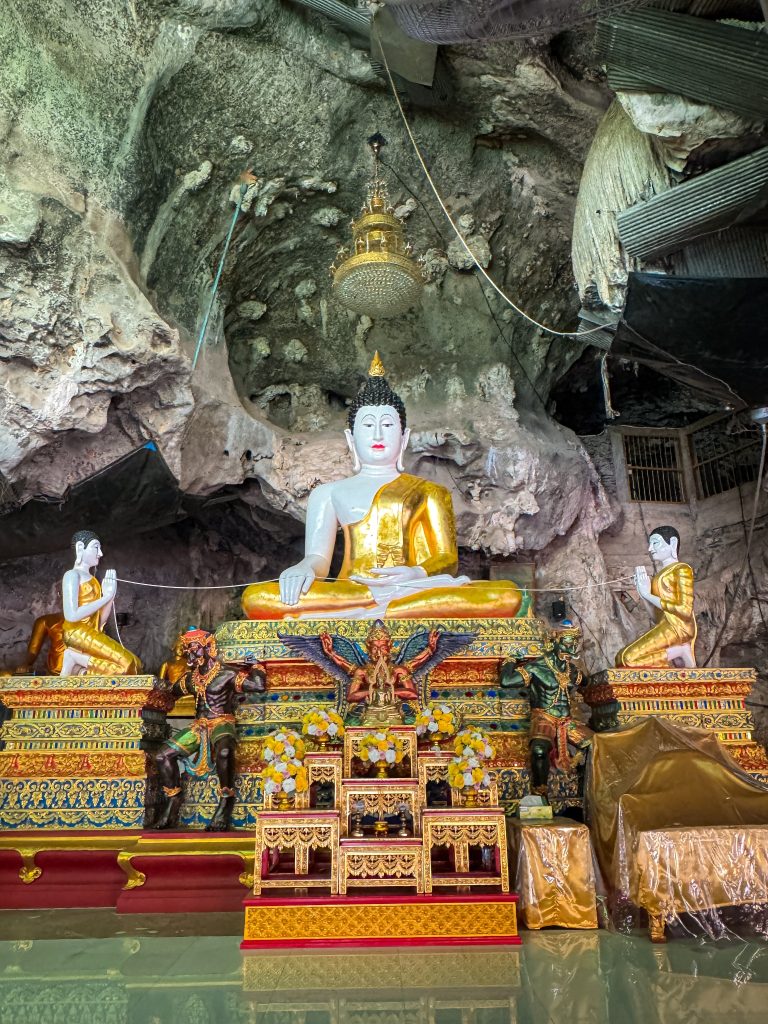
Just beyond the pagoda is the Tiger Cave itself—a natural limestone cave that inspired the name Wat Tham Suea, or Tiger Cave Temple.
According to local legend, tigers once sheltered here, and monks discovered tiger paw prints pressed into the stone. While there are no tigers today, the cave remains one of the most sacred parts of the temple complex.
Inside, Buddha statues sit beneath the rugged limestone ceiling, creating a beautiful contrast between nature and the carefully crafted shrines. It’s quiet, peaceful, and easy to see why Buddhist monks chose this cave as a place for meditation.
As with the other temple buildings, remember to remove your shoes before entering and be respectful of anyone praying or making offerings.
One Last Stop Before the Climb
Near the cave you’ll find a few small stalls selling drinks, snacks, and temple amulets.
If you haven’t already, now is the time to buy some water—you’ll need it.
Then take one last look up.
The staircase disappears into the trees, winding higher and higher until you can’t see the top.
It’s exciting.
It’s a little intimidating.
And with one deep breath, it’s finally time to begin the climb.
Climbing the 1,260 Steps to the Summit
Standing at the base of the staircase, I finally understood why this climb has become so famous.
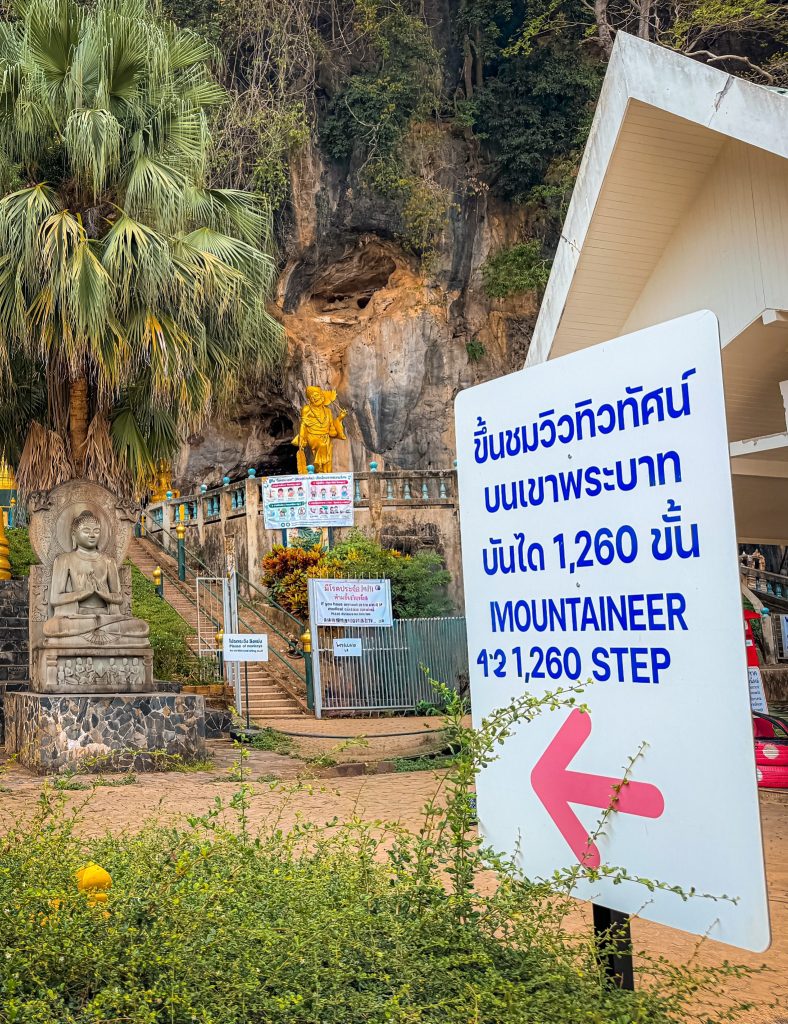
A sign marks the beginning with one simple number: 1,260 steps.
Looking up, the staircase disappears into the jungle canopy until you can’t even see the top. It feels a little intimidating—but also exciting.
I took one last sip of water, adjusted my backpack, and started climbing.
Pace Yourself
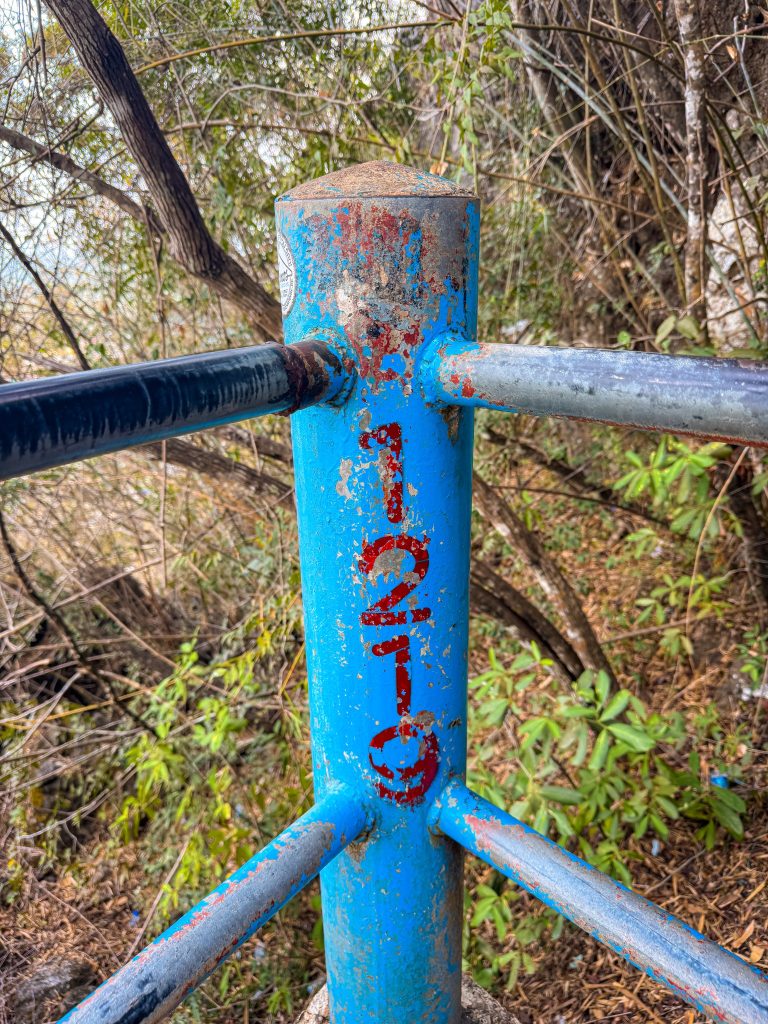
The climb is steep, and the stairs are surprisingly uneven. Some are short and easy, while others are almost twice as tall, making the ascent more challenging than the step count alone suggests. Thankfully, there’s a handrail the entire way.
There’s no prize for reaching the top first.
Most people stop several times to catch their breath, drink some water, or simply admire the views. I did exactly the same.
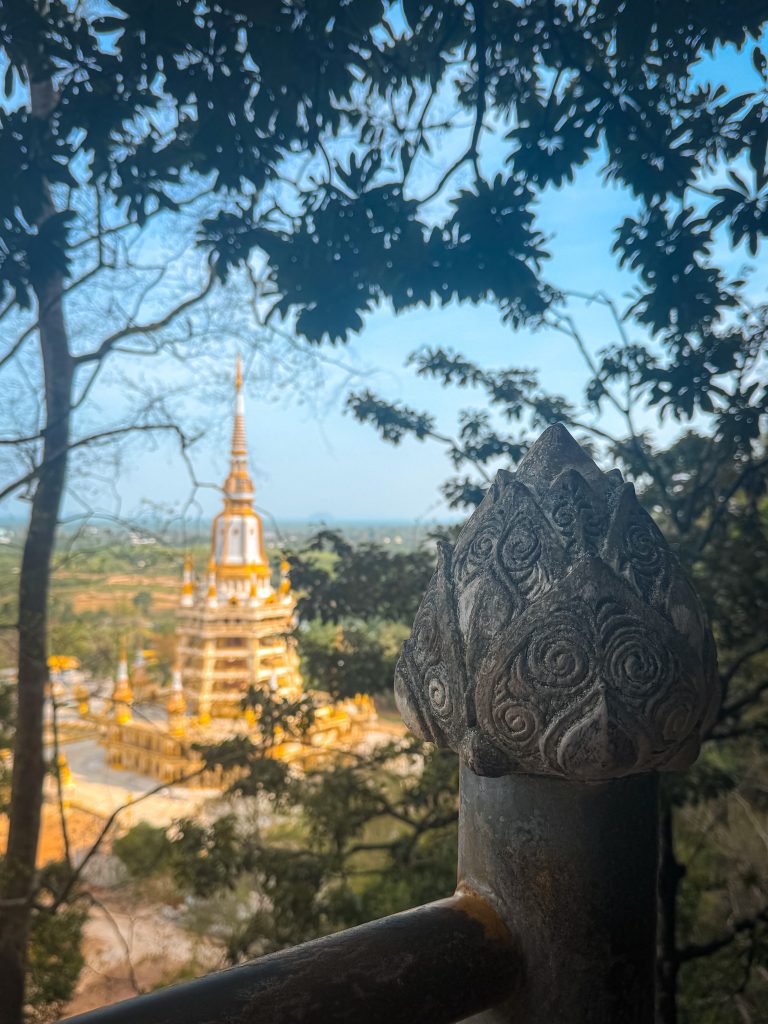
One of my favorite parts of the climb was that every break came with a reward. As you climb higher, you’ll catch glimpses of the giant white-and-gold pagoda below, along with small shrines and pagodas tucked into the mountainside. They make the journey feel like more than just a workout.
Bring More Water Than You Think
I visited during the hottest part of the year, around midday, when temperatures reached 97°F (36°C).
Let’s just say…I was melting like an ice cream cone left out in the sun.
If you can, start your climb early in the morning while temperatures are cooler. If you end up visiting later in the day like I did, just take your time, drink plenty of water, and don’t feel embarrassed about stopping to rest. Almost everyone does.
Beware of the Monkeys
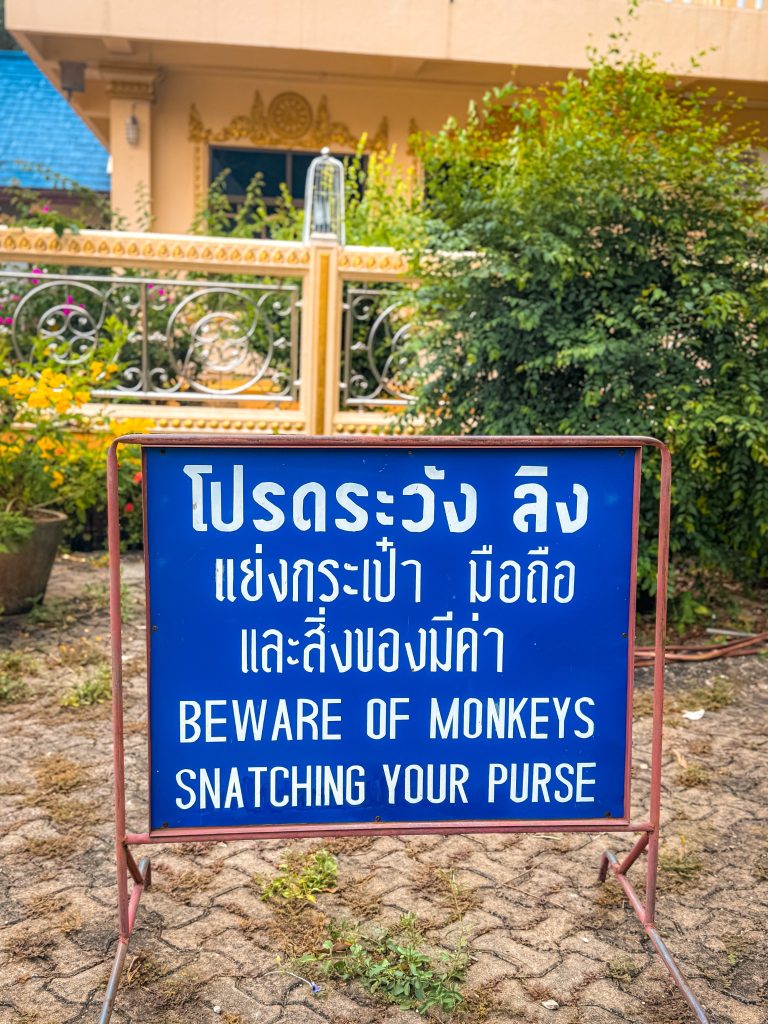
Before you start climbing, make sure everything you’re carrying is securely zipped up.
Ask me how I know.
Tiger Cave Temple is home to plenty of monkeys. They’re fun to watch, but they’re also incredibly clever and always on the lookout for an easy snack.
I learned that lesson the hard way.
Partway up the mountain, I stopped for a drink of water and forgot to zip my backpack before filming a couple of monkeys on the stairs.
Big mistake.
Out of nowhere, another monkey came charging up from behind and jumped straight into my open backpack!
Thankfully, a kind man climbing behind me rushed over to help. In all the commotion, a second monkey leapt onto my arm, gave me a quick pinch, and left me with a painful bruise before taking off.
To make matters even more embarrassing, I caught the whole thing on video, so that memory is now immortalized forever.
Thankfully, I wasn’t seriously hurt, but I definitely learned my lesson.
Learn From My Mistake
- Keep your backpack zipped at all times.
- Don’t carry food in your hands.
- Never feed the monkeys.
- Keep your valuables secure.
- If one approaches you, stay calm and give it space.
- Don’t make direct eye contact with them. They find it aggressive.
Most visitors never have any problems. As long as you secure your belongings, you’ll probably enjoy watching the monkeys from a safe distance instead of starring in your own wildlife documentary like I did.
Reaching the Summit
After what felt like an endless climb, the stairs finally leveled out.
I had made it.
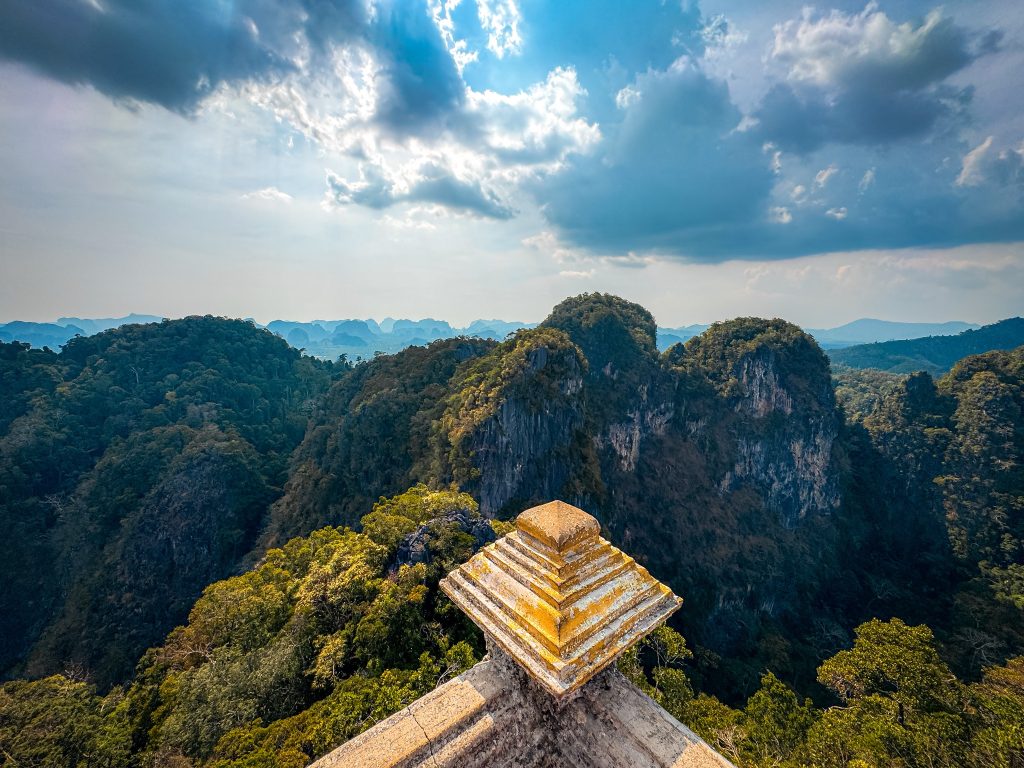
As I caught my breath, I was rewarded with one of the most spectacular views I’ve seen in Thailand.
A View Worth Every Step
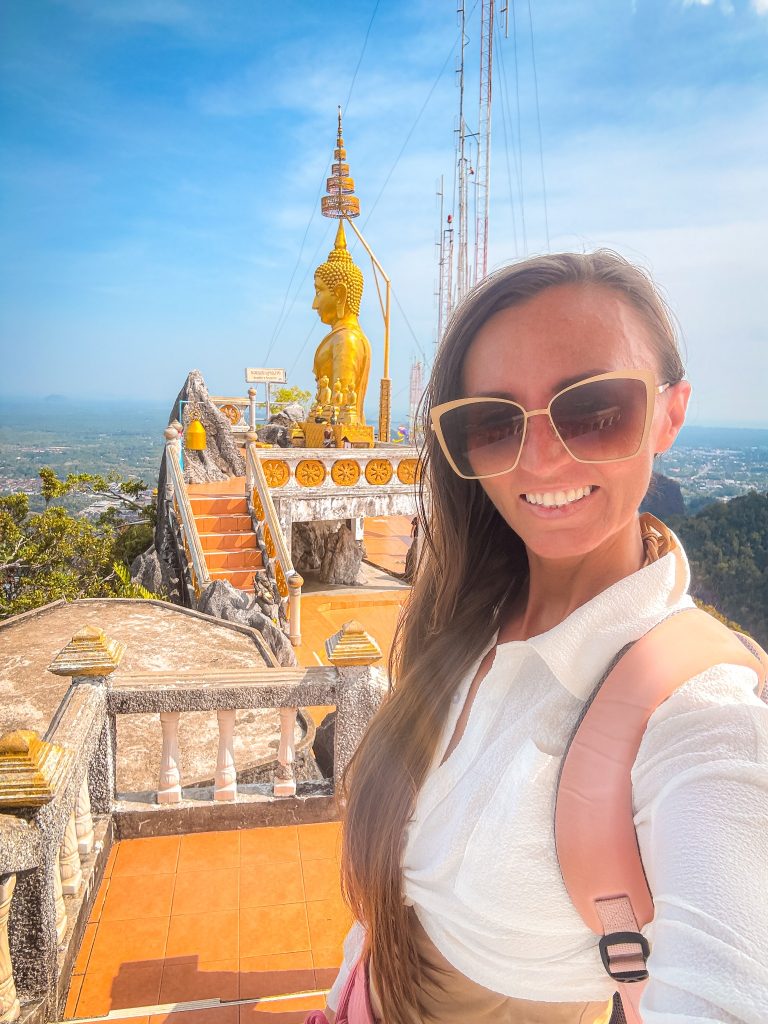
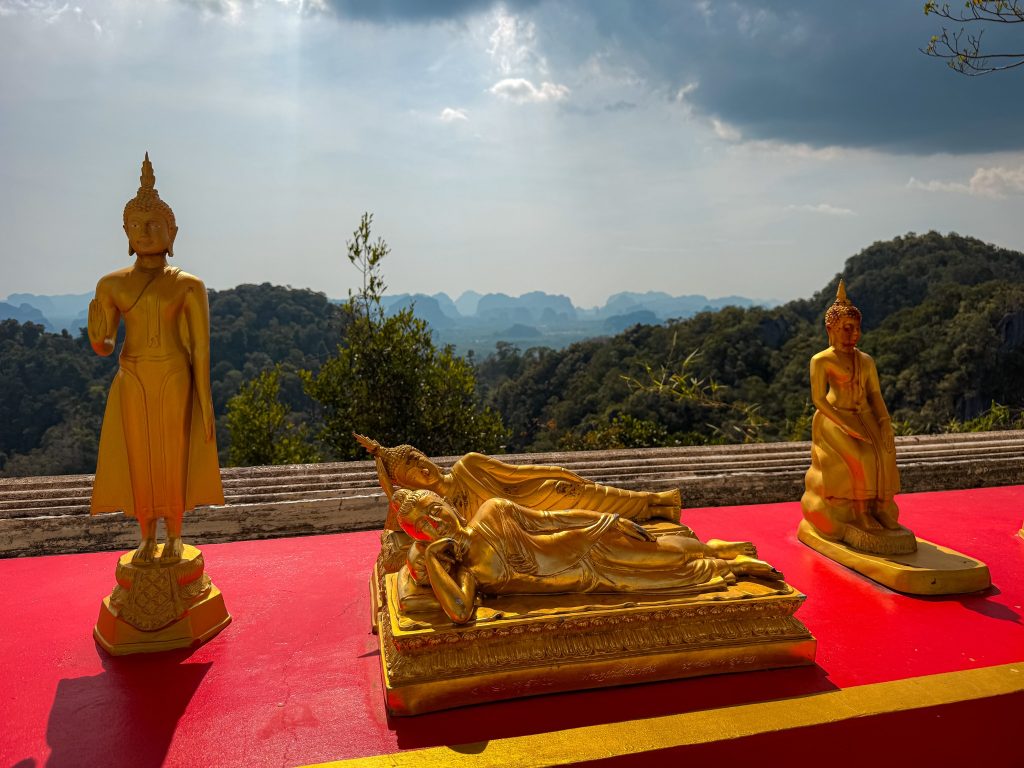
Layers upon layers of jungle-covered limestone mountains stretched across the horizon, fading into the distance beneath the hazy tropical sky. No photo can truly capture how vast it feels standing up there.
If you visit early in the morning from September-January, you may even see a blanket of sea mist filling the valleys below, making the peaks look like islands floating above the clouds.
More Than Just a View
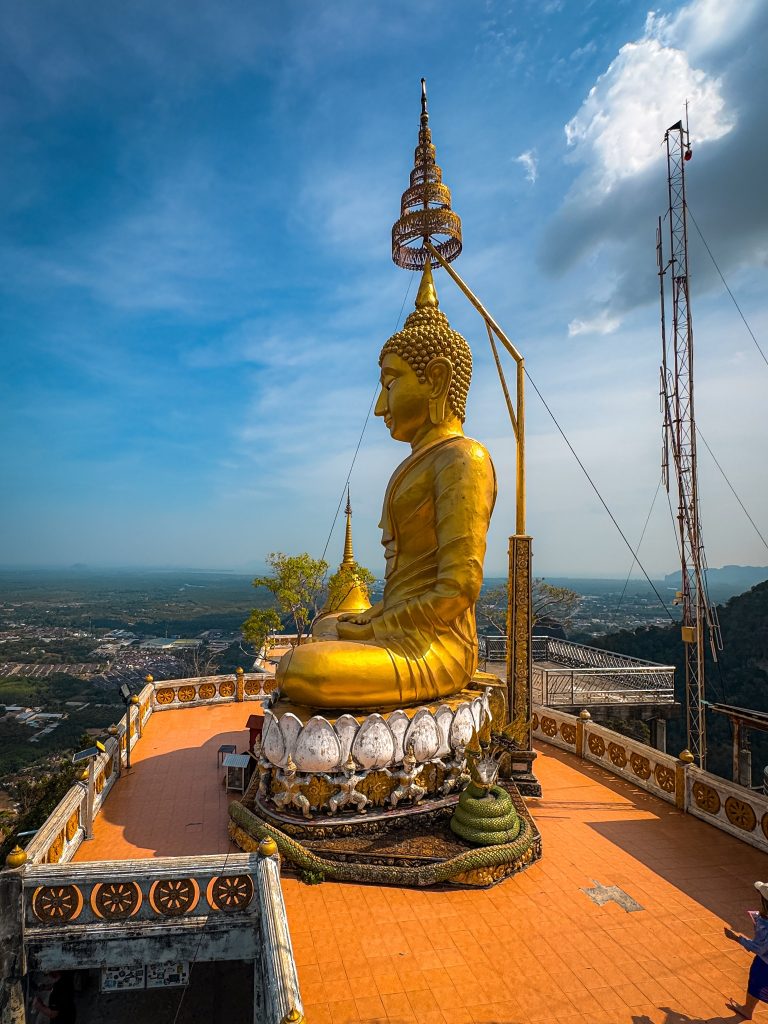
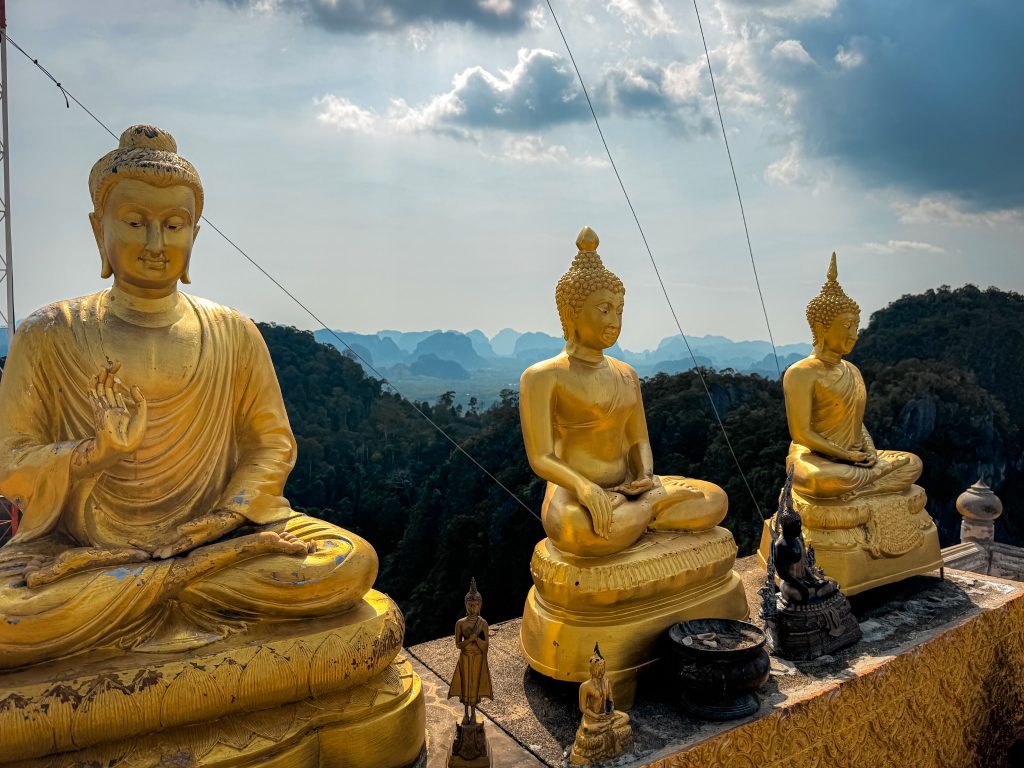
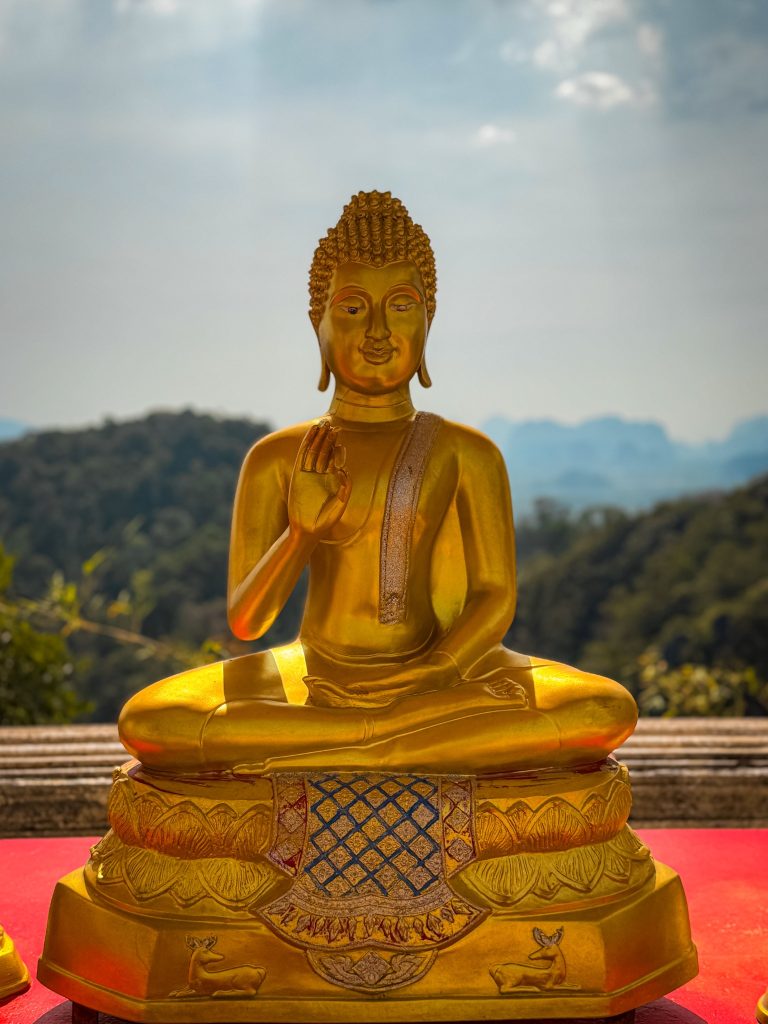
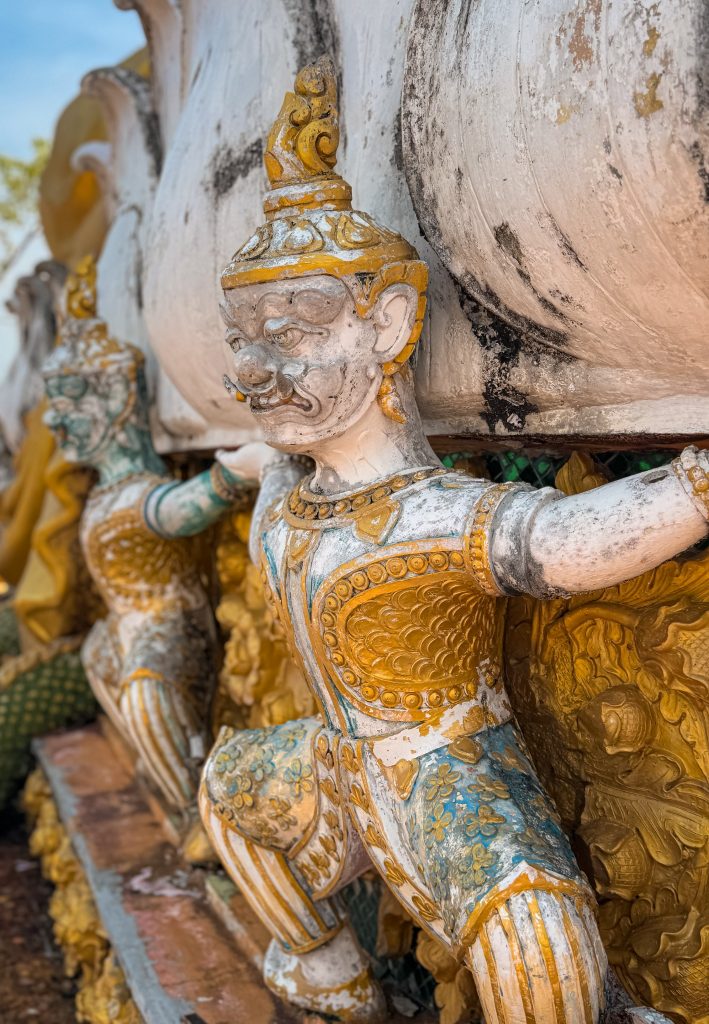
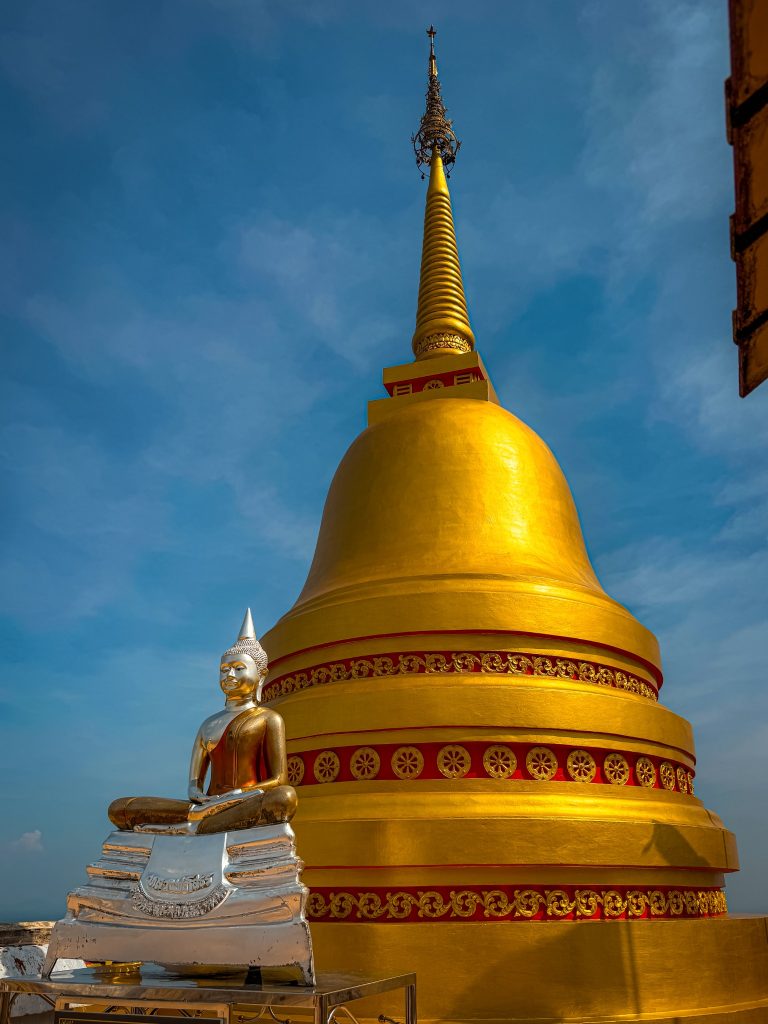
Standing proudly at the summit is an enormous golden Buddha overlooking Krabi Province, alongside a gleaming golden chedi and several smaller shrines. Seeing them after climbing all 1,260 steps made me appreciate the incredible effort it must have taken to build this sacred place.
I couldn’t help but wonder how they carried all of those construction materials—and the giant Buddha itself—to the top of the mountain.
Despite the breathtaking scenery, the summit still feels like an active place of worship. Visitors quietly admire the views alongside locals who have climbed here to pray, creating a peaceful atmosphere that’s very different from a typical tourist viewpoint.
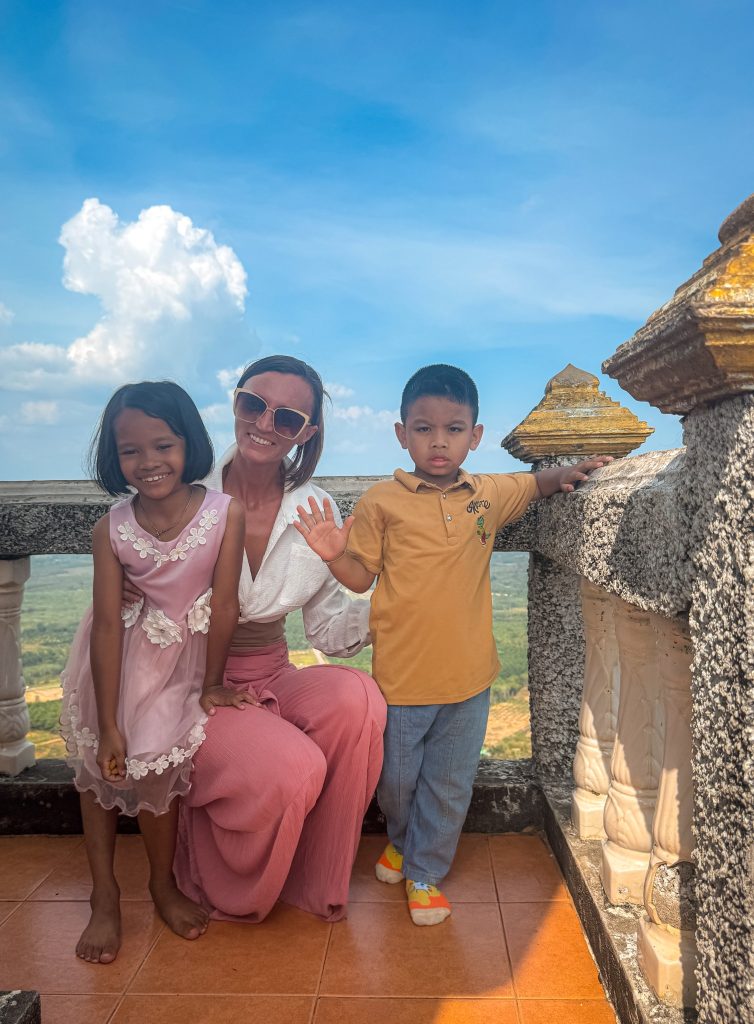
While I was taking in the scenery, a local mother asked if I would take a photo with her children. It was one of those small, unexpected travel moments that made me smile.
Before heading back down, don’t forget to refill your water bottle at the drinking water station near the summit.
Take one last look across the mountains.
You earned this view.
Don’t Miss the Hidden Parts of Tiger Cave Temple
Once you’ve made it back down all 1,260 steps, you might be tempted to head straight for the parking lot.
Don’t.
Instead of turning toward the exit, head left to explore the quieter side of the temple complex. While this area receives far fewer visitors, it’s just as peaceful and offers a completely different experience.
Explore Beyond the Main Temple
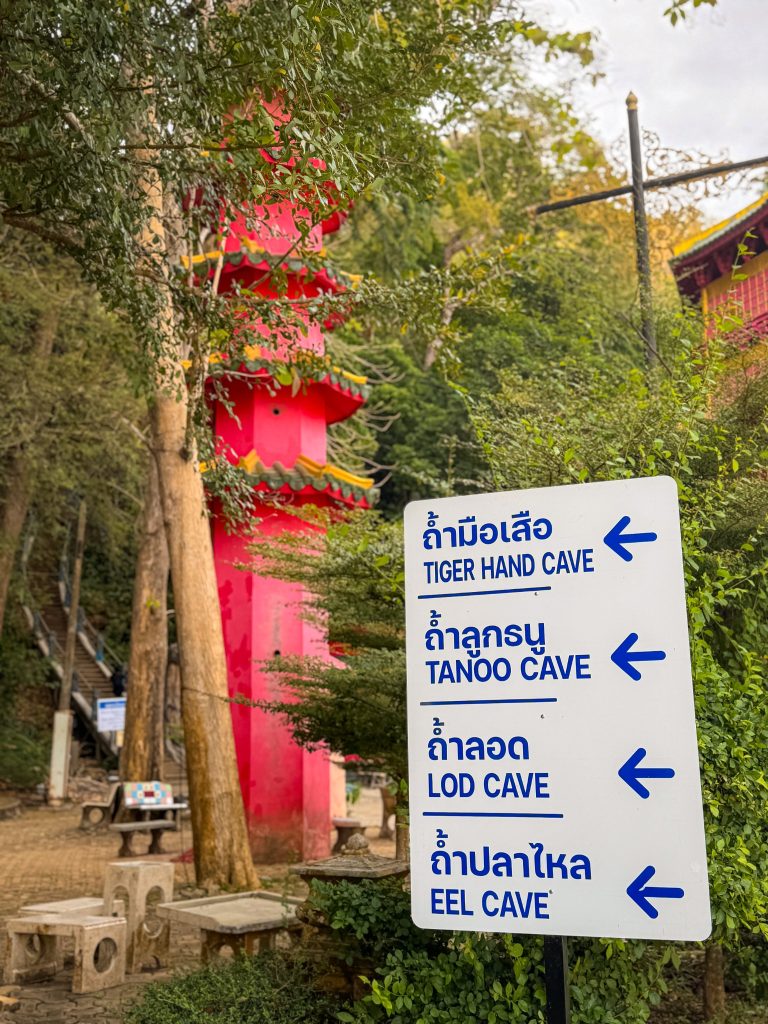
A smaller staircase leads through the jungle to a collection of caves, shrines, and temple buildings tucked beneath the limestone cliffs. The climb is much shorter than the hike to the summit, making it a great option if you skipped the hike or still have some energy left.
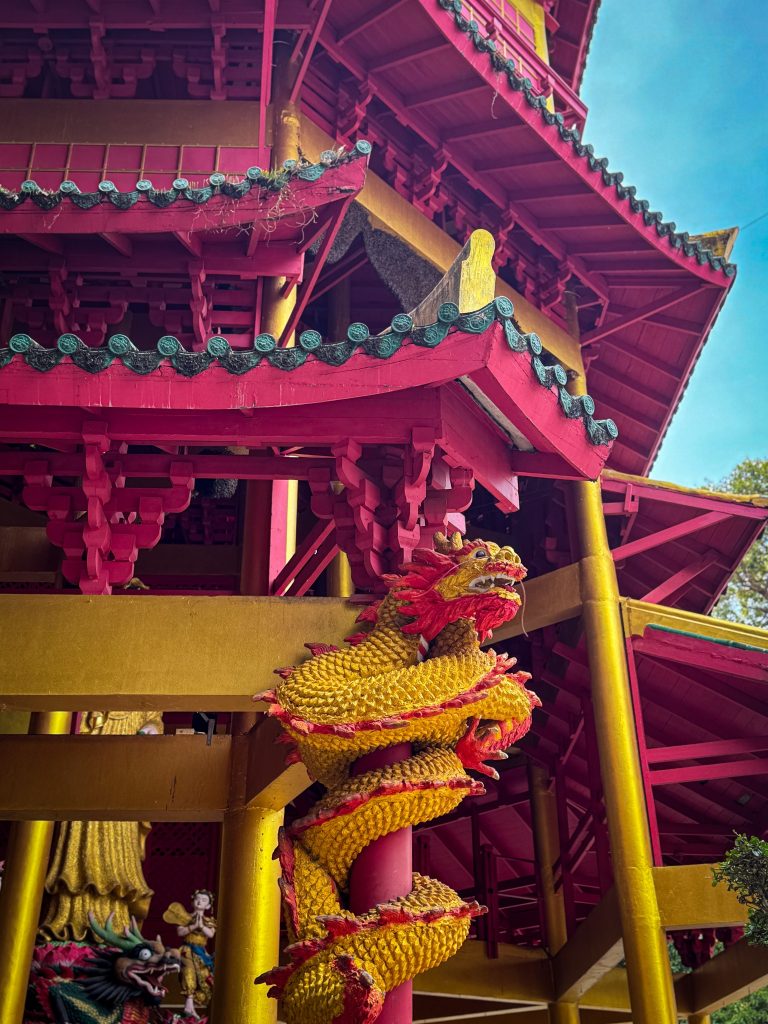
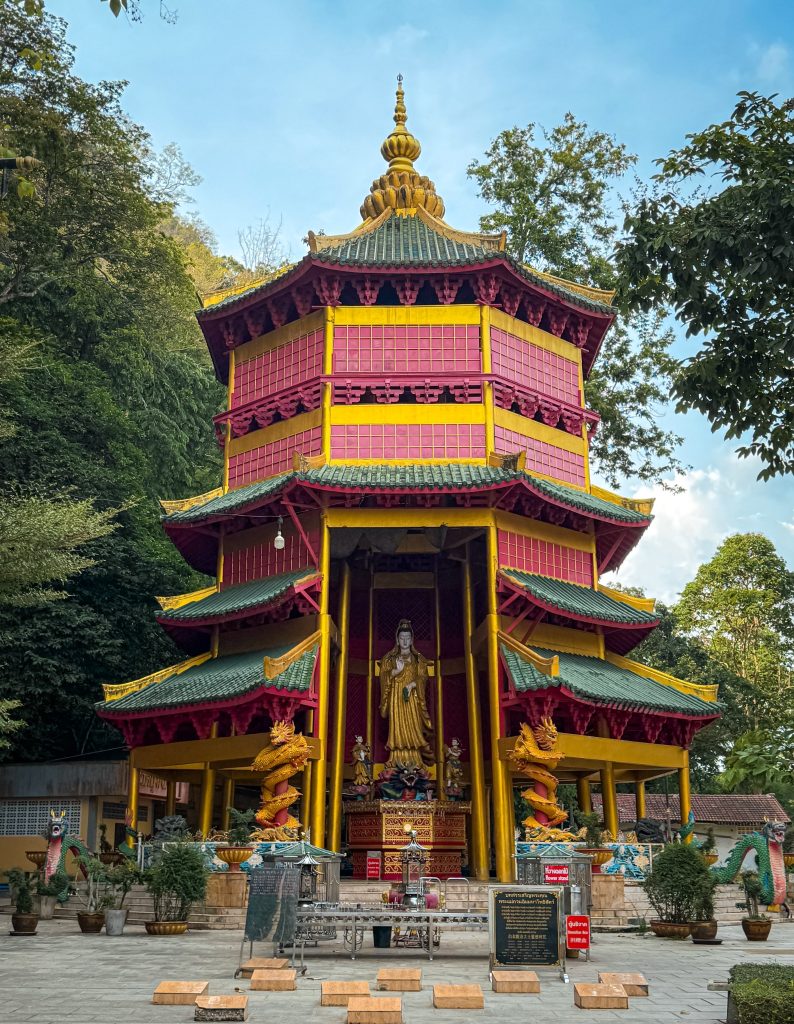
One of the highlights is the colorful Chinese temple, where ornate dragon sculptures curl across the roof. It’s another reminder that Tiger Cave Temple isn’t just one attraction—it’s an entire complex filled with unique places to discover.
Allow Plenty of Time
Before visiting, I assumed Tiger Cave Temple was simply a staircase leading to a viewpoint.
I couldn’t have been more wrong.
Between exploring the pagoda, visiting the Tiger Cave, climbing to the summit, and wandering through these quieter areas afterward, I easily spent 2–3 hours here without ever feeling rushed.
Looking back, what impressed me most wasn’t just the climb.
It was discovering everything else the temple had to offer.
Planning Your Visit
Opening Hours & Entrance Fee
Tiger Cave Temple is currently open daily from 6:00 AM to 6:00 PM. The entrance fee for foreign visitors is 50 baht (about $1.50 USD), and parking is free.
As opening hours and ticket prices can change, it’s always worth checking the latest information before your visit.
Dress Code
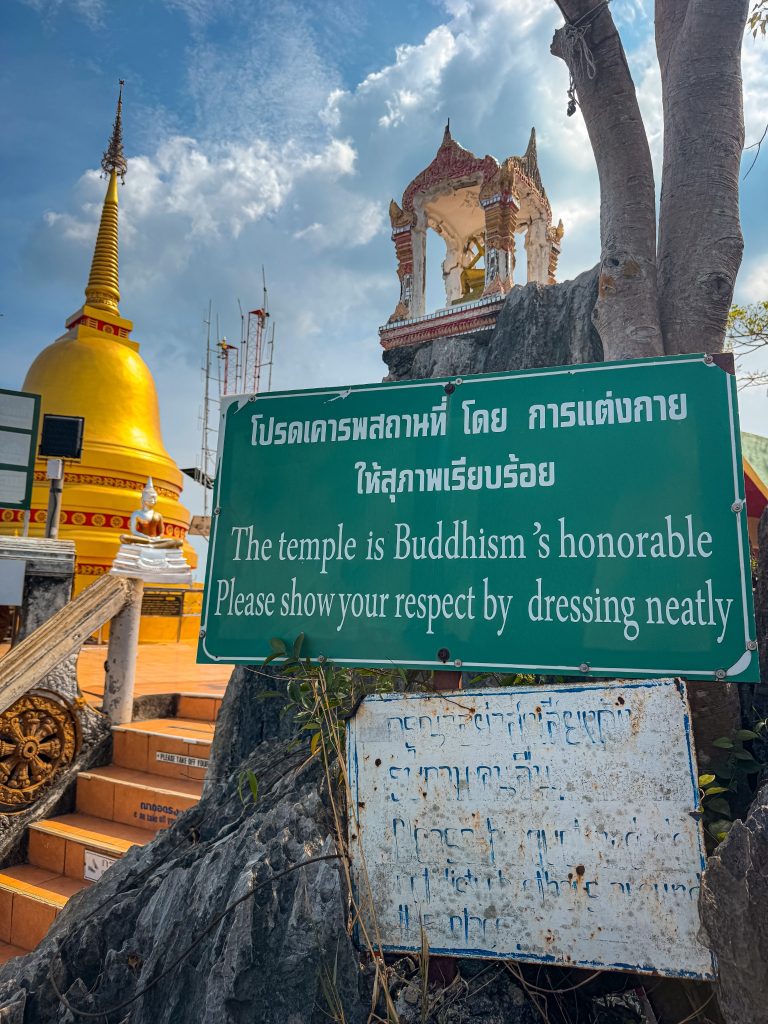
Tiger Cave Temple is an active Buddhist temple, so visitors should dress modestly by covering their shoulders and knees. You’ll also need to remove your shoes before entering temple buildings, caves, and certain sacred areas.
I visited during the hottest part of the year in flowy pants and a lightweight long-sleeved shirt. It definitely wasn’t the coolest outfit, but I never regretted dressing respectfully. If you’re worried about getting sweaty, consider bringing a clean shirt to change into before heading back to your hotel.
Best Time to Visit
Early morning is the best time to visit. The temperatures are cooler, the climb is more comfortable, and during certain times of the year you may even see a blanket of sea mist below the summit.
I visited around midday in 97°F (36°C) heat. While I still had an amazing experience, I’d recommend setting an early alarm if you can.
How to Get to Tiger Cave Temple
Tiger Cave Temple is located just outside Krabi Town, about 15 minutes from Krabi Town and 30 minutes from Ao Nang, making it an easy half-day trip from either location.
You have several transportation options:
- Scooter: The cheapest and most flexible option if you’re comfortable riding in Thailand.
- Grab Taxi: Convenient, but a return ride may be harder to find during quieter times.
- Songthaew: An affordable local option, though it requires a little more planning.
- Guided Tour: A stress-free choice that includes transportation and often additional historical and cultural insights.
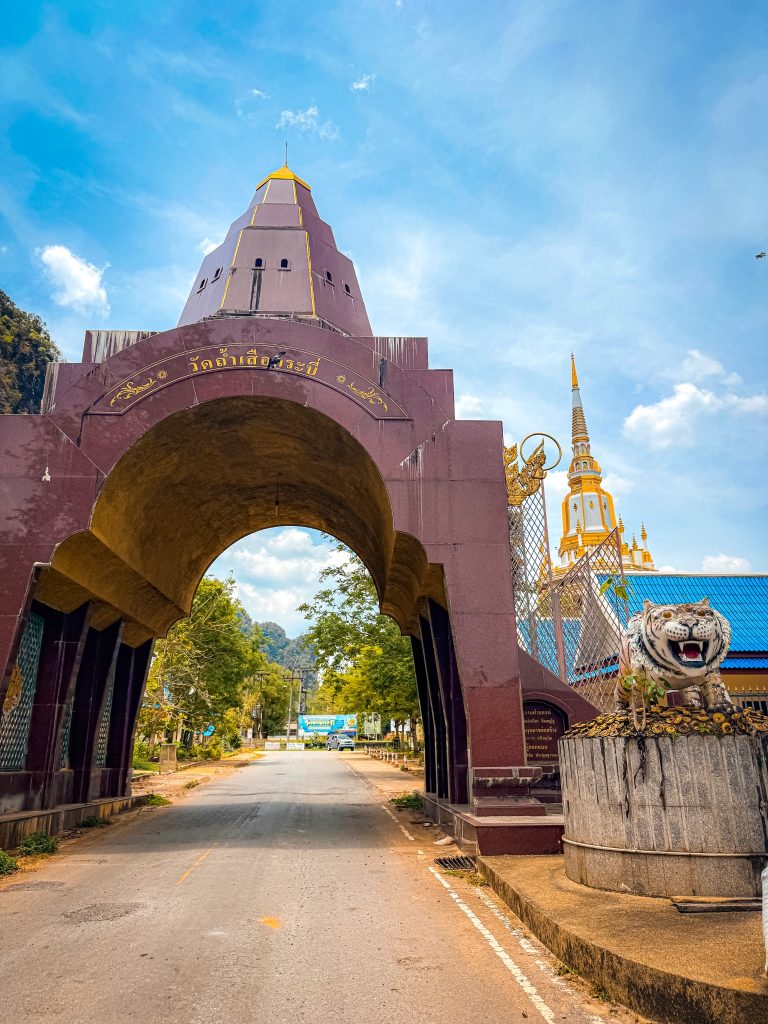
I rented a scooter and enjoyed the freedom to explore at my own pace. Google Maps initially sent me to an old entrance at the back of the temple instead of the current main entrance, so if that happens to you, don’t worry—the main visitor entrance is located off the main road.
If you’re hoping to see more of Krabi in one day, consider booking a tour that combines Tiger Cave Temple with Emerald Pool and the Krabi Hot Springs.
Should You Visit Tiger Cave Temple on a Tour or Independently?
Both options have their advantages, so the best choice depends on your travel style.
I rented a scooter and visited independently because I enjoy exploring at my own pace. It gave me the freedom to spend as long as I wanted inside the pagoda, take breaks during the climb, and wander through the quieter parts of the temple without watching the clock.
If you don’t want to worry about transportation, a guided tour is a great alternative. Besides handling the logistics, you’ll often learn more about the temple’s history and Buddhist traditions from a local guide. Many tours also combine Tiger Cave Temple with the Emerald Pool and Krabi Hot Springs, making it easy to see several of Krabi’s highlights in one day.
Visit Independently if you…
- Enjoy exploring at your own pace.
- Are comfortable riding a scooter or driving.
- Want the flexibility to make extra stops along the way.
Choose a Guided Tour if you…
- Prefer someone else to handle the transportation.
- Want to learn more about the temple’s history and culture.
- Plan to combine Tiger Cave Temple with other nearby attractions.
Personally, I’d still choose to visit independently, but if driving in Thailand isn’t your thing, a guided tour is an easy and worthwhile option.
Check out this Tiger Cave Temple tour that also visits the Emerald Pool and the hot springs.
Or considering booking this sunset tour of the temple.
10 Things I Wish I Knew Before Visiting Tiger Cave Temple
Before you go, here are the biggest lessons I learned during my visit. Hopefully, they’ll help you avoid the same mistakes and make the most of your time at Tiger Cave Temple.
- Don’t rush straight to the stairs. The beautiful pagoda and lower temple complex ended up being my favorite part of the entire visit.
- Google Maps may take you to the wrong entrance. If it directs you to the back of the temple, continue around to the main entrance where you’ll find the ticket booth.
- Bring more water than you think you’ll need. The climb is steep, and Thailand’s heat makes it even more challenging.
- Dress respectfully. This is an active Buddhist temple, so make sure your shoulders and knees are covered.
- Don’t rely on outdated information online. Some older guides still list the wrong number of steps and outdated visitor information.
- Keep your backpack zipped. The monkeys are adorable, but they’re also opportunistic—and they aren’t afraid to investigate an open bag!
- Allow at least 2–3 hours. There’s much more to see than just the climb to the summit.
- Explore the quieter side of the temple complex. The hidden caves, shrines, and Chinese temple are well worth the extra time.
- Start early if you can. The cooler temperatures make the climb much more enjoyable, and you may even catch sea mist over the mountains.
- Take your time. Stop to admire the views, the shrines, and the peaceful atmosphere. Tiger Cave Temple isn’t just about reaching the top—it’s about enjoying the journey.
Frequently Asked Questions About Tiger Cave Temple
Is Tiger Cave Temple worth visiting?
Absolutely. While the summit views are spectacular, don’t overlook the rest of the temple complex. The pagoda, Tiger Cave, and peaceful atmosphere make this one of my favorite places in Krabi.
How many steps are there at Tiger Cave Temple?
There are 1,260 steps to the summit. Some older guides list a different number, but the current sign at the temple shows 1,260.
How difficult is the hike?
The climb is challenging but manageable for most people with a reasonable level of fitness. The stairs are steep and uneven, so take your time, bring plenty of water, and rest whenever you need to.
How long does the climb take?
Most people reach the summit in 30–45 minutes and take 20–30 minutes to come back down.
Can you visit Tiger Cave Temple without climbing?
Yes! The lower temple complex includes the stunning pagoda, Tiger Cave, shrines, and peaceful walking paths. Even without climbing to the summit, there’s plenty to see.
What should I wear?
As an active Buddhist temple, visitors should cover their shoulders and knees. You’ll also need to remove your shoes before entering temple buildings and caves.
Are there monkeys?
Yes, and they’re very clever. Keep your backpack zipped, don’t carry food in your hands, and never feed them.
What do the incense and amulets mean?
Many visitors light incense as a sign of respect or prayer. Temple amulets are often worn by Buddhists as symbols of faith, protection, or good fortune. Even if you aren’t participating, it’s important to be respectful of those who are.
Is sunrise or sunset better?
Early morning is cooler and may reward you with beautiful sea mist below the summit during from September-January. Sunset is also popular, but check with temple staff about current closing procedures if you plan to stay late.
Final Thoughts: Is Tiger Cave Temple Worth the Climb?
Before visiting, I thought Tiger Cave Temple was simply a staircase leading to a viewpoint.
I couldn’t have been more wrong.
Yes, the climb is challenging, and the views from the summit are incredible. But what stayed with me most wasn’t standing beside the giant golden Buddha—it was wandering through the magnificent pagoda, exploring the peaceful cave shrine, and discovering just how much there was to experience beyond the famous staircase.
Tiger Cave Temple isn’t just a viewpoint.
It’s an entire sacred mountain waiting to be explored.
Whether you come for the challenge, the scenery, or the spiritual atmosphere, I think you’ll leave understanding why it’s one of Krabi’s most unforgettable places.
And if you ask me what my favorite part was?
It wasn’t the summit.
It was everything that happened before I got there.
Happy exploring, and remember to Be Free and Travel! 🌏✈️