Budget Thailand Travel Guide: Is Thailand Cheap to Travel in 2026?
All products and services featured on Be Free and Travel are independently selected by Anna Freitag. However, when you buy something through one of the featured links, we may earn an affiliate commission at no additional cost to you.
is Budget Thailand Travel possible?
Thailand has a magical way of making budget travel feel exciting instead of restrictive.
You can eat a plate of spicy, garlicky pad kra pao at a local market, get a Thai massage for less than the cost of lunch back home, wander through glowing night markets, hop on a longtail boat to one of the prettiest beaches in the country, and still feel like your money is going shockingly far.
So, is Thailand cheap to travel?
Yes. Thailand is still one of the best budget travel destinations in the world.
But I also want to give you a more honest answer than “Thailand is dirt cheap!” because that phrase does not fully tell the truth anymore. Thailand is affordable, especially compared to the U.S., Europe, and many high end tropical destinations. However, costs have gone up since I first visited.
When I went to Thailand for three months in 2017, I was much more conscious of every dollar. I stayed in a wider mix of accommodations including dorms, did more free activities, moved slowly, and made choices based around stretching my money for a longer trip.
When I returned in March and April of 2026 for a three-week Thailand trip, I traveled very differently. I chose to be much more on the comfy midrange end of the spectrum.
Read More:
3 Week Thailand Itinerary: Fast and Slow Routes For First Timers
What i prioritized
With only three weeks, I wanted to maximize my time. I took domestic flights instead of long buses when it made sense, chose paid activities whenever I felt like it, stayed in private rooms and cute hotels, got massages, ate in restaurants whenever I wanted, and still enjoyed plenty of cheap street food and local market meals because I genuinely love eating that way.
That is one of the best things about budget Thailand travel: you can make the trip as cheap or as comfortable as you want.
what to expect for your budget
You can backpack Thailand for around $30 USD per day if you are intentional, stay in dorms, eat mostly street food, limit paid activities, and avoid moving around too much.
You can also travel Thailand on around $60–$100 USD per day and have a much more flexible, comfortable, fulfilling trip with private rooms, domestic flights, restaurants, massages, shopping, and paid activities.
This budget Thailand travel guide breaks down what Thailand actually costs, how to save money, when it is worth splurging, and how to plan a trip that feels amazing without accidentally blowing your budget.
Read More: 31 Best Ways To Save Money While Planning A Trip
Quick Answer: How Much Money Do You Need for Budget Thailand Travel?
Excluding international flights, here is a realistic daily Thailand travel budget:
| Travel Style | Daily Budget | What to Expect |
|---|---|---|
| Shoestring backpacker | $25–$35/day | Dorm beds, street food, local transport, free and cheap activities |
| Budget traveler | $40–$60/day | Basic private rooms or nicer hostels, street food plus casual restaurants, some paid activities |
| Comfy midrange traveler | $75–$100/day | Nice private hotels, domestic flights when useful, restaurants, massages, shopping, and tours |
| Luxury value traveler | $150+/day | Boutique hotels, spas, private tours, nicer restaurants, beachfront stays |
If you are asking, “Is it cheap to travel to Thailand?” the answer depends on whether you mean the flight there or the cost once you arrive.
International flights to Thailand can be expensive depending on where you are flying from. Once you are in Thailand, however, your day-to-day travel costs can be very reasonable.
A very tight budget traveler could spend around 1,000 baht per day, which is roughly $30 USD depending on the exchange rate. On that budget, expect dorm-style accommodations, street food, local transportation, and mostly free or very cheap activities.
A more comfortable budget is around $60 per day.
A very comfortable midrange budget is around $100 per day.
At $100 per day, you can usually stay in nice private rooms, eat out often, take domestic flights when they make sense, get massages, join activities, and still not feel like you are constantly telling yourself no.
My Real Thailand Budget From My 2026 Trip
On my 2026 Thailand trip, I wasn’t trying to travel as cheaply as possible.
I wanted comfort. Ease. To say yes to the activities I was excited about. I wanted to eat in restaurants when I felt like it. I wanted massages and cute hotels. I wanted to spend my limited time enjoying Thailand instead of always choosing the cheapest possible option.
I also spent six days of the trip on a pre-planned aerial arts retreat, which was largely already paid for before I arrived, minus a few extras. Outside of that retreat, I tracked my real spending and paid attention to what things cost.
The breakdown
After accommodations and international flights, I spent around $60 USD per day on food, shopping, things to do, and transportation.
My accommodations ranged from free, because I stayed with a local friend in Bangkok, to around $50–$60 per night in hotels. I was traveling solo, so if you are traveling with a friend or partner, you could potentially split that hotel cost in half.
That is one of the reasons Thailand is such a great destination for couples or friends on a budget. A $50 hotel room for one person is already affordable. A $50 hotel room split between two people becomes a fantastic deal.
Book Vieng Mantra Hotel in Chiang Mai
My domestic flights ranged from about $35–$86 per flight. I took three domestic flights:
- Bangkok to Chiang Mai
- Chiang Mai to Krabi
- Krabi back to Bangkok
Could I have spent less?
Absolutely.
I could have taken night buses, stayed in dorms, skipped some paid activities, eaten only cheap street food, and moved around less. But that was not the style of trip I wanted this time.
And that is the point: Thailand gives you room to choose.
Why My Thailand Trip Was Not Ultra-Budget
I want to be clear that my 2026 Thailand trip was more comfy midrange than ultra-budget.
I stayed in private hotel rooms. I took domestic flights. I ate at restaurants whenever I wanted. I took a full-day cooking class. I did an all-day trekking tour. I got massages. I went shopping. I used Grab frequently. I rented a scooter for a few days in Krabi. I chose convenience when it felt worth it.
But even with all of that, Thailand still felt affordable.
One thing that is important to understand is that hotel pricing in Thailand does not translate emotionally the same way it does in the U.S.
How hotels differ from the us
In the U.S., a $50–$60 hotel room often either does not exist, or when it does, it can feel gross, sketchy, outdated, or unsafe. If that’s your immediate thought when hearing that I stayed in hotels around that price point, rest assured: Thailand is different.
At $50–$60 per night in Thailand, especially outside the most expensive areas, you can often find hotels that feel clean, comfortable, safe, stylish, and genuinely enjoyable. Even within popular beach areas you can find good hotel deals.
Book Villa Cha Cha Krabi Beachfront Hotel
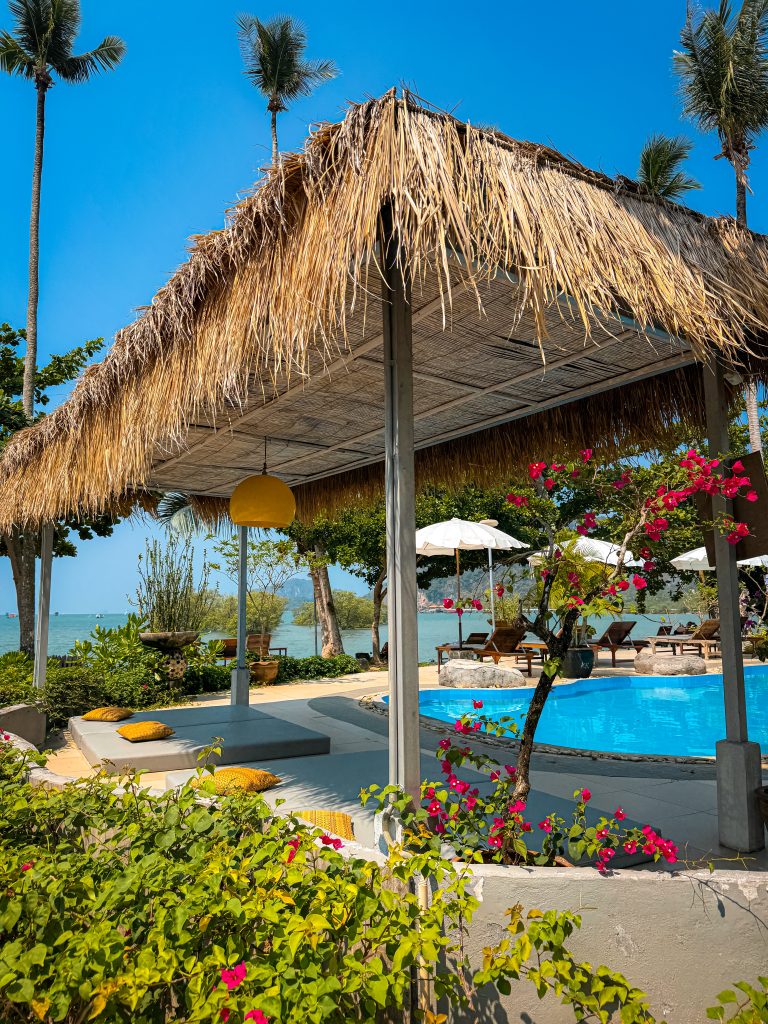
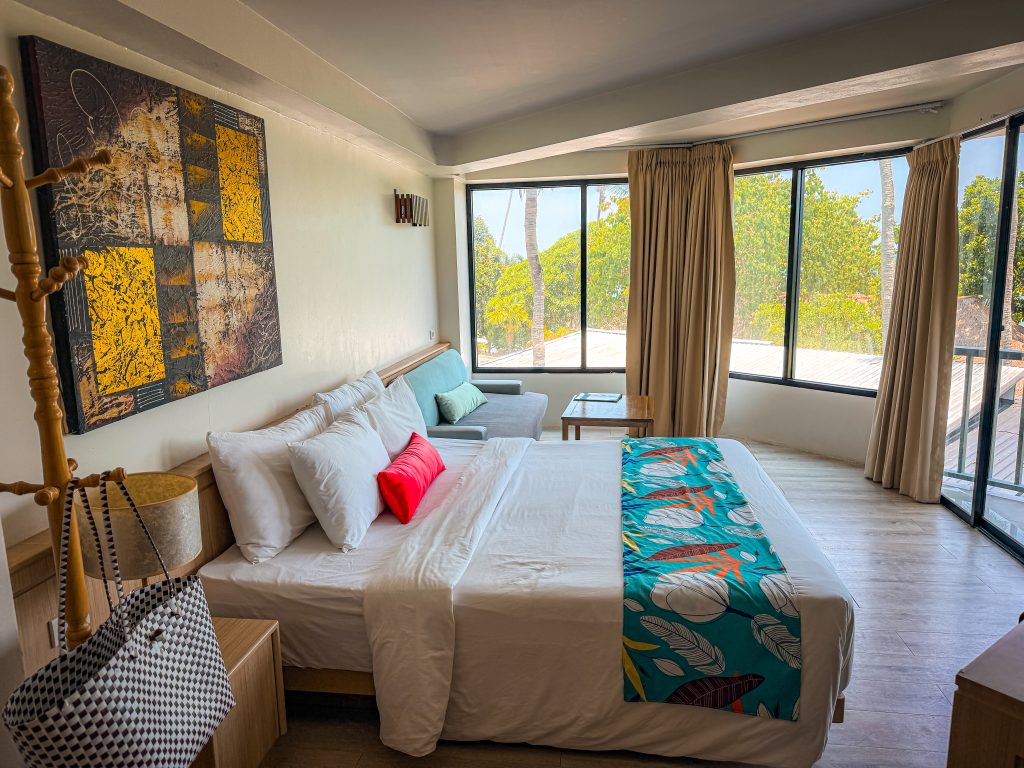
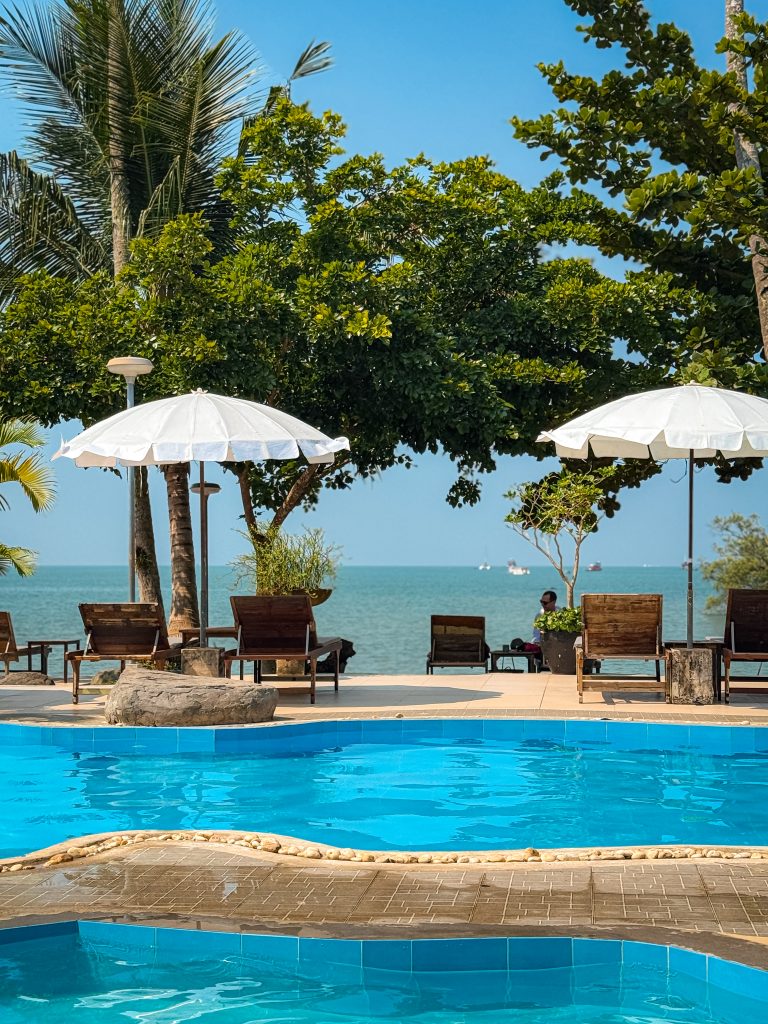
My most expensive hotel room at $50 per night was in a beach front hotel in Krabi. It was a large corner room with expansive sea view. Having access to the beach front pool made it feel extra.
I’ve seen this hotel as low as $22 per night at less busy times of the year.
That is one of the things I love most about budget Thailand travel. You do not always have to sacrifice comfort to stay on a reasonable budget.
Keep in mind, I was traveling during low season so had better deals.
Is Thailand Cheap to Travel Compared to the U.S.?
Yes, Thailand is cheap to travel compared to the U.S. in many of the ways that matter most on a trip.
Hotels are usually better value. Local food is much cheaper. Massages are dramatically cheaper. Domestic transportation can be very affordable. Paid activities often cost less than similar full-day experiences would cost back home.
But not everything is unbelievably cheap.
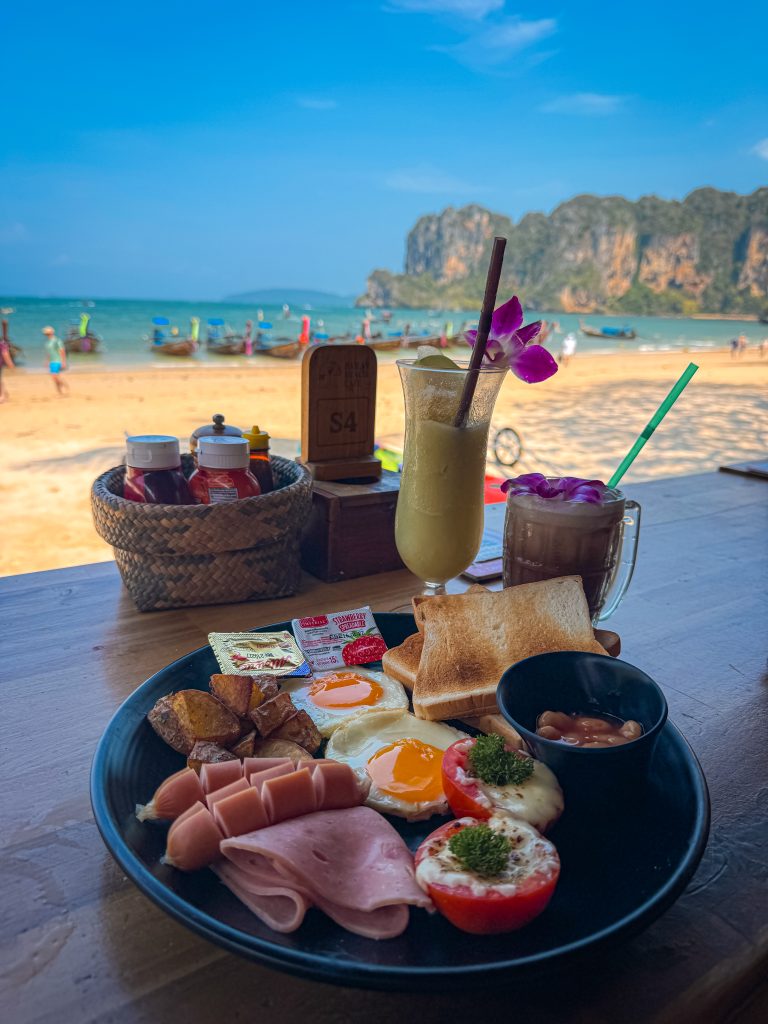
A cute beach cafe with a smoothie, coffee, and full breakfast might cost around $15 USD. That is still cheaper than many similar meals at home, especially with a great view, but it is not “I can eat all day for two dollars” cheap.
Western-style brunch, specialty coffee, rooftop bars, cocktails, boutique hotels, private tours, beach clubs, island hopping tours, and luxury spas can all add up.
The budget magic of Thailand comes from mixing and matching.
Have the $1.50 moo ping and sticky rice at a rest stop because it is delicious. Then maybe spend $25 at an incredible Michelin-star restaurant in Chiang Mai. Walk around a free local market in the morning. Then take a paid cooking class in the afternoon. Stay in a basic private room for most of the trip. Then splurge on one beachfront hotel.
Thailand is cheap if you want it to be. It can also be luxurious if you want it to be. The sweet spot, in my opinion, is somewhere in the middle.
What Makes a Thailand Trip More or Less Expensive?
Your Thailand budget depends on a few major things.
Your Travel Style
A backpacker staying in dorms, eating street food, and taking buses will have a very different budget than someone staying in boutique hotels, eating at restaurants, taking domestic flights, and booking tours.
Neither style is wrong.
The key is knowing which kind of traveler you are for this specific trip.
In 2017, I was a long-term traveler. I moved slower, spent less, and leaned toward free activities.
In 2026, I was on a three-week trip. My time felt more precious, so I was more willing to spend money to save time, feel comfortable, and do the things I really wanted to do.
Your Itinerary
Where you go in Thailand matters.
Northern Thailand, especially Chiang Mai, is generally one of the best areas for budget travelers. You can find affordable hotels, cheap massages, amazing markets, temples, cafes, cooking classes, and tours.
Bangkok can be very budget-friendly if you use public transit, eat local food, and avoid spending too much at malls, rooftop bars, and taxis.
The islands and beach destinations are often more expensive. You may pay more for taxis, beachfront hotels, boat tours, and restaurants in tourist areas.
How Often You Move
Moving around Thailand costs money.
Every flight, ferry, shuttle, taxi, bus, or train adds to your total budget. It can also drain your energy.
If you are trying to travel Thailand on a tight budget, one of the best things you can do is move less often. Instead of trying to see Bangkok, Chiang Mai, Pai, Phuket, Krabi, Koh Phi Phi, Koh Samui, Koh Tao, and Koh Phangan in one trip, choose fewer places and actually enjoy them.
Slow travel usually saves money and feels better.
Your Food Choices
Food can be one of the cheapest parts of traveling Thailand, but it can also quietly become a bigger expense if you are eating Western food, ordering coffee multiple times a day, drinking cocktails, and choosing restaurants in touristy areas.
Street food, local restaurants, night markets, and 7-Eleven meals can keep your food budget very low.
Cute cafes, beach restaurants, hotel breakfasts, smoothie bowls, and cocktails will raise it.
Your Activity Choices
Thailand has so many free and cheap things to do. You can wander markets, visit temples, go to beaches, watch sunsets, explore neighborhoods, and walk through old towns for very little money.
But Thailand also has incredible paid experiences: cooking classes, trekking tours, elephant sanctuaries, diving, boat trips, Muay Thai classes, spa days, retreats, and private tours.
A budget trip does not mean skipping all of them. It means choosing the paid experiences that matter most to you.
Budget Accommodation in Thailand
Budget hotels in Thailand are one of the biggest reasons the country is such a good value destination.
You can find dorm beds for backpacker prices, simple guesthouses for budget travelers, boutique hotels for midrange travelers, and dreamy resorts for far less than you would pay in many other tropical destinations.
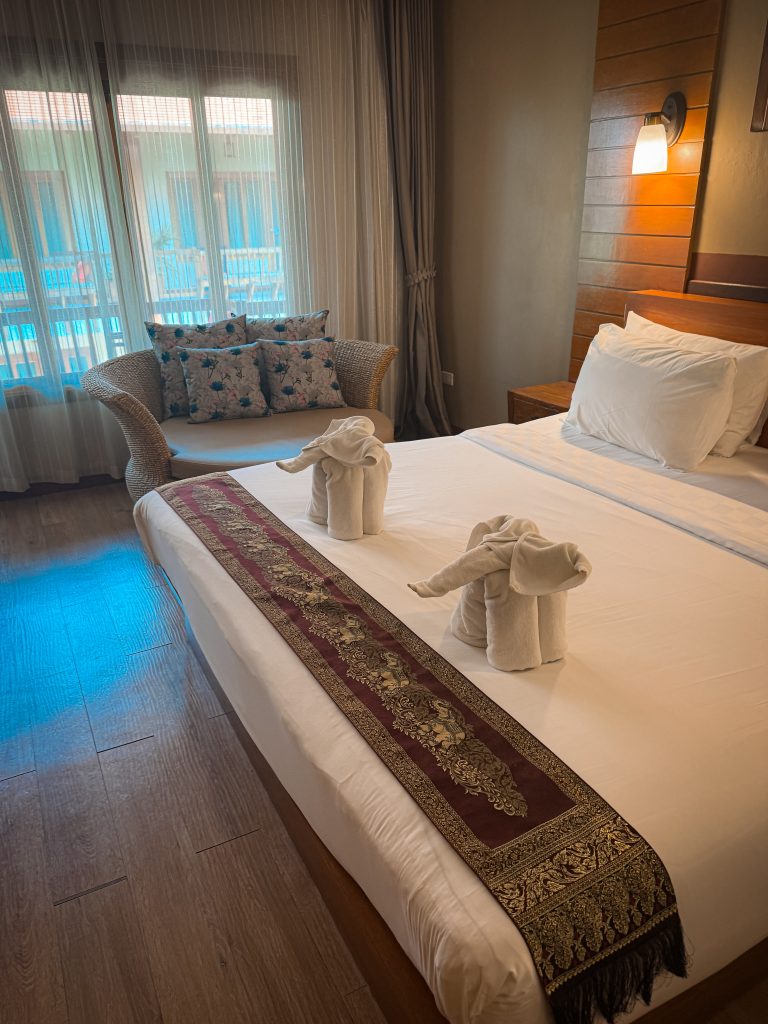
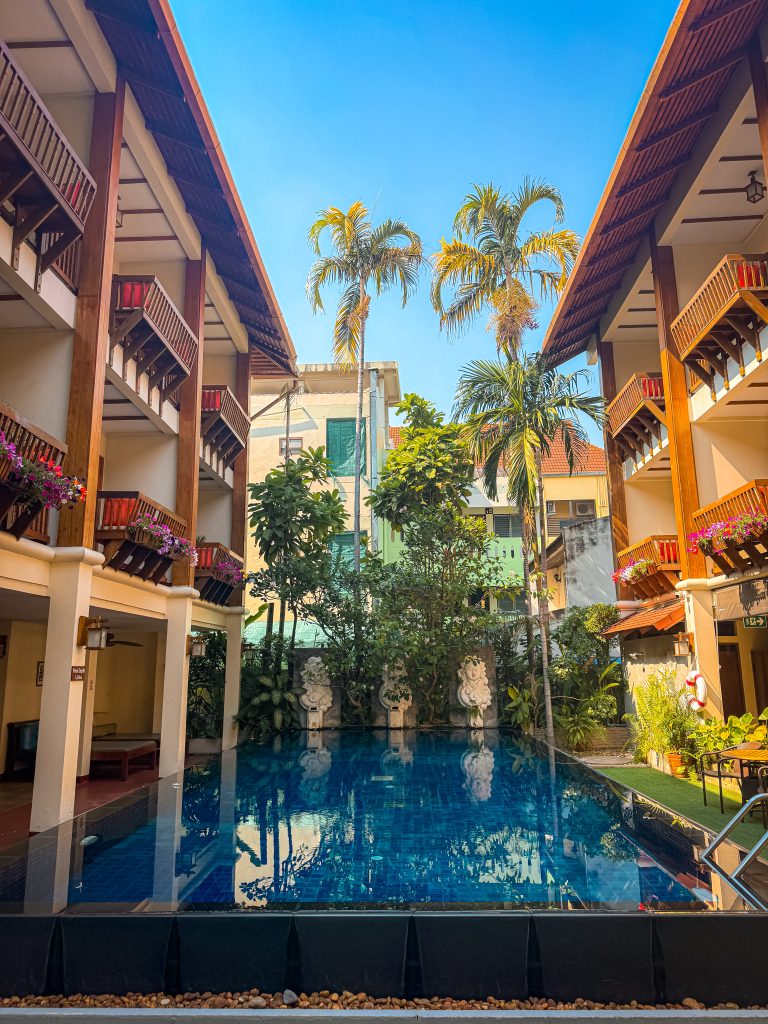
For my 2026 trip, I stayed more on the comfortable midrange side. My hotels were often around $50–$60 per night, and they felt safe, clean, and comfortable. Again, that same price point in the U.S. would often make me nervous. In Thailand, it can feel like a treat.
If you are traveling with someone else, private rooms become an even better value because you can split the room cost.
Types of Budget Accommodation in Thailand
Hostel Dorms
Hostels are the cheapest option and best for true shoestring travelers. If your goal is to spend around $30 per day, dorms will probably be part of your plan.
Hostels can also be great if you are traveling solo and want to meet people.
Private Hostel Rooms
Many hostels also offer private rooms. These can be a nice middle ground if you want the social atmosphere of a hostel but still want your own space.
Guesthouses
Guesthouses are simple, locally run accommodations that are often affordable and full of character. They may not have luxury amenities, but they can be clean, comfortable, and well-located.
Budget Hotels
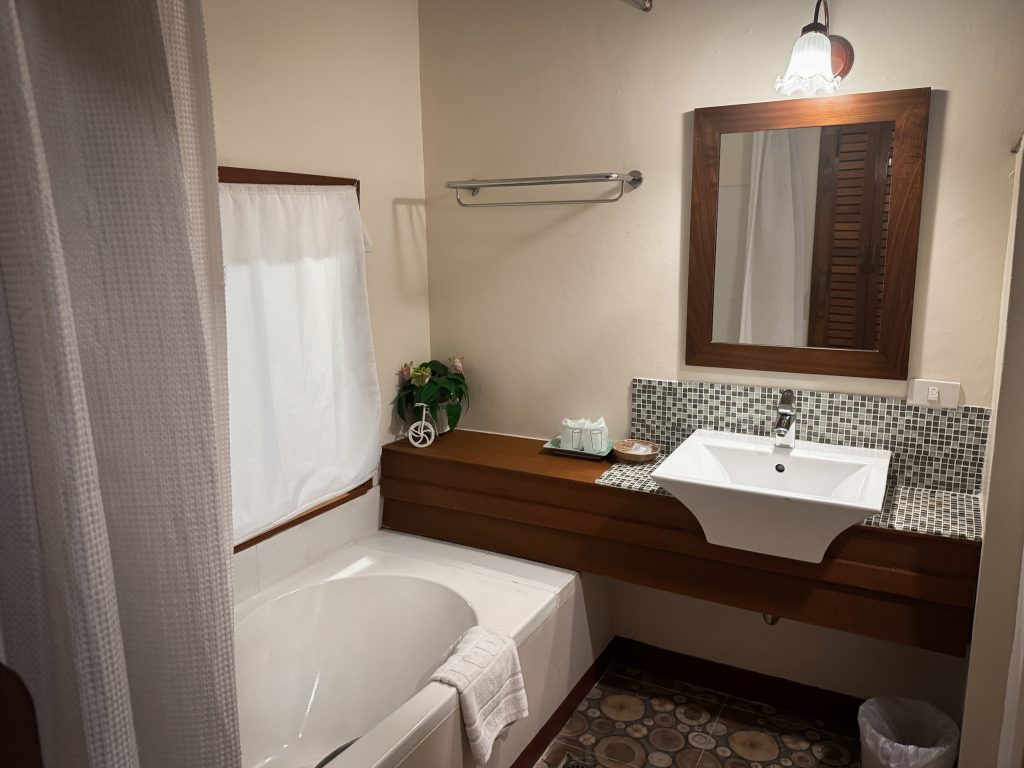
Budget hotels in Thailand can be a fantastic value. You can often find private rooms with air conditioning, private bathrooms, good locations, and a clean, safe feeling.
Boutique and Midrange Hotels
This is my personal favorite category for a shorter trip. Midrange hotels in Thailand often feel much nicer than the price suggests, especially if you are used to U.S. hotel prices.
Beachfront Hotels and Special Stays
Beachfront hotels, jungle retreats, elephant sanctuary stays, and other special accommodations can raise your budget quickly, but they can also make a trip feel unforgettable.
The trick is not necessarily to splurge every night. Choose one or two special stays and keep the rest of your accommodation more budget-friendly.
Airbnb and VRBO
I personally stayed in a lot of these on my long trip in 2017. Having a kitchen made a big difference for my budget.
When to Splurge on Accommodation in Thailand
Even on a budget Thailand trip, I think there are times when spending more on accommodation is worth it. You don’t have to splurge on all of these. My advice, choose one or two areas to splurge.
Splurge at the Beginning of the Trip
The first few days of your Thailand trip are a great time to splurge.
You are fresh off a long international flight. You may be jet-lagged. You might be sweaty, overwhelmed, excited, and exhausted all at once. A quiet, private room with good air conditioning and a comfortable bed feels extra amazing at that point.
Your excitement for the trip is also at a high when you first arrive, so the treat feels special.
Splurge on One Beachfront Stay
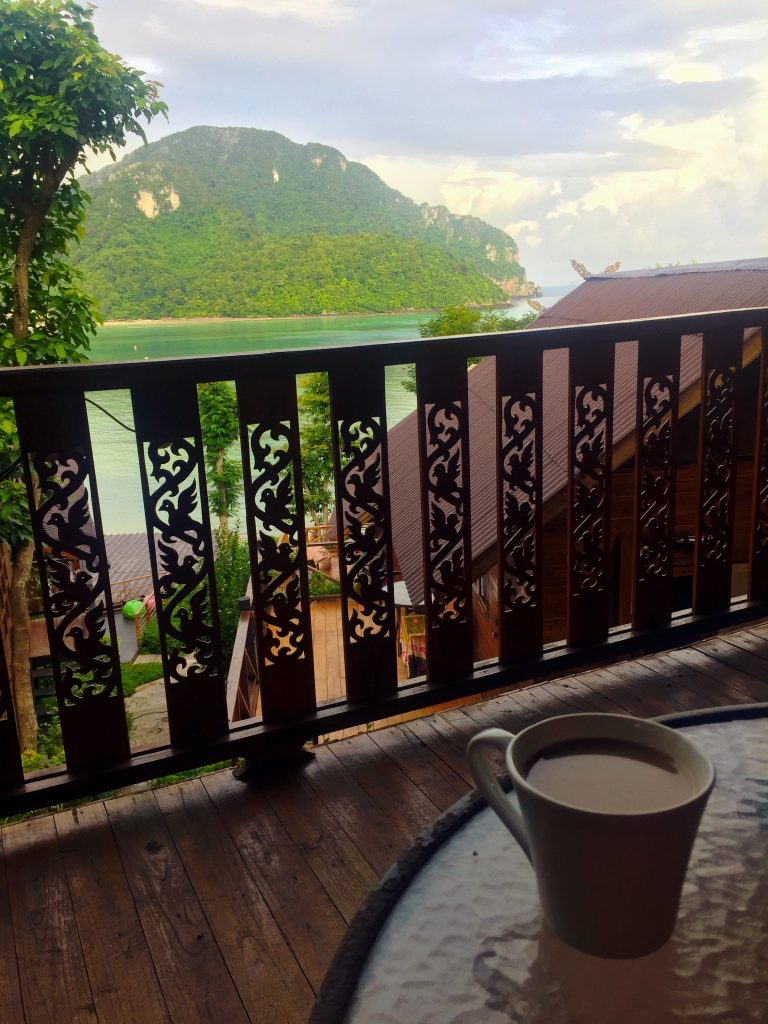
If your budget allows, consider choosing one beachfront hotel or special beach stay during your trip.
You do not have to stay beachfront the entire time. Even one or two nights can make the trip feel more luxurious.
Wake up near the water. Have coffee with a view. Walk straight to the beach. Take it slow.
That kind of splurge can be worth more than several smaller random purchases.
Splurge on Something Unique
Another good place to splurge is on something extra special and specific to Thailand, like staying at an elephant sanctuary in the north, choosing a beautiful boutique hotel in Chiang Mai, or booking a unique jungle or mountain stay.
One or two “wow” accommodations can make a budget trip feel much more luxurious without turning the whole trip into a luxury budget.
Upgrade on the Last Night
Depending on the length of your trip, the last night can also be a good time to upgrade to at least a private room.
For me, I am often more tired at the end of a trip. The last day or two, my thoughts start turning toward going home. I would not necessarily save the coolest accommodation of the entire trip for the last night, but comfort matters when you know you are about to get on an exceptionally long international flight.
A good shower, a quiet room, and an easy airport transfer can feel priceless.
Budget Accommodation Tips for Thailand
Check the Location on Google Maps
Always check your hotel location on Google Maps before booking.
Look at how close it is to the things you actually want to do in that destination. A cheaper hotel on the outskirts of town may look like a great deal, but if you have to pay for transportation every day, it may end up costing more than staying somewhere central.
Sometimes spending a little more for a walkable location saves money overall.
Compare Hotel Price With Transportation Costs
A $30 hotel that requires two Grab rides per day might not be cheaper than a $45 hotel where you can walk everywhere.
This is especially important in beach destinations, where transportation can be more limited and more expensive.
Travel in Low Season or Shoulder Season
Accommodation can be cheaper in low season, and you may have more options available. Just pay attention to weather patterns, especially if you are planning island or beach time.
Move Less Often
Staying longer in one place does not only help your budget because of hotel rates. The bigger savings often come from spending less on transportation between cities, islands, and regions.
Every relocation has hidden costs: airport transfers, taxis, ferries, snacks, baggage fees, and the lost time that could have been spent enjoying the destination.
Read Recent Reviews
Look for recent reviews that mention cleanliness, safety, noise, air conditioning, Wi-Fi, location, and staff. A cheap room is not a deal if you cannot sleep or do not feel comfortable.
use Airbnb to stretch your budget
Airbnb can also be a great option for budget Thailand travel, especially if you’re staying somewhere for more than a night or two and want a little more space than a hotel room.
I didn’t stay in any Airbnbs on my 2026 trip, but I stayed in a lot of them during my three-month Thailand trip back in 2017. They were a big part of how I kept my longer trip affordable.
Even now, I’ve found private houses in Krabi on Airbnb for as little as $22 per night.
Not every house will be priced that low, of course. You’ll still want to check cleaning fees, location, reviews, and whether transportation costs will eat up the savings.
Airbnb can be especially worth checking if you’re traveling with your partner or friends. Splitting the cost of a private house or apartment can make it cheaper per person than booking separate hotel rooms.
Having a kitchen or kitchenette can help you save on food costs. Even if you don’t cook much on vacation, eating breakfast at home or actually heating up your leftovers from dinner the night before can help stretch your Thailand travel budget.
How to Eat in Thailand on a Budget
Food is one of the greatest joys of traveling Thailand, and it can also be one of the easiest places to save money.
You can eat incredibly well on a budget if you lean into Thai food, street food, markets, and local restaurants.
Thailand is not the place to be afraid of local food. This is where the magic is.
Street Food in Thailand
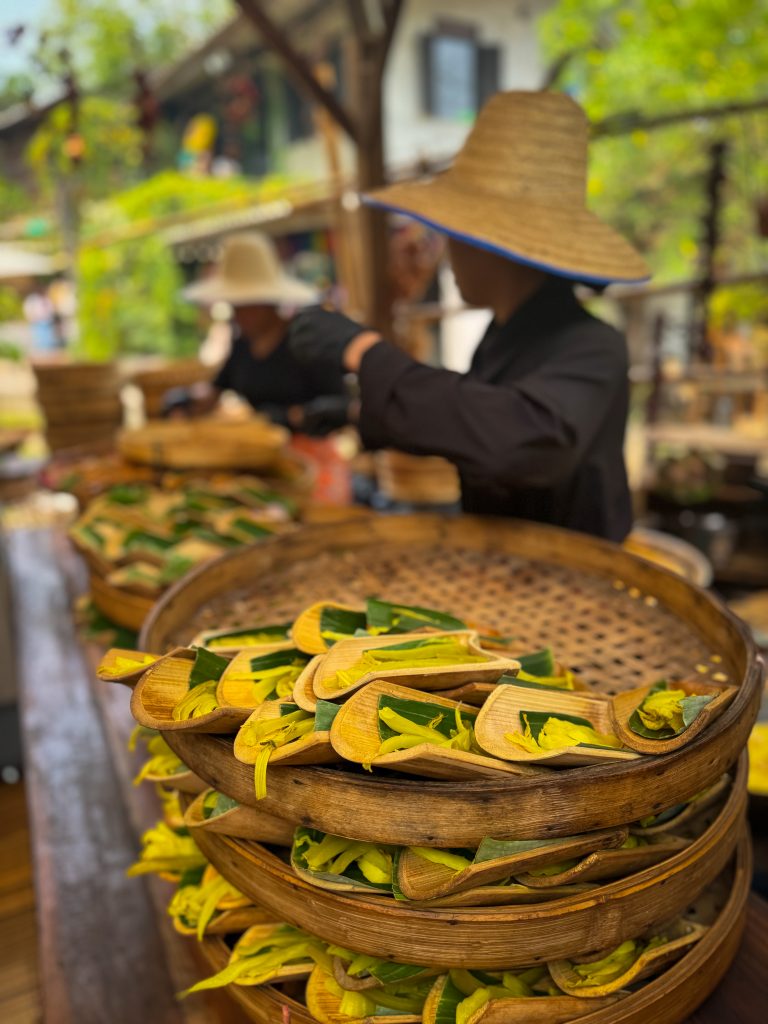
Street food is one of the best parts of budget Thailand travel.
You can find grilled meats, noodle soups, stir-fries, fresh fruit, Thai omelets, mango sticky rice, skewers, curries, roti, smoothies, and so many things you may not even recognize yet.
One of my favorite cheap snacks from bus rest stops and vendors was moo ping with sticky rice. Moo ping is grilled pork on skewers, usually a little sweet, smoky, salty, and so delicious. I paid around 50 baht, or about $1.50 USD, for a decent-sized snack.
That is exactly the kind of budget travel food I love. It is cheap, easy, filling, and genuinely something I want to eat.
Local Markets and Night Markets
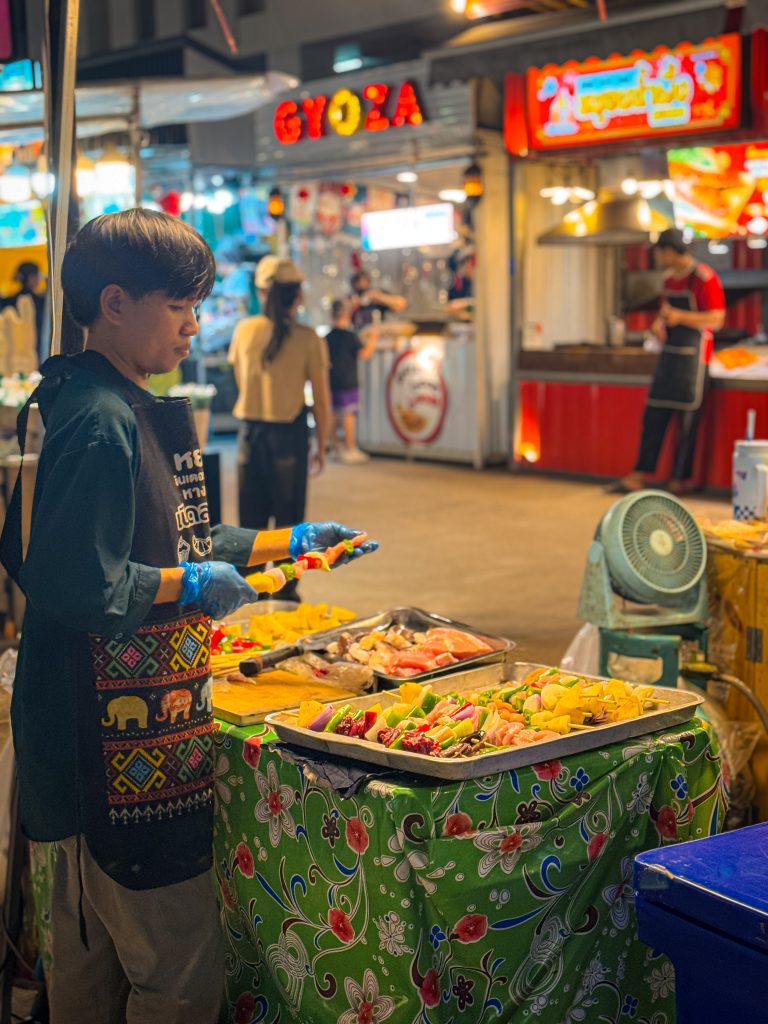
Markets are one of the best ways to eat cheaply in Thailand.
Night markets are especially fun because you can try a little bit of everything. They are also a great option if you are traveling with other people because everyone can choose what they want.
Some night markets are clearly designed for travelers. They are still fun, but prices may be a little higher.
Other markets are much more local. These are often my favorite.
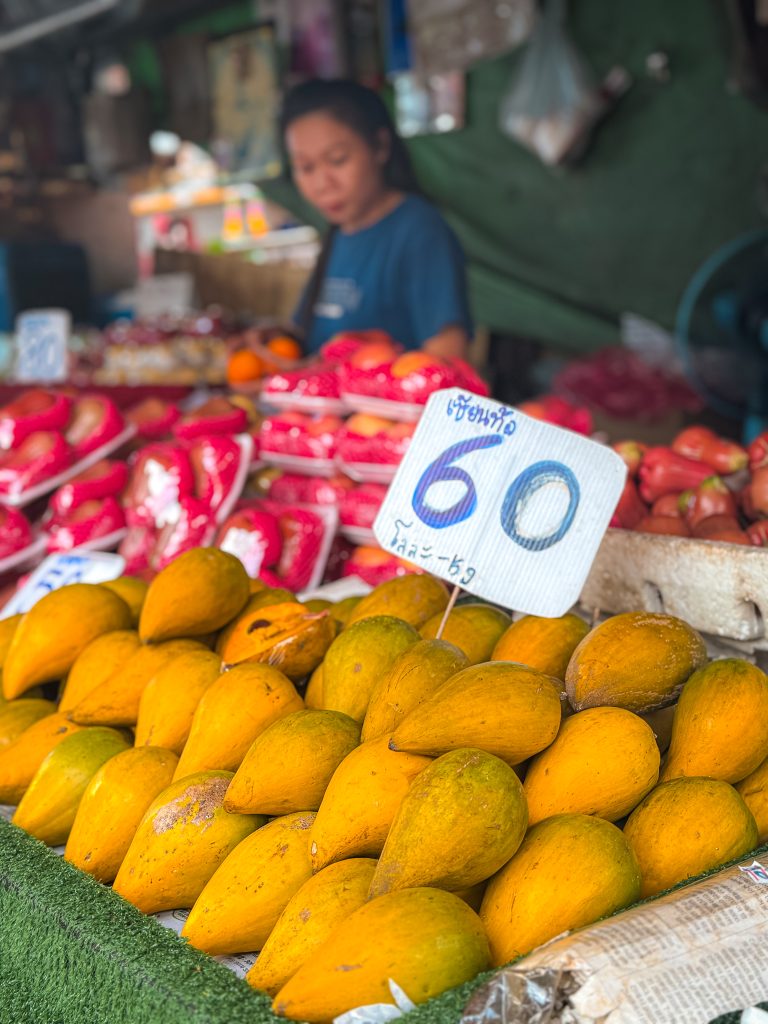
In Chiang Mai, I walked around a flower market and produce market where I did not see a single tourist the entire time. It was clearly where locals shopped. I used pointing, gesturing, and Google Translate so I could try local fruits I had never tried before, including tamarind.
You may also see locals lining up for dinner at their favorite stalls. They are not “locals only” because you are not allowed to eat there. They are “locals only” simply because most travelers never even know they exist.
Those are the places where Thailand starts to feel extra special.
Restaurants in Thailand
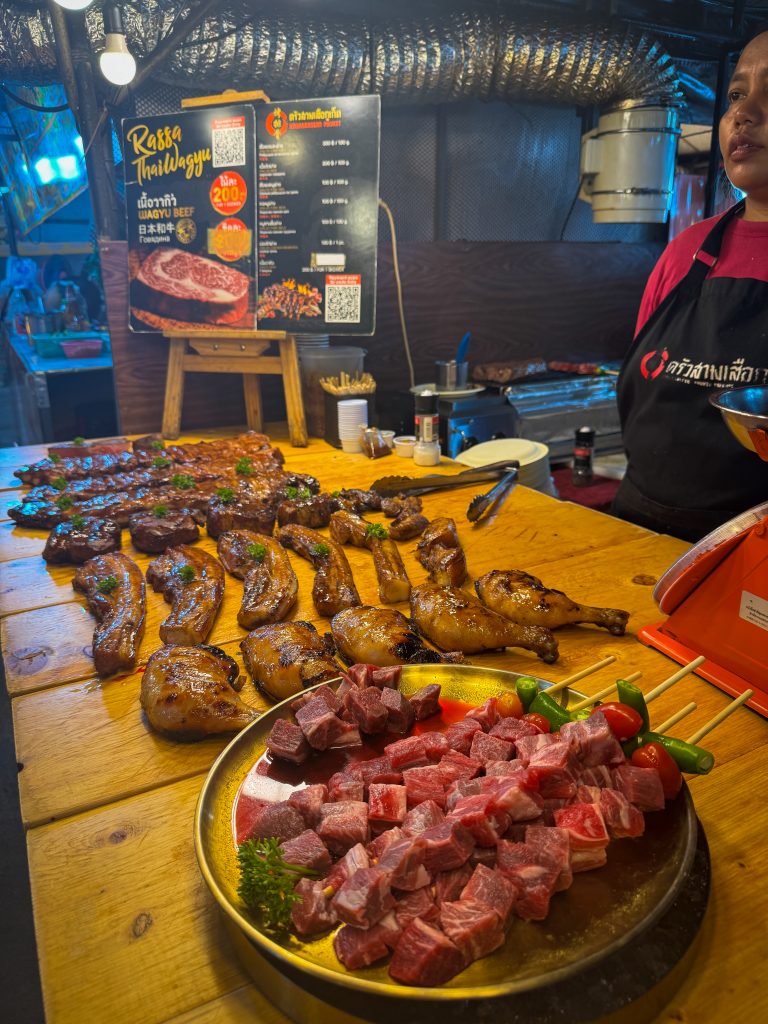
Restaurants in Thailand are generally cheaper than restaurants in the U.S., but do not expect every restaurant to be a tiny fraction of what you would pay at home.
In touristy beach towns, restaurant prices can feel higher, and it can be trickier to find the true local spots. Getting out of the most touristy areas often gives you way cheaper options at both restaurants and markets.
Even so, I had some amazing restaurant meals for prices that felt like a steal compared to the U.S.
One of my favorite examples was a Michelin-star restaurant in Chiang Mai where I paid the equivalent of about $25 USD per person. I went with all the girls from my aerial arts retreat, and each of us picked one plate for the table to share. We all ordered whatever we wanted to drink individually.
Because we went in a big group and ate family style, I got to try way more dishes than I would have otherwise. A similar meal in the U.S. would have cost a fraction? No. It would have cost so much more.
That meal felt like one of those perfect Thailand budget travel moments: not the cheapest meal of the trip, but incredible value for the experience.
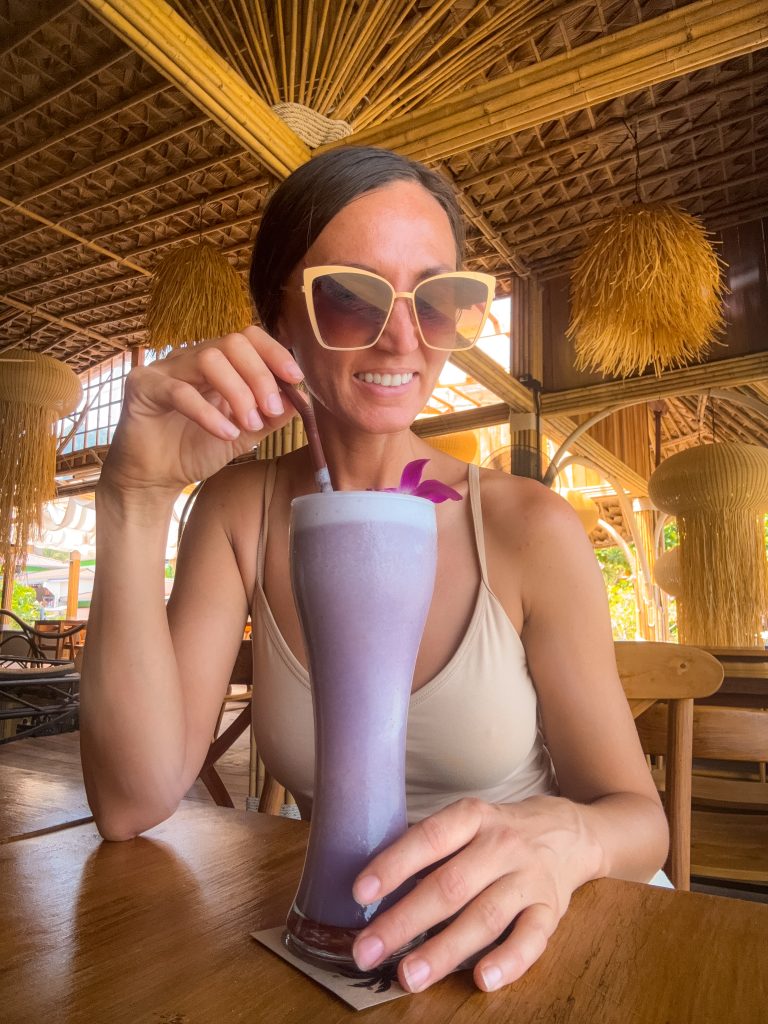
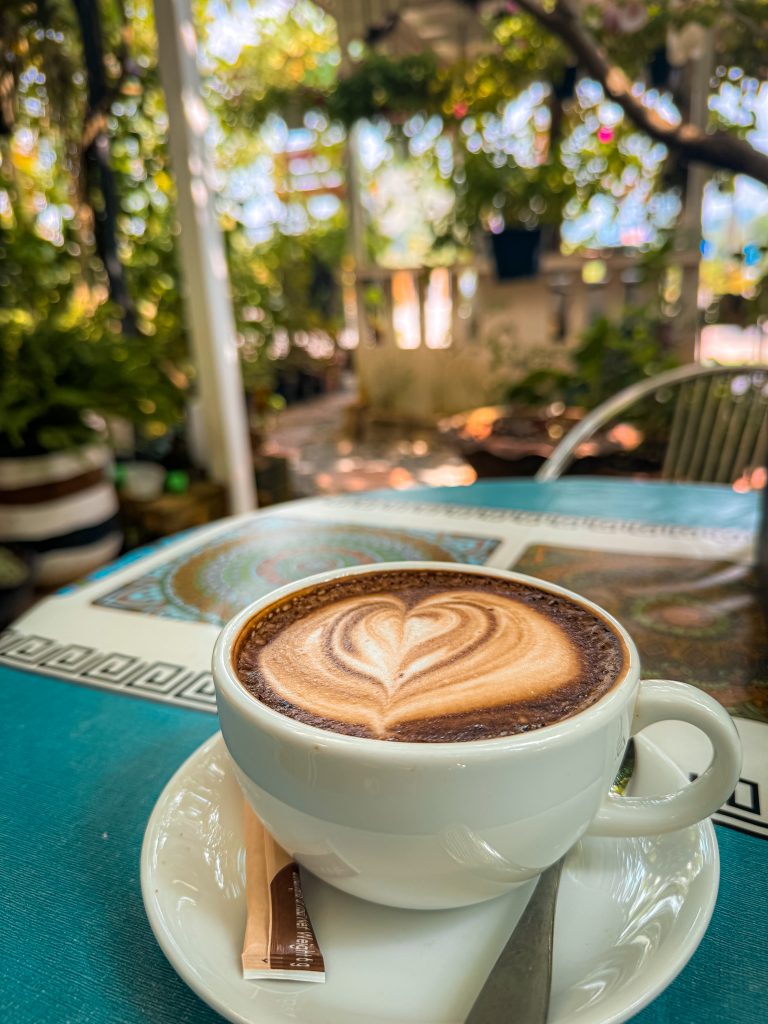
Coffee and Smoothies in Thailand
Coffee and smoothies are affordable in Thailand, but they can sneak up on your budget if you buy them constantly.
I generally paid anywhere from 50–200 baht for coffee. The more expensive side was usually at places like airports, specialty cafes, or high-tourist areas.
Smoothies tended to be in a similar range.
A smoothie here and a coffee there might not seem like much, but if you are on a tight budget, those extras add up quickly.
That said, I love a good coffee shop. I do not think budget travel has to mean skipping every little joy. Just be aware of how often you are doing it.
7-Eleven for more than just snacks in Thailand
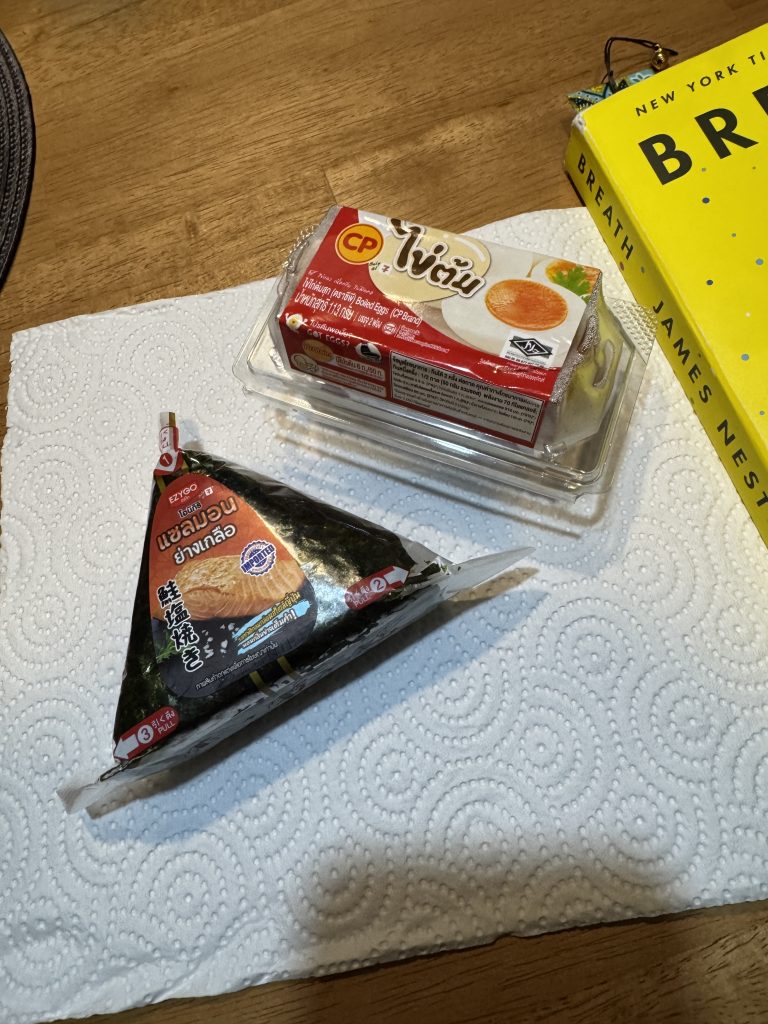
7-Eleven in Thailand is iconic for a reason.
It is not just a place to buy bottled water. You can get snacks, quick meals, breakfast, coffee, toiletries, sunscreen, electrolyte drinks, and random little things you did not know you needed.
My local friend and her husband get hard-boiled eggs and onigiri, which are Japanese rice balls, from 7-Eleven for breakfast every day. This is what I ate while staying with them in Bangkok.
It is a great option when you have an early tour, a travel day, or you simply do not feel like sitting down at a restaurant.
Don’t sleep on 7-Eleven for quick and cheap meals on the go.
Thailand Food Budget Tips
- Eat Thai food most of the time.
- Try street food and local markets.
- Look for busy stalls with high turnover.
- Use 7-Eleven for quick breakfasts, snacks, and travel day meals.
- Watch how much you spend on coffee, smoothies, and cocktails.
- Get away from the most touristy beach restaurants when possible.
- Share dishes with a group when you can.
- Splurge selectively on meals that feel truly special.
- Carry small bills for markets and street food.
- Try local fruits and snacks you have never had before.
Transportation in Thailand on a Budget
Transportation in Thailand can be very affordable, but your choices matter.
You can save money with buses, trains, ferries, songthaews, public transportation, and slower travel. You can save time with domestic flights, Grab, private transfers, and scooters.
The best transportation choice depends on your budget, time, comfort level, and itinerary.
Domestic Flights in Thailand
Domestic flights can be surprisingly affordable in Thailand, especially if you book ahead and you travel light (aka carry on only).
On my 2026 trip, I took three domestic flights:
- Bangkok to Chiang Mai
- Chiang Mai to Krabi
- Krabi to Bangkok
My domestic flights ranged from about $35–$86 per flight.
Could buses or trains have been cheaper? Yes, in some cases. But with only three weeks, flying helped me maximize my time.
That is an important budget travel lesson: the cheapest option is not always the best value.
If you have three months, a night bus might make sense. If you have two or three weeks, a $50 flight that saves you an entire day can be worth it.
Flying In and Out of Bangkok
For my trip, flying both in and out of Bangkok was more cost-effective than flying directly into Chiang Mai or flying out of Chiang Mai.
Even with buying a domestic flight from Bangkok to Chiang Mai, it still made more sense for my overall budget.
When planning your trip, compare multiple options:
- Round trip to Bangkok
- Multi-city flights into Bangkok and out of Chiang Mai or Phuket
- Flying into Bangkok and buying domestic flights separately
- Flying into Phuket or Chiang Mai directly
Do not assume the most direct route is the cheapest. Also factor in baggage fees, airport transfers, and total travel time.
Night Buses and Trains
Night buses can be a great way to save money because they combine transportation and one night of accommodation.
If you sleep well on buses, this can be a smart budget move. You travel while you would otherwise be sleeping and wake up in a new place.
The downside is comfort. If you arrive exhausted and lose the whole next day recovering, it may not feel worth it.
Night trains can be a more comfortable and memorable option, depending on the route and ticket class.
Ferries and Boats in Thailand
Ferries are common for island and coastal travel, and they are often reasonably priced. In 2017 I did much more coastal travel between islands and found the ferries to be easy and affordable. This year
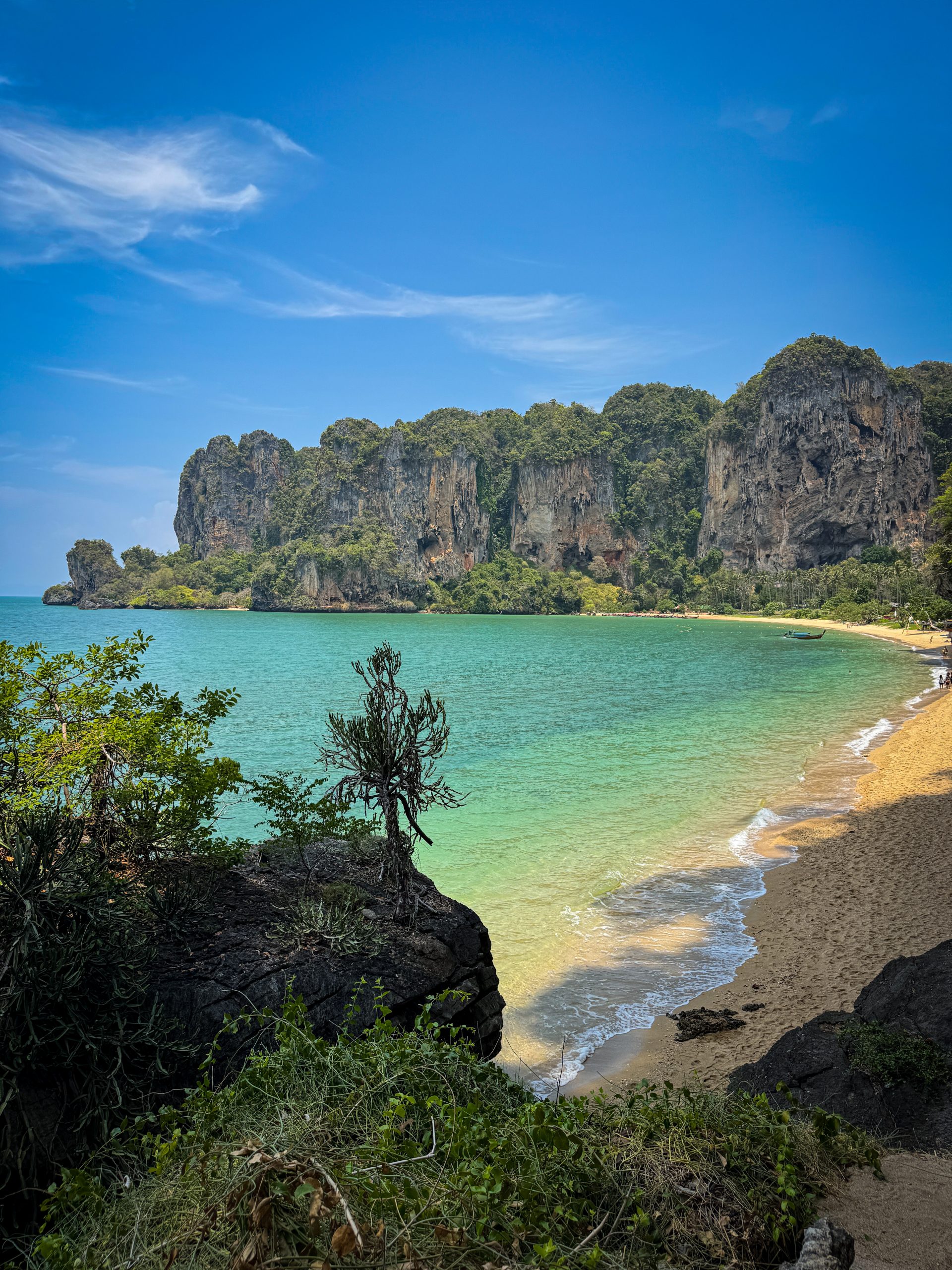
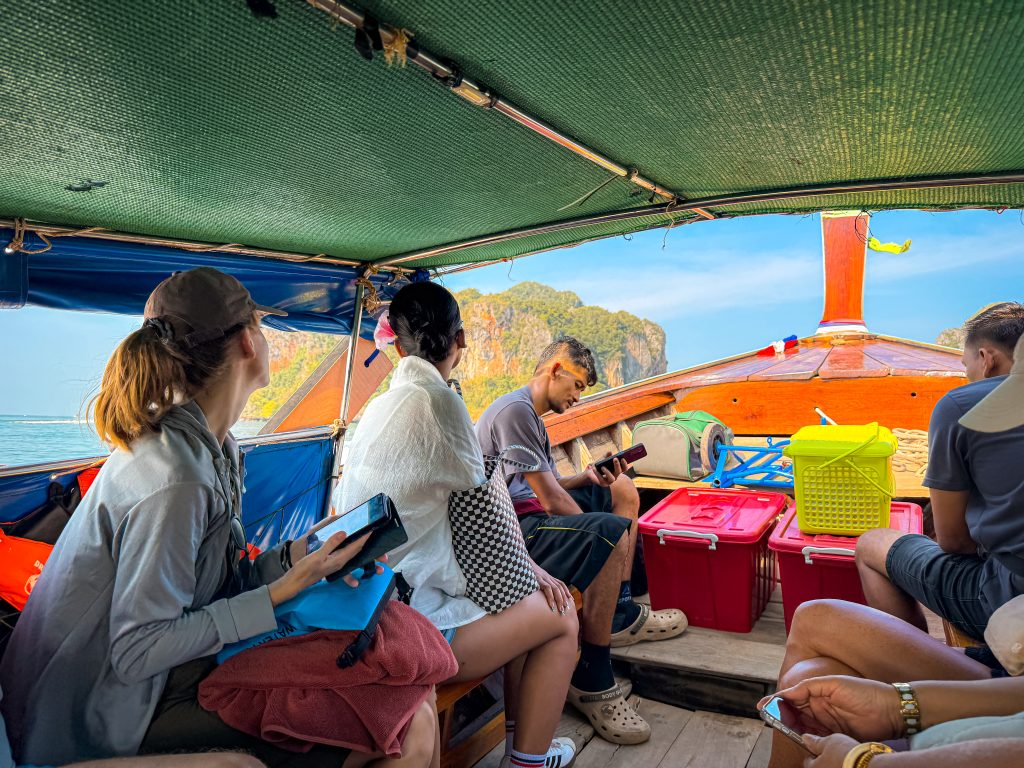
In Krabi, I paid 200 baht, or about $6 USD, for a round-trip longtail boat ferry to and from Railay.
You can certainly pay much more for an island tour on a longtail boat, or even a private luxury longtail boat tour, but this was an area where I chose the budget option.
I still got the experience of taking the boat, but then I could spend my day exploring Railay at my own pace instead of being rushed around on an island-hopping tour.
That is one of my favorite budget travel strategies: choose the cheaper version of the experience when it gives you most of what you actually wanted.
Grab in Thailand
I used Grab frequently on my trip, and it was very affordable.
Grab works a lot like Uber. You can use it to call a car or scooter taxi in many places, and you can also order food through the app if you are completely exhausted after a day of exploring.
For me, Grab was especially helpful when I was tired, carrying bags, traveling solo, or going somewhere that was not easy to reach on foot.
It is not always the absolute cheapest option, but it can be convenient, safe-feeling, and still very budget-friendly compared to U.S. rideshare prices.
Bangkok Public Transportation
Bangkok has affordable public transportation, including the BTS Skytrain and MRT metro.
This is one of the best ways to save money in Bangkok because traffic can be intense, and taxis or Grab rides can take longer than expected.
If you are staying in Bangkok, look at whether your accommodation is near a BTS or MRT station. A hotel near public transit can save you time, money, and stress.
Songthaews in Thailand
Songthaews are trucks with two rows of benches in the back. They can function as a public bus, shared taxi, private taxi, or tour transportation depending on the situation.
Generally, if a songthaew is functioning like a public bus and has room, you can wave at the driver and they may stop for you.
Fares are per person and can be less than $1.
The tricky part is knowing whether it is going where you want to go. You can try asking another passenger for advice. If you ask the driver, he may offer you a price as a taxi to take you directly there, which will usually cost much more than riding it like a public bus.
Also, do not expect every songthaew to stop for you. Some are used for private tours or hotel shuttles.
The beach hotel I stayed at in Krabi had a songthaew as a free shuttle to and from Ao Nang several times per day, which was a great little budget perk.
Airport Transfers in Thailand
Airport transfers in Thailand can be very affordable, but prices vary by destination and whether you take shared or private transportation.
I paid 150 baht in both Chiang Mai and Krabi.
In Chiang Mai, that was for a private taxi and a short ride to the Old Town area where I was staying.
In Krabi, 150 baht was for a shared shuttle that took about 30 minutes to get me from the airport to my beach hotel.
If you have a very early flight, it may be worth paying a bit more for a private transfer from your hotel back to the airport. There may not be as many shared options at those times, so budget accordingly.
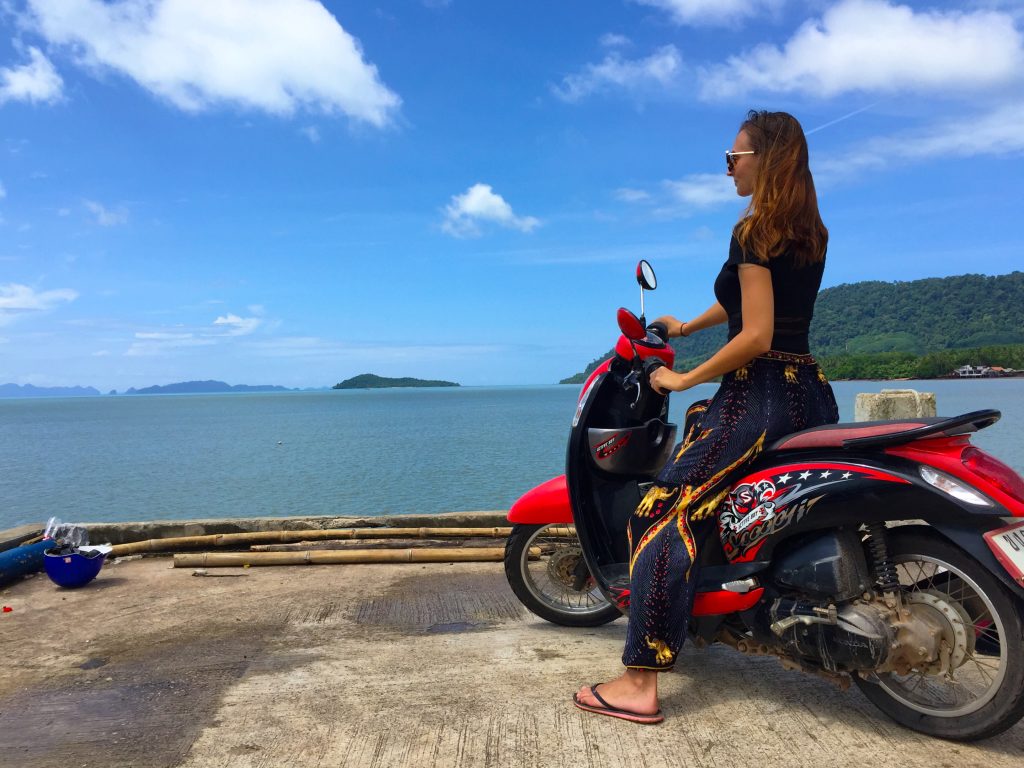
Renting a Scooter in Thailand
Renting a scooter can be one of the cheapest ways to get around Thailand, but this is not an area where I recommend being casual.
The rules of traffic at home do not apply the same way in Thailand. People pass on all sides, which made it feel hard to predict. Traffic felt more aggressive to me, especially in the big cities.
I personally only rented a scooter for a few days in Krabi. I paid $7 per day for the size scooter I picked.
Even there, I still felt a little nervous, but traffic was way more chill compared to Chiang Mai or Bangkok.
I did not feel comfortable renting one in the big cities.
If you rent a scooter:
- Wear a helmet.
- Make sure you are legally allowed to ride.
- Check whether your travel insurance covers scooter accidents.
- Take photos of the scooter before leaving.
- Do not ride if you are not confident.
- Do not ride after drinking.
- Remember that cheap transportation is not worth getting hurt.
Cheap Travel Insurance for Thailand
Travel insurance may not be the most exciting part of planning a Thailand budget trip, but it is one of the smartest.
It is always cheaper to buy an insurance policy than to be caught off guard by an unexpected expense while traveling.
Thailand itself may be affordable, but emergencies are not.
Travel insurance is especially important if you plan to ride scooters, go island hopping, do adventure activities, take domestic flights, check bags, or travel for several weeks.
Before buying any policy, read the details carefully. Pay attention to medical coverage, emergency evacuation, lost luggage, trip delays, and whether scooter or motorbike accidents are covered.
The cheapest policy is not always the best policy if it does not cover what you actually need.
Cheap Things to Do in Thailand
There are so many cheap things to do in Thailand that your trip can feel full even without spending a fortune on tours.
The key is to mix free wandering with a few paid experiences that feel really worth it.
Get a Thai Massage
Massages are one of the best-value activities in Thailand.
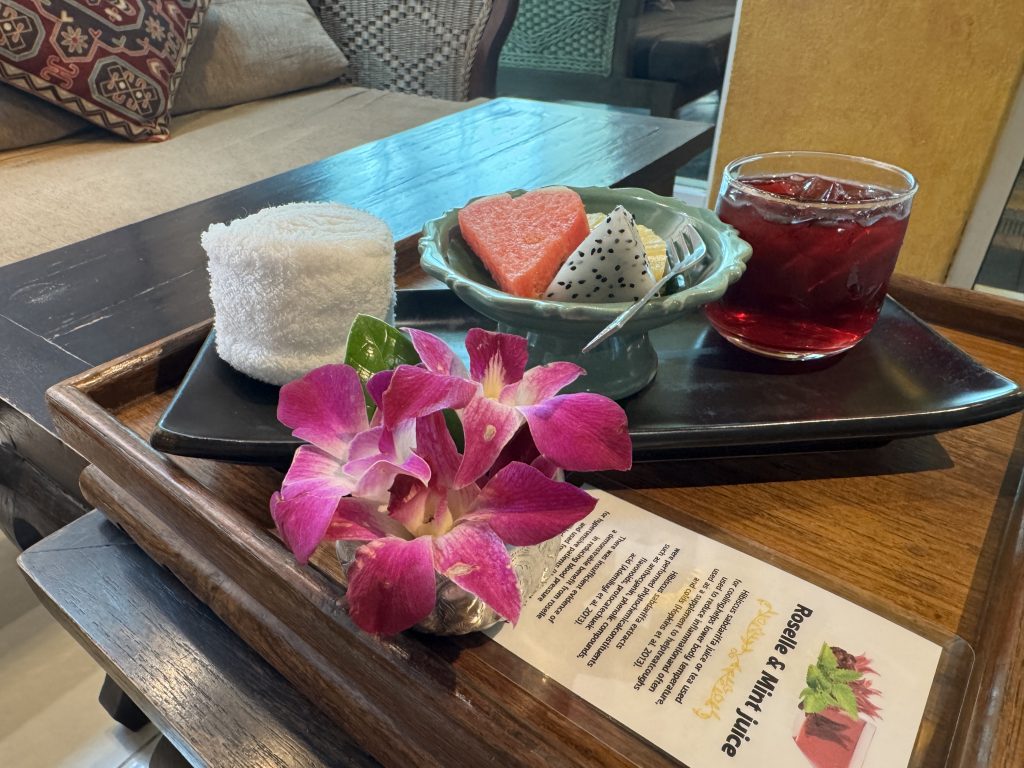
Basic Thai massages can start around 300 baht for an hour, or about $9 USD.
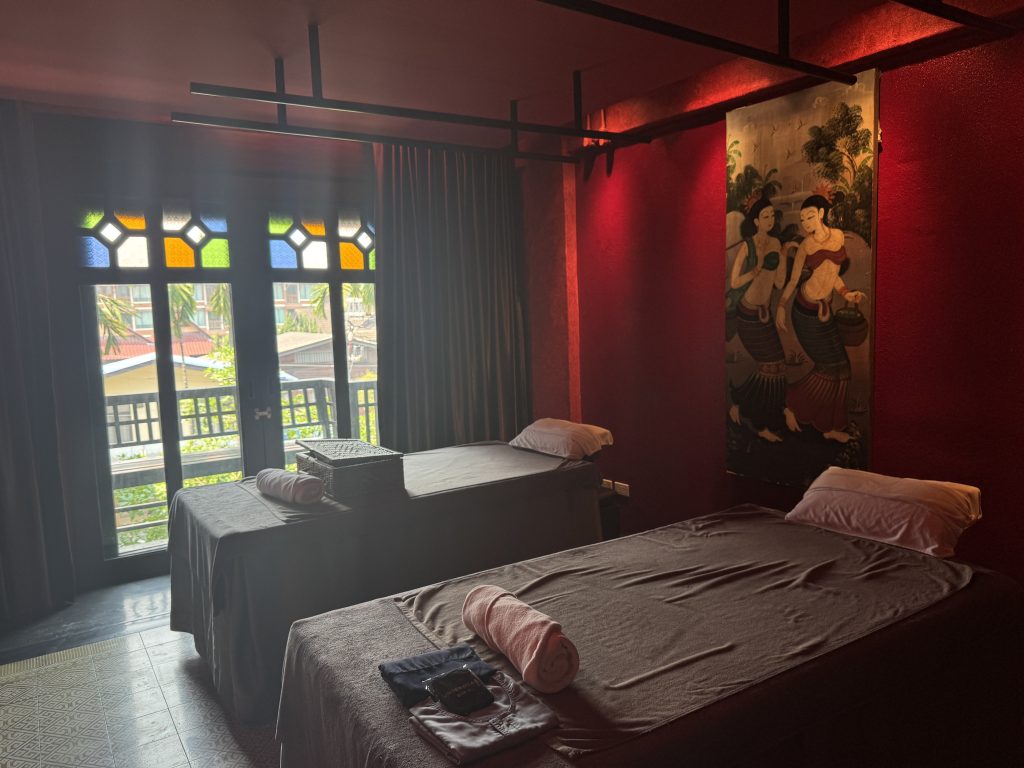
Nicer spas cost more, but they are still often much cheaper than a similar experience would be in the U.S.
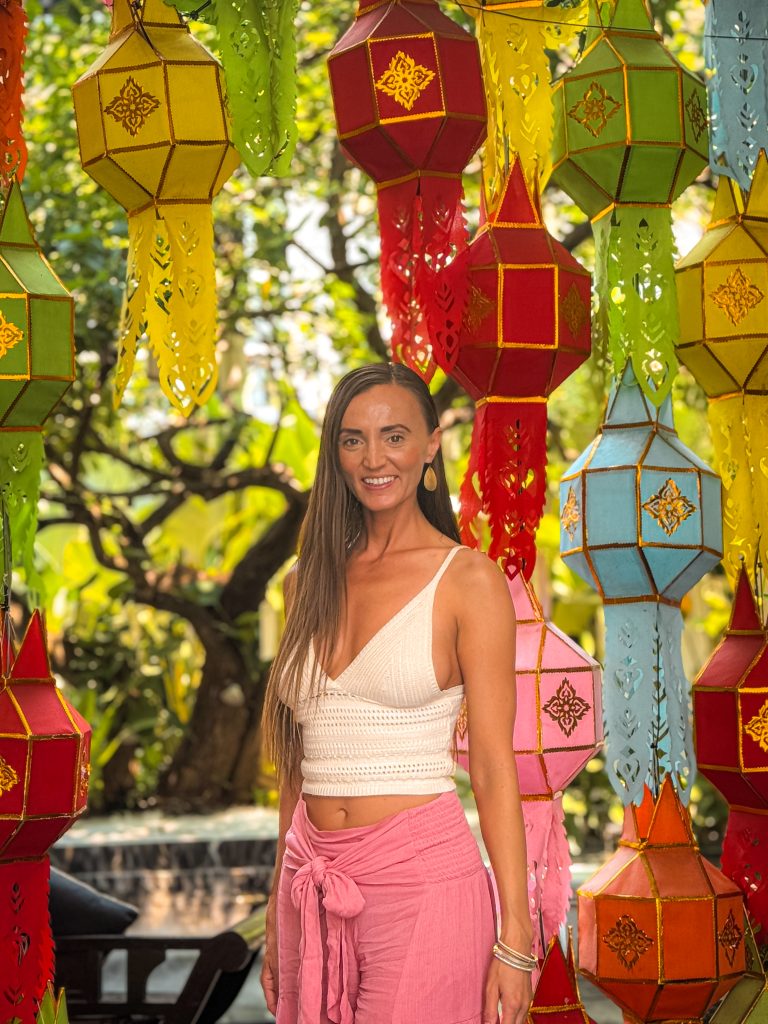
In Chiang Mai, I got a two-hour massage at a luxury spa for less than $60 USD. That is not the cheapest massage you can find in Thailand, but it felt like an incredible value for the experience.
If you are on a tight budget, go for the basic massage.
If you have room for a splurge, choose one nicer spa experience.
Either way, massage belongs in the Thailand budget travel conversation because it is one of those things that can make a trip feel luxurious without totally wrecking your budget.
Take a Thai Cooking Class
A cooking class is one of my favorite activities to recommend in Thailand.
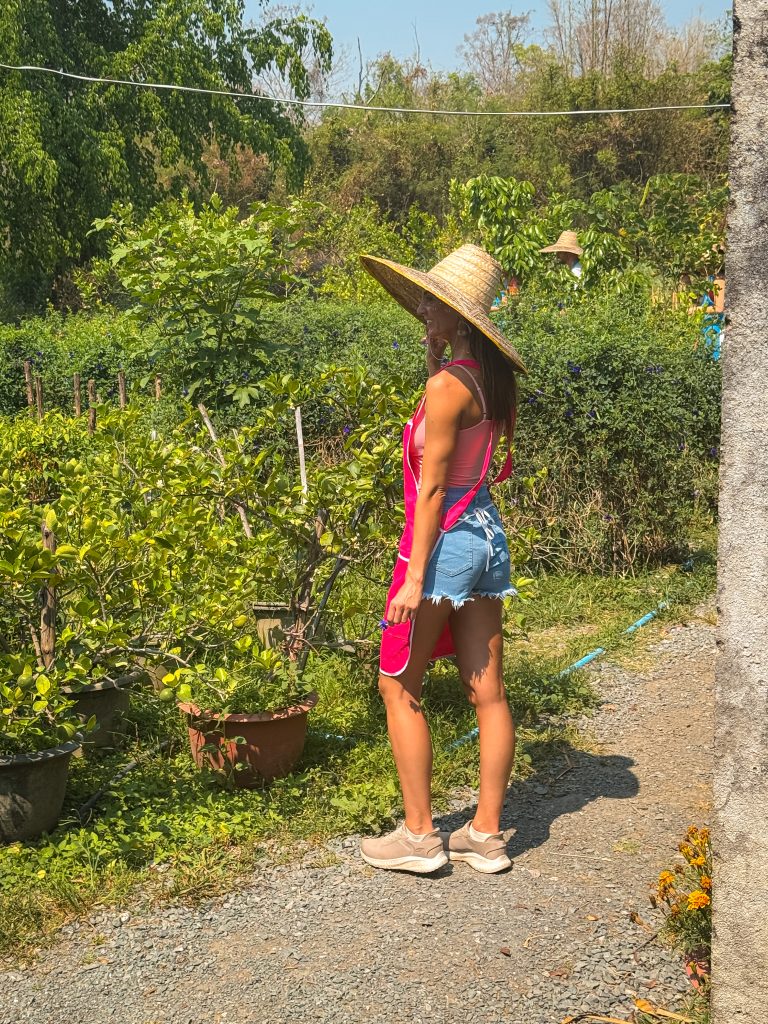
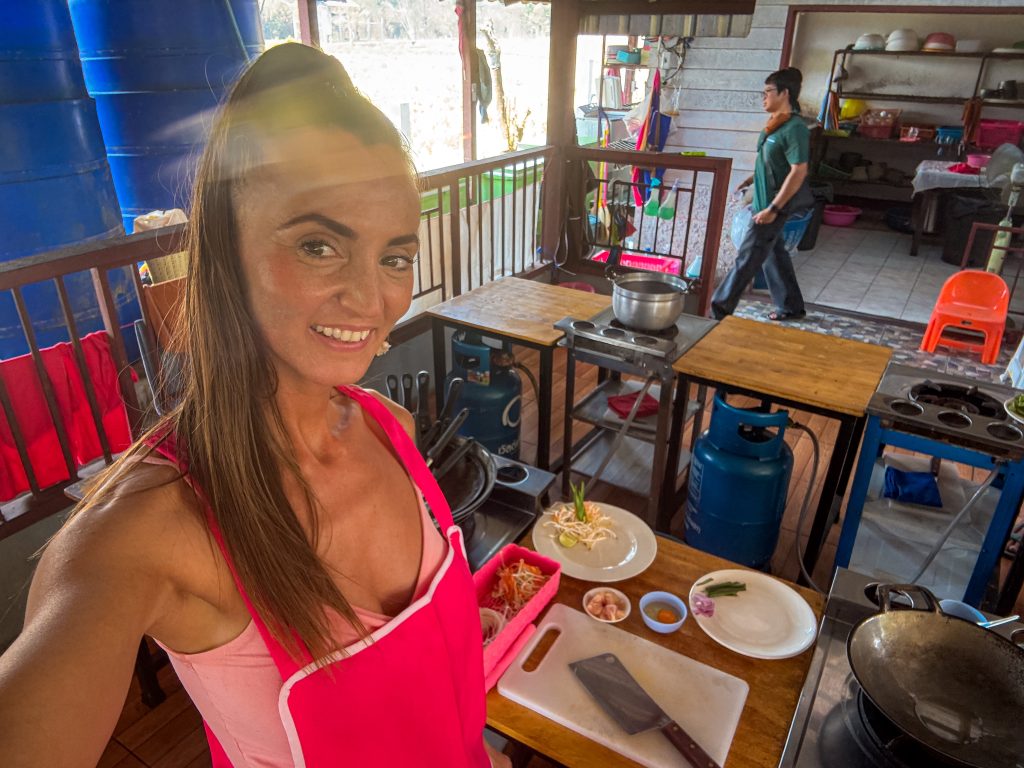
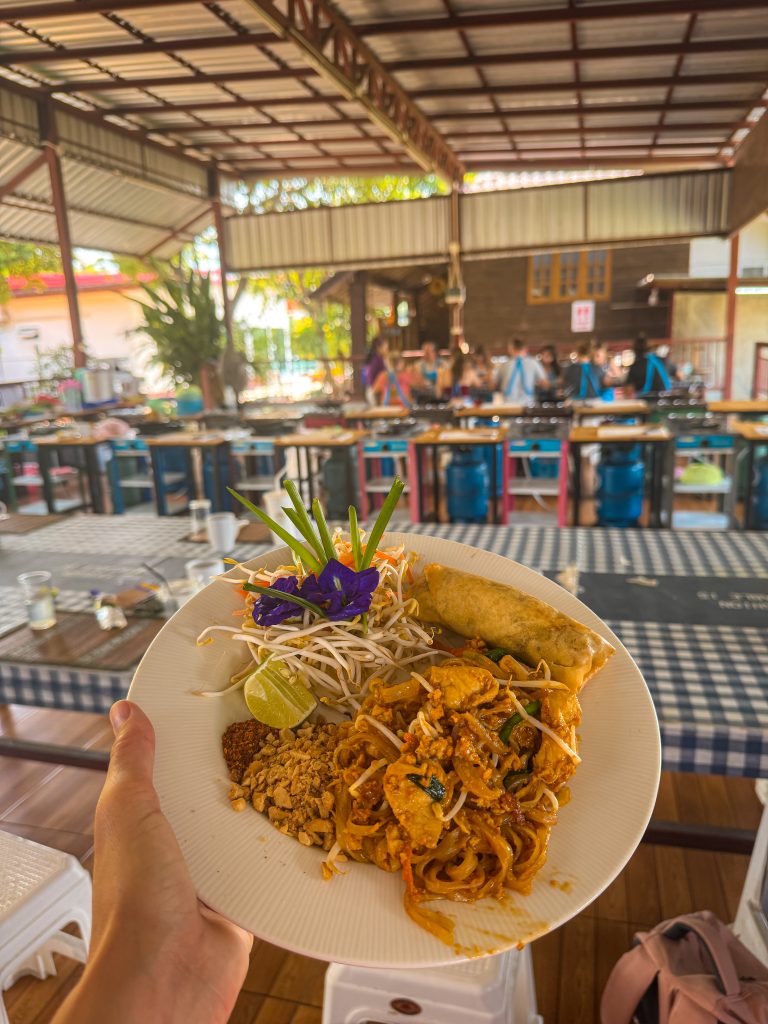
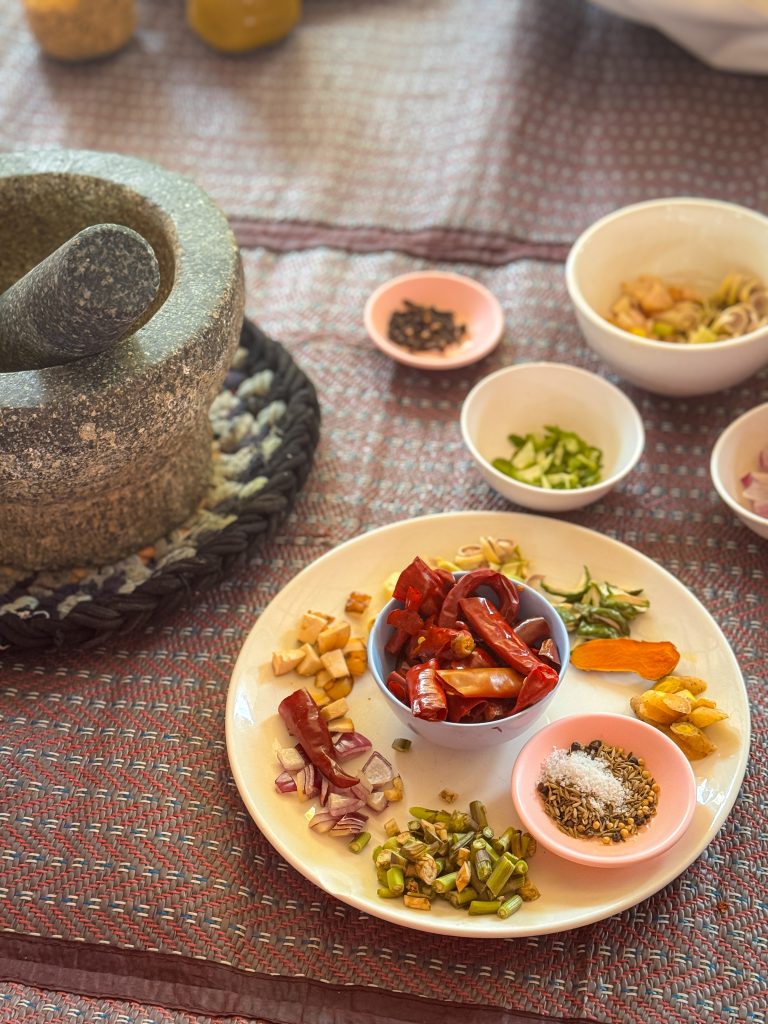
I paid 1,200 baht, or about $36 USD, for an all-day cooking class in Chiang Mai. It was an eight-hour class that included a trip to a local market and a tour of the organic farm before we cooked eight different things.
We made curry paste, salads, soups, stir-fries, dessert, and more.
That is an amazing value for a full-day experience, especially considering how much food you eat and how much you learn.
There are also half-day classes for less if you want something shorter or cheaper.
Take a Trekking Tour
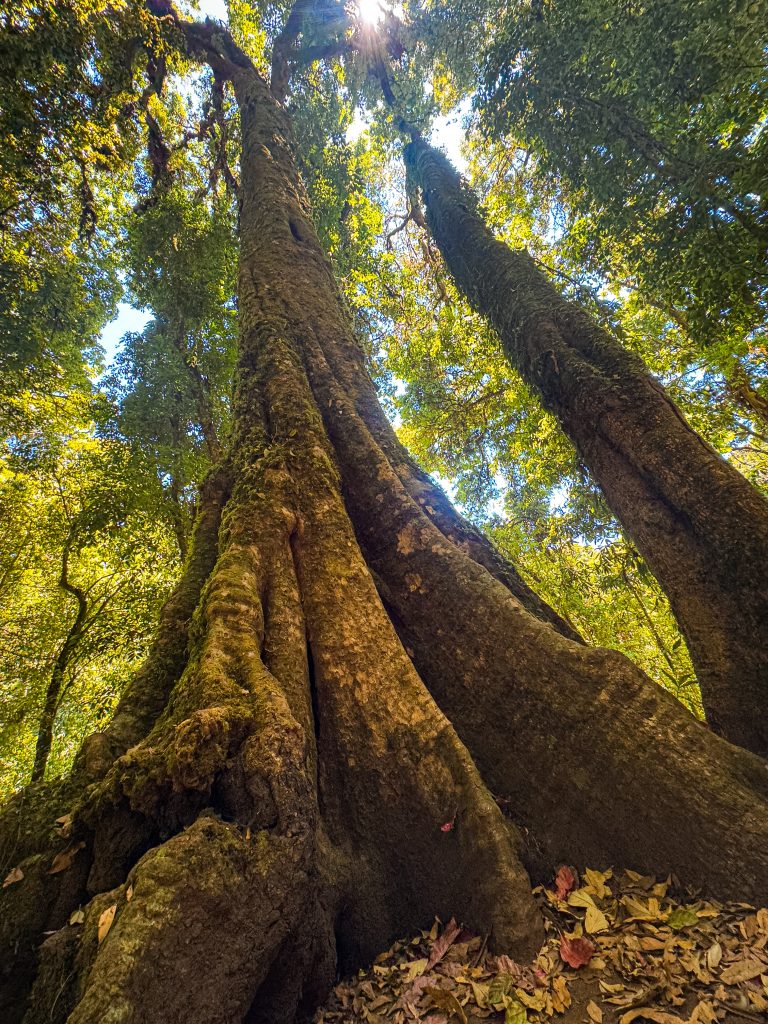
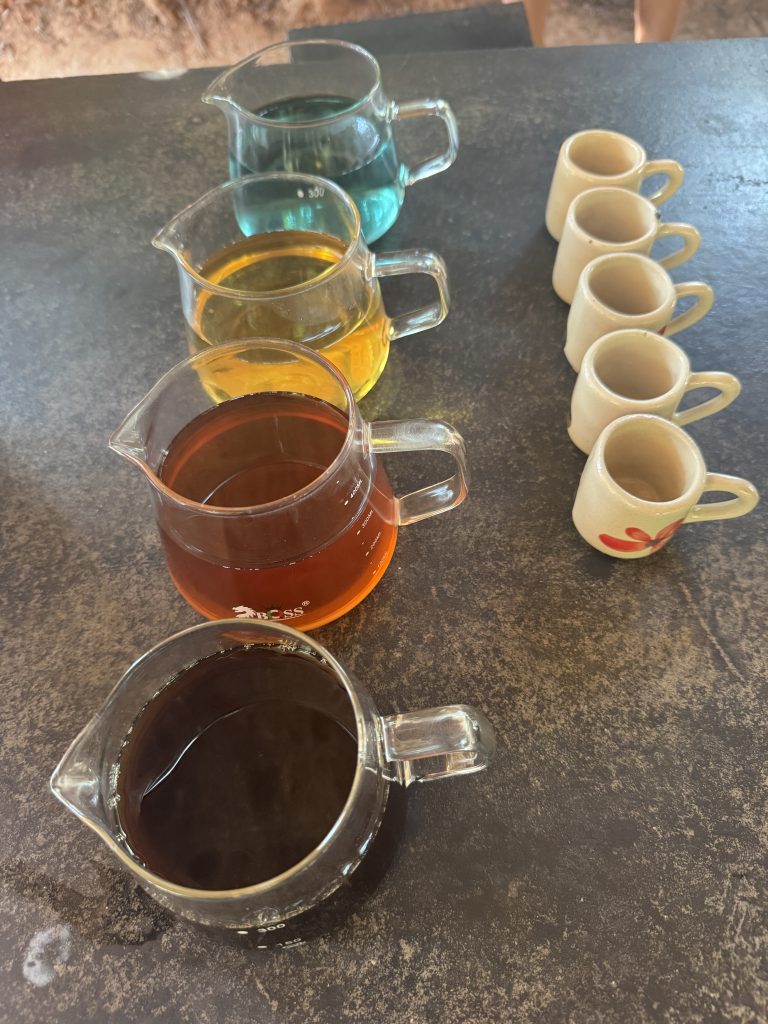
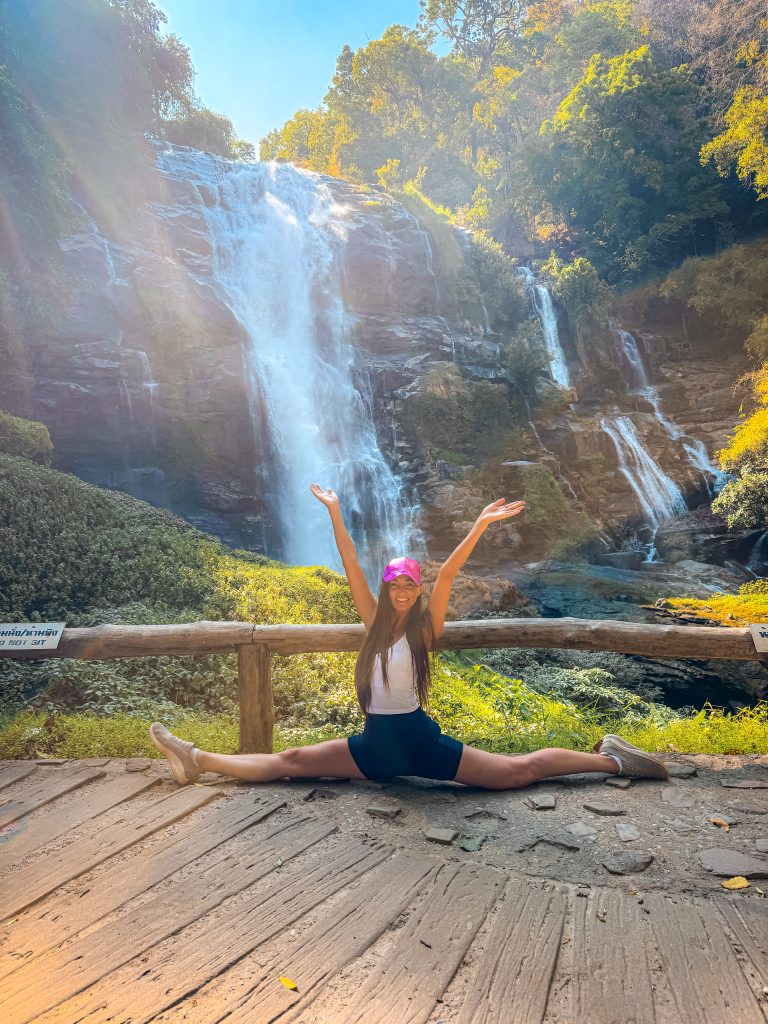
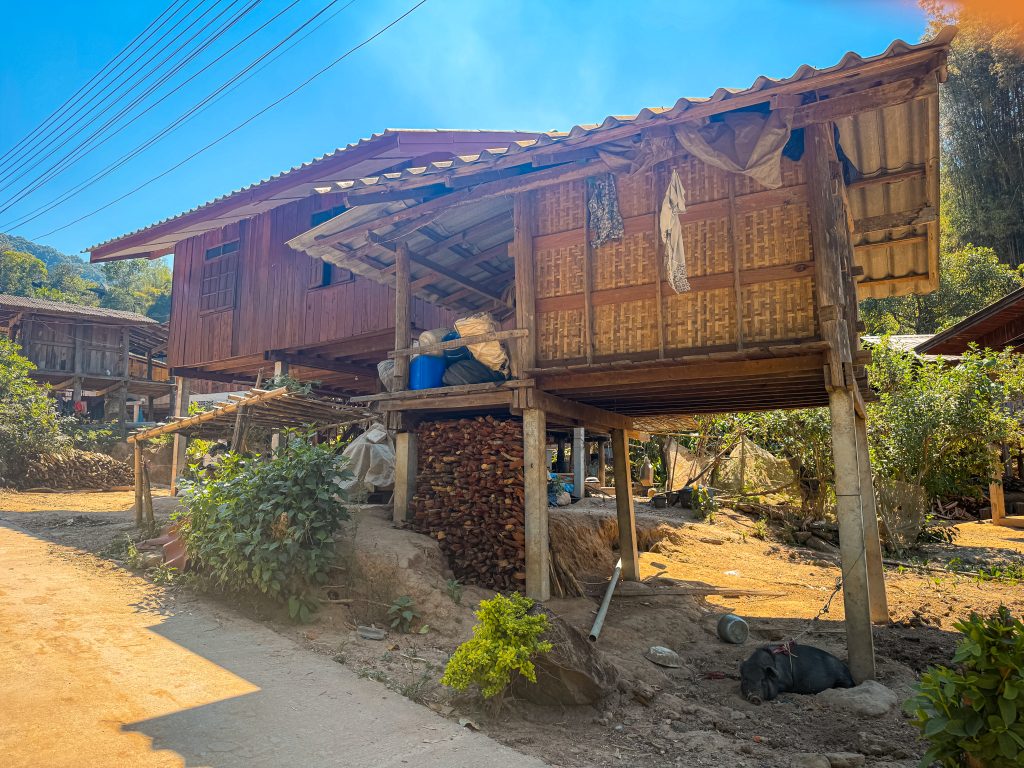
I paid 1,900 baht, or about $57 USD, for an all-day trekking tour in Northern Thailand.
The tour visited several different sites and included a tea and coffee tasting in a traditional Karen village.
For a full-day guided experience, I thought this was a solid value.
Tours are not always necessary, but they can be worth it when they help you access places that would be harder to reach on your own.
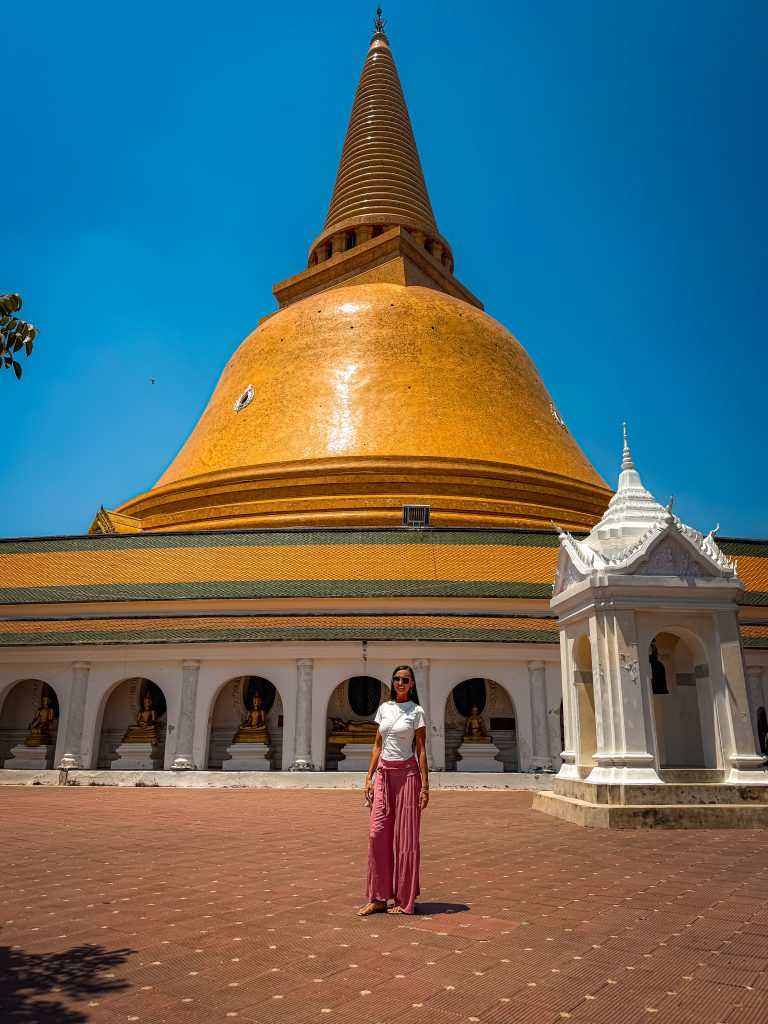
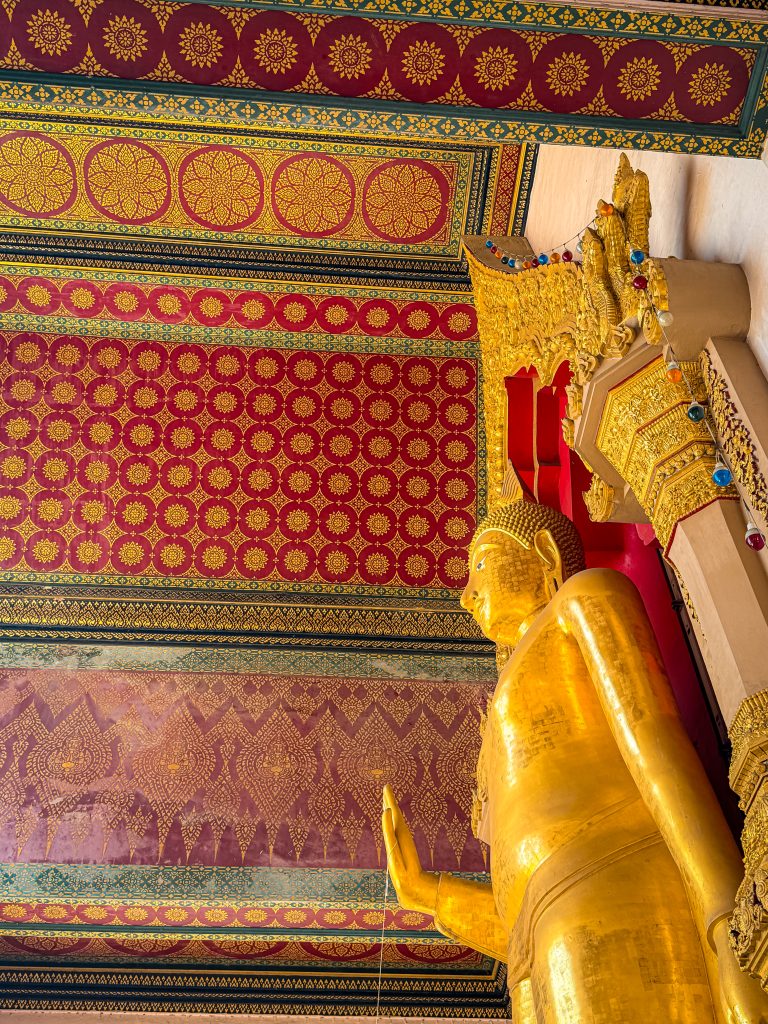
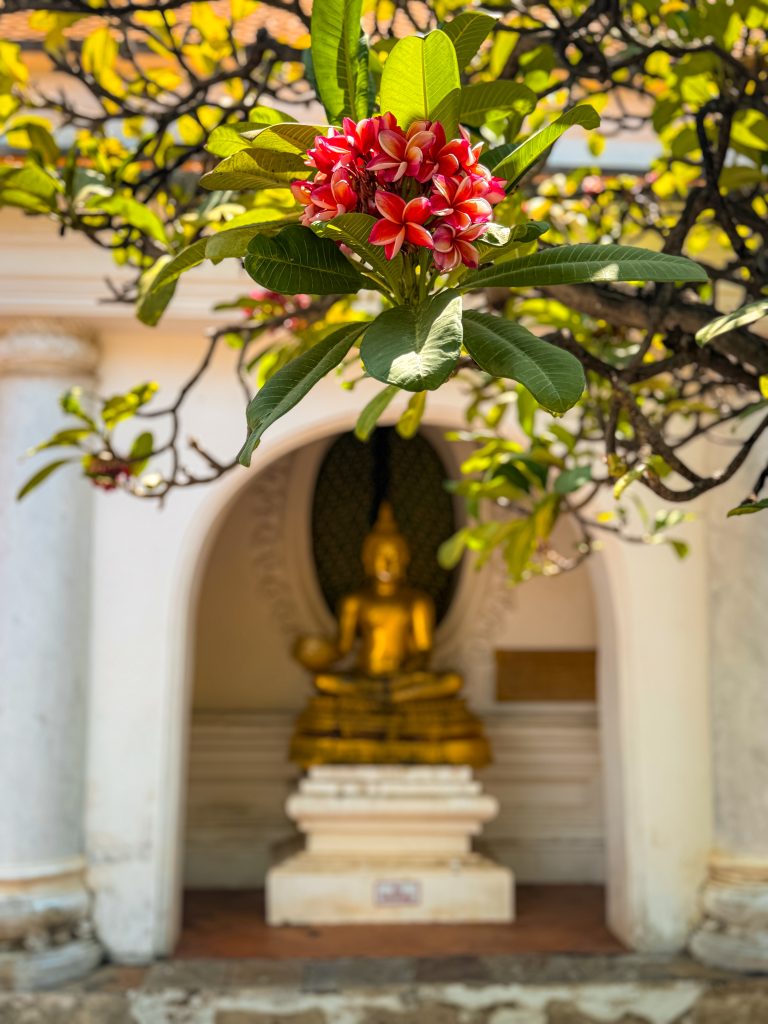
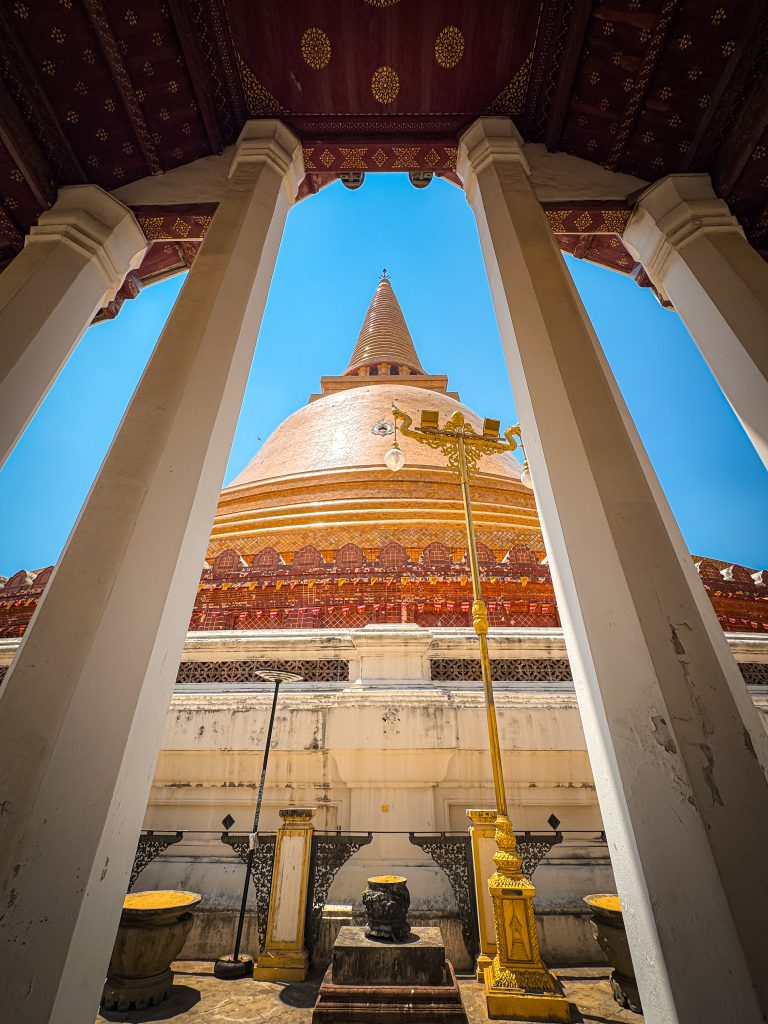
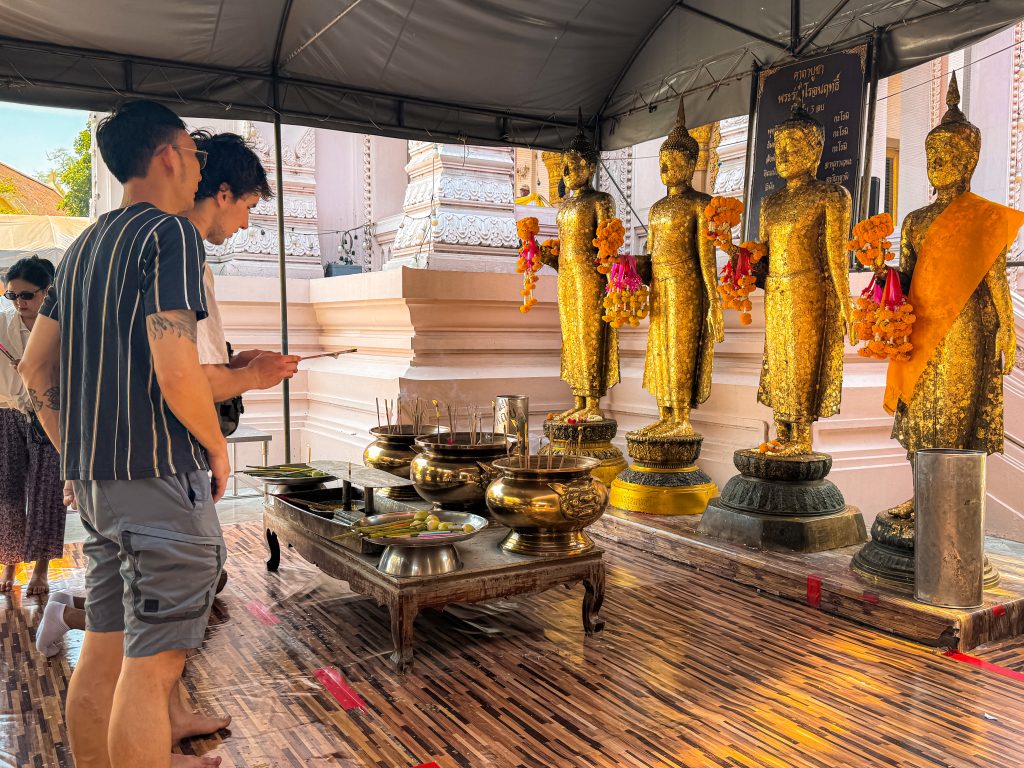
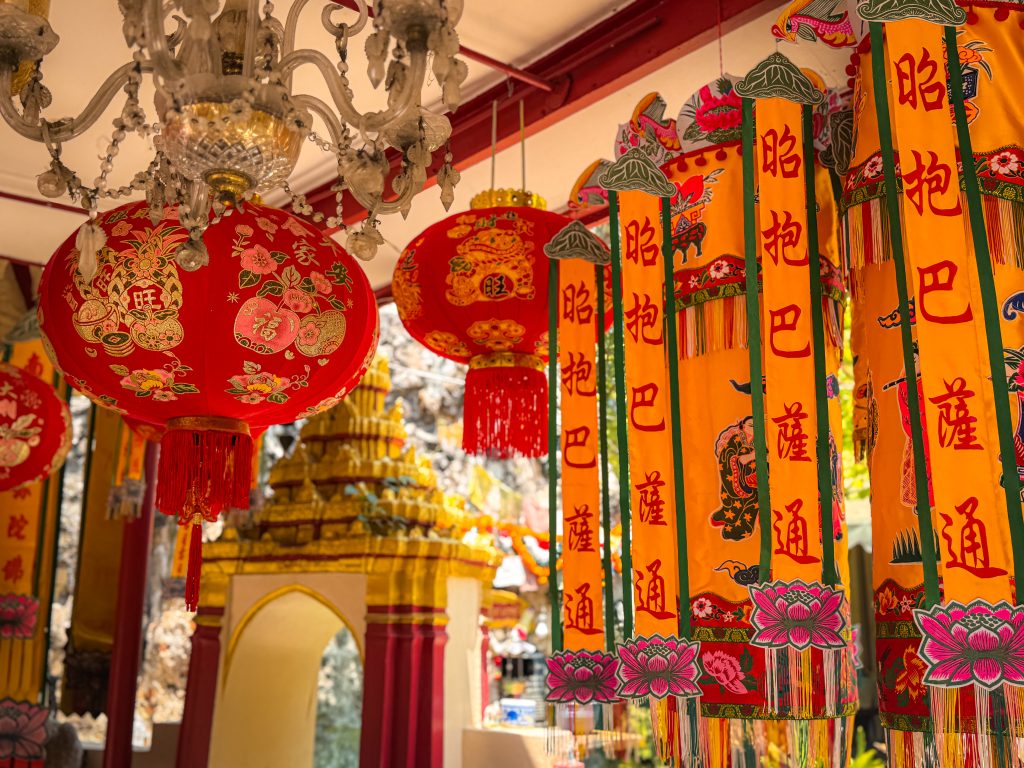
Visit Temples
Thailand has beautiful temples all over the country.
Many temples are free or very inexpensive to visit. Some famous temples do have entrance fees, but they are often still affordable.
For example, famous places like the White Temple in Chiang Rai may have a small entrance fee, while many smaller local temples are free.
Temples are one of the best ways to experience Thai culture, architecture, and beauty on a budget. Just remember to dress respectfully, cover shoulders and knees where required, and be mindful that these are sacred spaces.
Entrance fee for the famous Tiger Cave Temple is only 50 baht ($1.50 USD).
Explore Railay by Longtail Boat
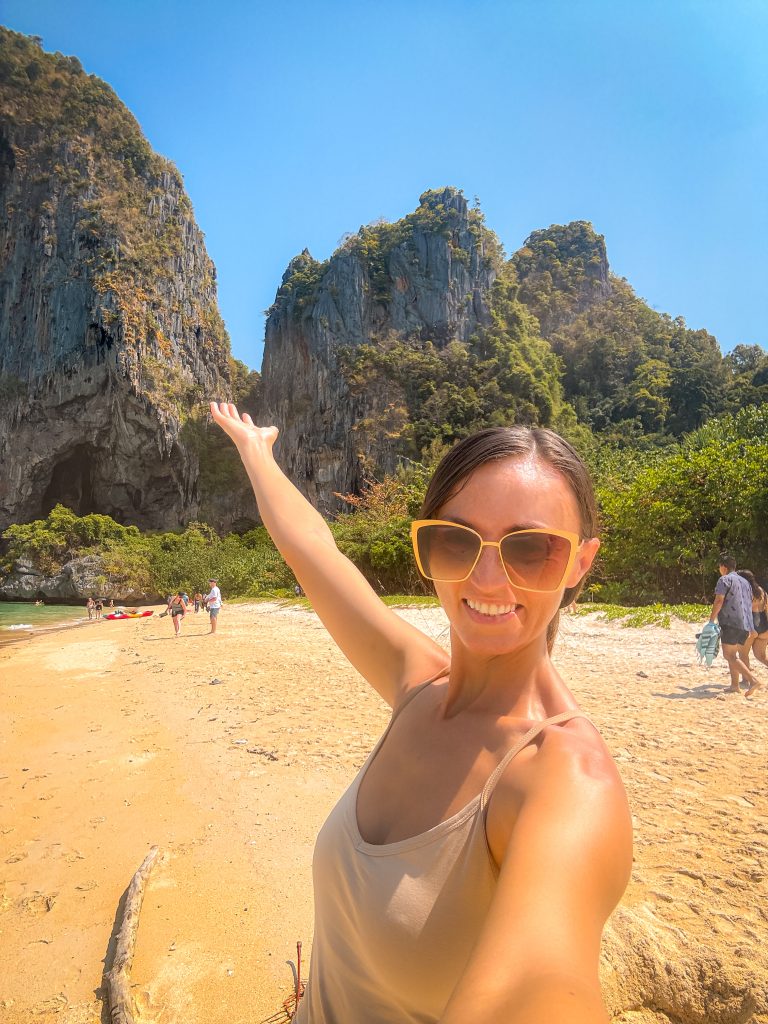
In Krabi, taking the longtail boat ferry to Railay was one of my favorite budget-friendly choices.
Instead of booking a more expensive island-hopping tour, I paid 200 baht round trip and explored Railay at my own pace.
This gave me the boat experience, beach time, views, walking, and freedom without the higher cost or rushed feeling of a group tour.
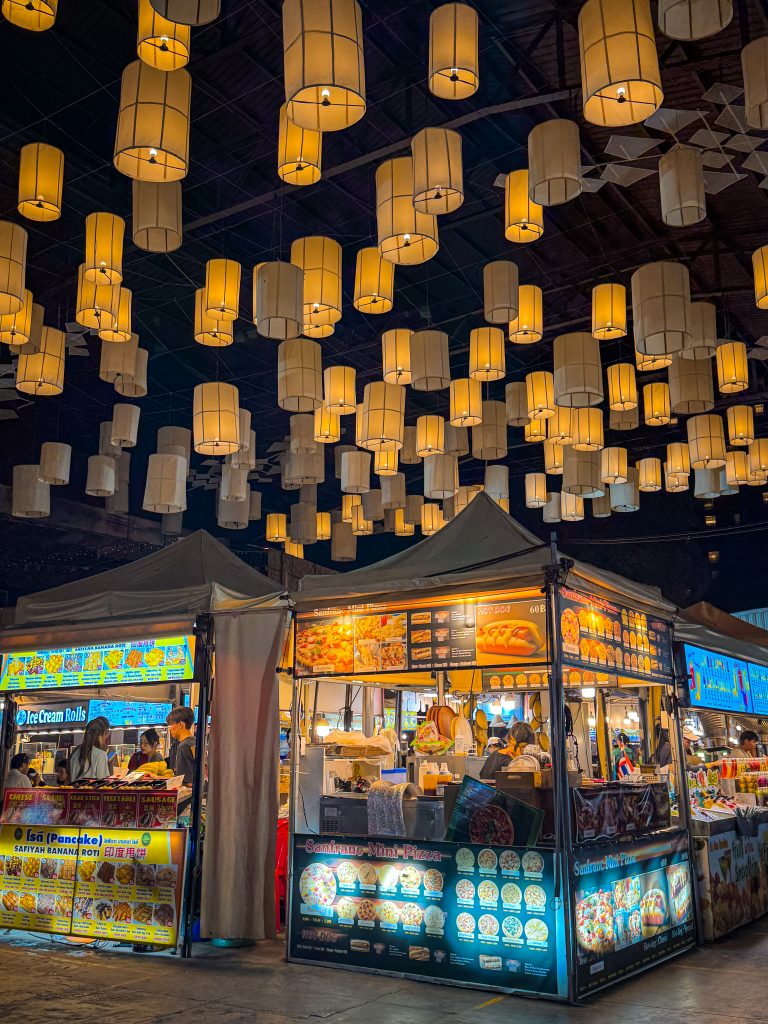
Visit Night Markets
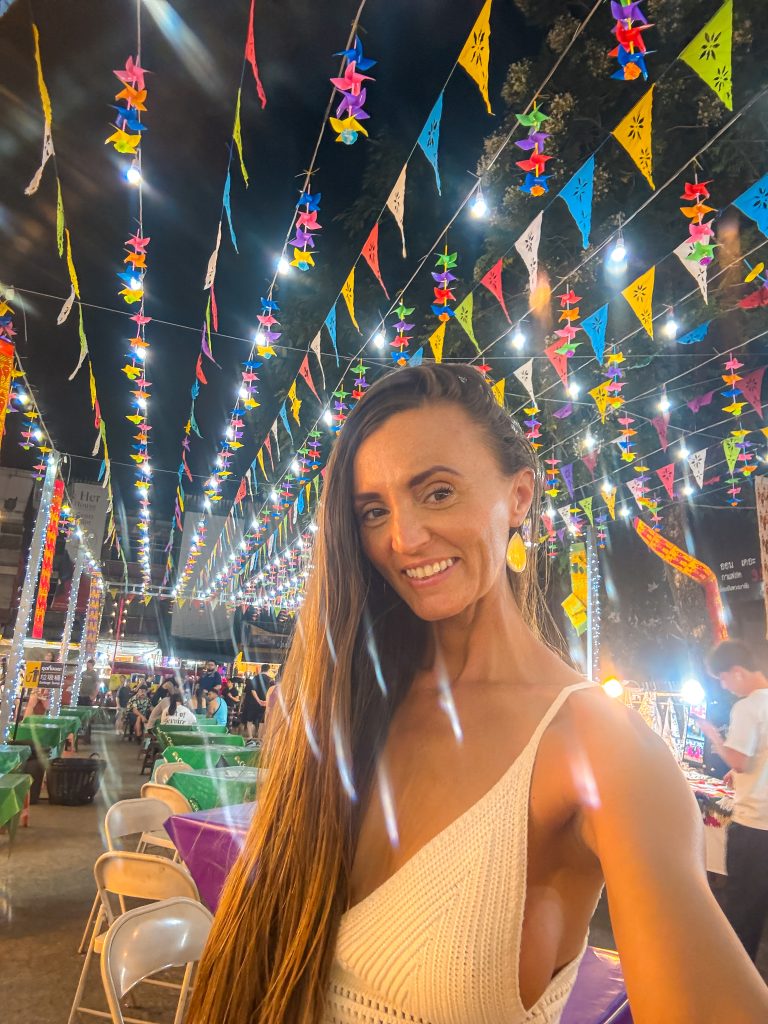
Night markets are both a food experience and an activity.
You can walk around, try snacks, listen to music, shop, people-watch, and soak up the energy without spending much.
Some night markets are very touristy, but they can still be fun. Others are more local and feel more like a peek into everyday life.

Take a Muay Thai Class or Watch a Fight
If you are interested in fitness or Thai culture, Muay Thai can be a memorable paid activity.
Prices vary depending on whether you take a class, go to a gym, or watch a fight, but it can be a fun experience to budget for.
Visit Waterfalls and Viewpoints
Depending on where you are in Thailand, waterfalls and viewpoints can be cheap or free activities.
You may need to pay a small park entrance fee or transportation cost, but these can still be budget-friendly ways to spend a day.

Free Things to Do in Thailand
Free things to do in Thailand deserve their own section because you truly can have beautiful days without spending much at all.
Walk Through Local Markets
Local markets were some of my favorite places in Thailand.
In Chiang Mai, I walked through a flower market and produce market where I did not see a single tourist. I saw locals buying produce, flowers, snacks, and meals. I tried fruits I had never tried before. I used Google Translate. I pointed. I gestured. I smiled.
That kind of experience is free unless you decide to buy something, and it can be more memorable than a paid attraction.
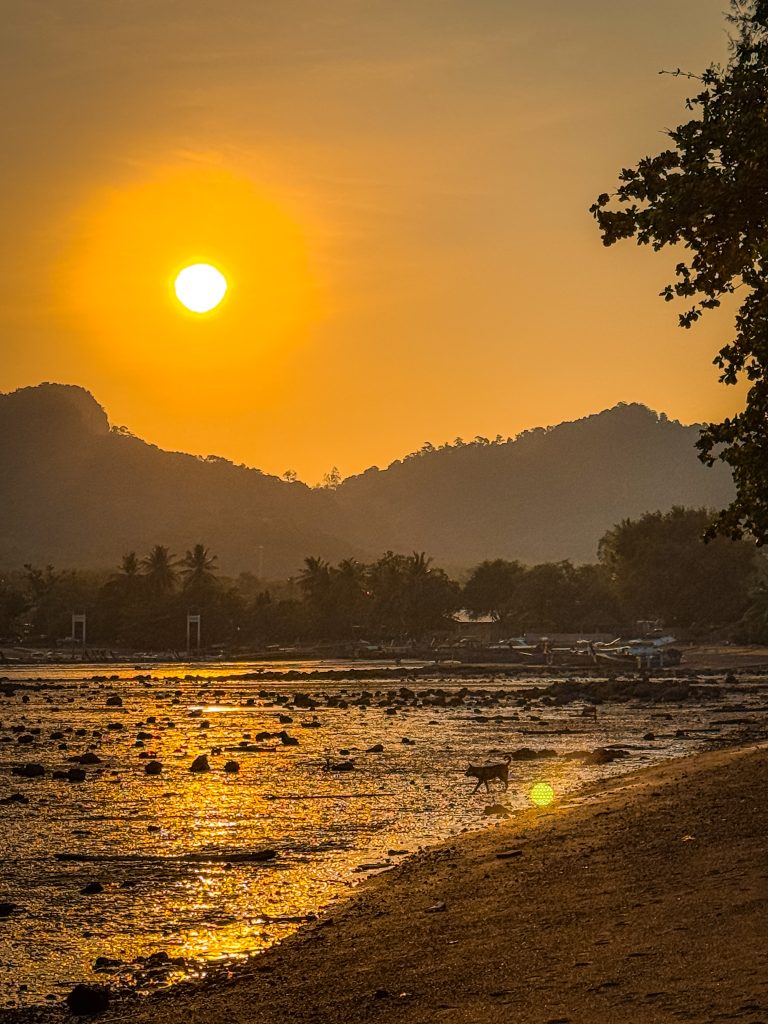
Watch the Sunset
Sunsets in Thailand can be spectacular, especially on the islands and beaches.
Bring a drink, sit by the water, and let the day slow down.
Simple. Free. Perfect.
Wander Old Towns and Neighborhoods
Chiang Mai Old Town, Bangkok neighborhoods, beach roads, riverside areas, and smaller towns can all be wonderful to explore on foot.
Walking is one of the best budget travel tools.
You notice more. You spend less. You stumble across places you would have missed in a taxi.
Visit Free Temples
Not every temple has an entrance fee.
Smaller local temples can be free to visit and often feel more peaceful than the major tourist attractions.
Just be respectful, dress appropriately, and avoid treating temples like photo props.

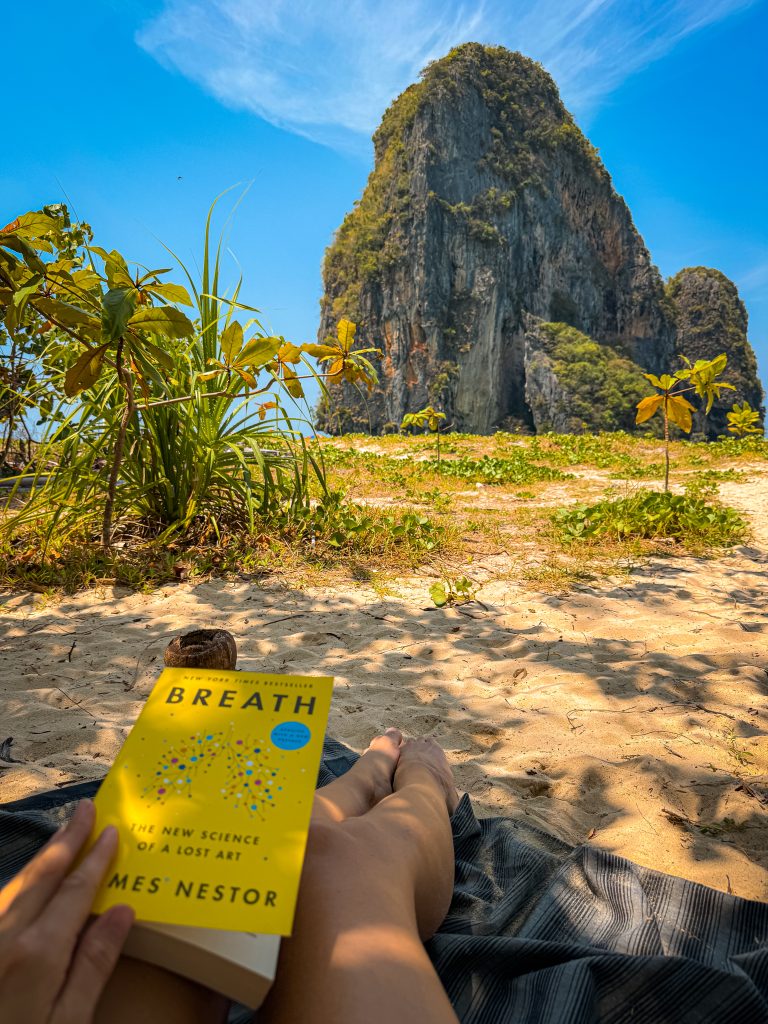
Go to the Beach
Many beaches in Thailand are free to visit.
You may spend money on transportation, food, drinks, or chair rentals, but simply going to the beach does not have to cost much.
Pack water, bring a towel, and enjoy.
Explore Malls in Bangkok
This may sound funny, but Bangkok malls can be a free activity.
They are air-conditioned, enormous, and often visually interesting. You can window shop, people-watch, cool down, and see a totally different side of Bangkok.
Of course, the danger is accidentally shopping.
Walk Along Rivers, Canals, and Beach Roads
Some of my favorite travel moments are not official attractions.
They are walks. Quiet streets. Interesting flowers. A local food stall. A cat on a temple wall. A view you did not plan for.
Thailand is full of those moments.
Shopping in Thailand on a Budget
Shopping in Thailand can be so much fun.
There are night markets, local markets, boutiques, souvenir stalls, handmade goods, textiles, beauty products, tea, art, clothing, and little treasures everywhere.
But shopping can also sneak up on your budget fast.
Set a Shopping Budget
Before you go to a market, decide how much you are willing to spend.
It is easy to think, “Oh, this is only a few dollars,” over and over again until suddenly you have spent a lot.
Markets are fun even if you do not buy anything. You can browse, take in the atmosphere, and enjoy the experience without needing to bring home half the market.
Leave Space in Your Suitcase
If you know you want to shop, leave space in your suitcase before you leave home.
Buying another bag and paying for an extra checked bag with your airline can be much more expensive than just leaving space to begin with.
My personal tip for anyone with an expandable suitcase: start with the extender zipped closed. Then, on your trip home, unzip it and use that extra space for souvenirs.
It feels like a little travel hack gift to your future self.
Take Pictures Instead of Buying Everything
One of my favorite budget shopping tips is to take pictures instead of buying every cute thing you see.
Thailand has so many beautiful clothes, bags, baskets, teas, jewelry, ceramics, art pieces, and little souvenirs that it is very easy to convince yourself you need all of them.
But sometimes the photo is enough.
You will still have the memory of all the cute things you saw in Thailand without actually having to make space in your luggage, or on that shelf, or in that closet at home that is already overcrowded.
Take it from me: that cute shirt or outfit you loved while traveling is not always something you love nearly as much once you are back home.
There is something about being in vacation mode that makes everything feel more magical. The beach pants make sense in Thailand. The elephant-print outfit feels fun at the night market. The woven bag feels like it belongs with your travel self.
Then you get home and realize it does not quite fit your normal life.
That does not mean you should never shop. I love bringing home special little things from trips. But instead of buying everything that catches your eye, take a photo first. If you still keep thinking about it later, maybe go back and buy it.
This helps you save money, save luggage space, and avoid bringing home things you only loved because you were in the glow of vacation.
My Favorite Thailand Souvenir
My favorite souvenir from this trip was a little woven basket for steeping loose-leaf tea.
It cost me about $0.50 USD, and now I think about Thailand every time I use it, which is almost every day.
I also brought home tea from Thailand, especially butterfly pea tea. It is made from a blue flower, and the tea turns from blue to purple when you add citrus.
Souvenirs do not have to be expensive to be meaningful.
Sometimes the tiny, practical things are the ones that stay with you.

Should You Haggle in Thailand?
I haggled much more in Thailand back in 2017.
Truthfully, now it usually does not feel worth my precious energy. These days, I mostly decide whether the listed price is worth it to me. If it is, I buy it. If it is not, I walk away.
Shops often have fixed prices. Markets and stalls may be more flexible.
Try haggling where you want, but if the shop owner stays firm on the listed price, haggling is probably not acceptable there.
Also, keep perspective. Sometimes travelers get intense over tiny amounts of money that mean very little to us but more to the person selling. It is fine to negotiate, but do it kindly.
Flights to Thailand on a Budget
International flights may be one of the biggest expenses of your Thailand trip.
The good news is that once you arrive, Thailand can be very affordable. The bad news is that getting there can cost a lot depending on where you are flying from.
Bangkok Is Often the Cheapest Entry Point
Bangkok is often one of the cheapest places to fly into Thailand.
Even if you want to spend most of your time in Chiang Mai or the islands, it may still be cheaper to fly into Bangkok and then take a domestic flight.
That’s what worked best for my 2026 trip.
Compare Multiple Flight Options
When searching for flights, compare:
- Round trip to Bangkok
- Round trip to Phuket
- Round trip to Chiang Mai
- Multi-city flights
- Separate domestic flights within Thailand
- Different travel dates
- Nearby departure airports
Do not only look at the sticker price. Factor in baggage fees, long layovers, airport transfers, arrival times, and whether you will need an extra hotel night.
Be Flexible With Dates
A day or two of flexibility can sometimes save a lot of money.
Shoulder season can also be a good time to find better deals on both flights and accommodations.
Budget for the Flight Separately
When I talk about traveling Thailand for $30, $60, or $100 per day, I am excluding international flights.
Flights vary too much by departure city and season to include them in a daily Thailand budget.
For planning purposes, I recommend creating two separate budgets:
- International flights
- Everything once you are in Thailand
That makes it easier to understand what the trip will really cost.
Sample 3-Week Thailand Budget
If you are planning a three-week Thailand itinerary, here are some realistic budget ranges excluding international flights.
Shoestring 3-Week Thailand Budget
Approximate daily budget: $30/day
Approximate 21-day budget: $630
More realistic cushion: $700–$900
This budget is possible, but you need to be intentional.
Expect:
- Dorm beds
- Street food
- 7-Eleven breakfasts
- Local transportation
- Few paid activities
- Limited shopping
- Slower travel
- Fewer destination changes
This is closer to how I thought about money during my 2017 trip, especially because I was staying for three months. The longer you travel, the more every small expense matters.
Comfortable Budget 3-Week Thailand Budget
Approximate daily budget: $60/day
Approximate 21-day budget: $1,260
More realistic cushion: $1,300–$1,600
This is a great range if you want to travel on a budget but still have some flexibility.
Expect:
- Basic private rooms or nicer hostels
- Street food plus restaurants
- Some paid activities
- Some domestic transport
- Occasional massages
- Light shopping
- A mix of free and paid experiences
This budget can feel very satisfying if you choose carefully.
Midrange 3-Week Thailand Budget
Approximate daily budget: $100/day
Approximate 21-day budget: $2,100
More realistic cushion: $2,100–$2,500
This is the range where a three-week Thailand trip can feel very comfortable.
Expect:
- Nice private hotel rooms
- Domestic flights when useful
- Restaurants
- Massages
- Paid activities
- Shopping
- Some tours
- More convenience
This is closer to how I traveled in 2026. I was not being reckless with money, but I also was not trying to make every decision the cheapest possible one.
Where to Go in Thailand on a Budget
Thailand costs vary a lot by region.
Bangkok on a Budget
Bangkok can be affordable if you use public transportation, eat local food, and avoid too many splurges.
Budget-friendly Bangkok activities include:
- Street food
- Local markets
- Temples
- Public transportation
- Parks
- Neighborhood walks
- River areas
- Malls for air conditioning and browsing
Bangkok can also get expensive quickly if you are taking taxis everywhere, going to rooftop bars, eating Western food, shopping heavily, or staying in luxury hotels.
Chiang Mai on a Budget
Chiang Mai is one of my favorite places for budget Thailand travel.
It has affordable hotels, amazing food, temples, local markets, night markets, massages, cooking classes, cafes, and access to Northern Thailand tours.
It is also a great place to slow down.
If you are trying to make your Thailand budget stretch, Chiang Mai deserves a spot on your itinerary.
Northern Thailand on a Budget
Northern Thailand can be a great value overall.
Trekking tours, villages, mountains, temples, markets, and small towns can all be part of a beautiful trip.
Pai and Chiang Rai are popular additions, though your costs will depend on how you get around and how many tours you take.
Krabi on a Budget
Krabi can be more expensive than Chiang Mai, but it can still be done on a budget.
My beach hotel had a free shuttle to Ao Nang, which helped. I also chose the budget longtail boat option to Railay instead of booking a more expensive island-hopping tour.
Beach destinations are often where you need to be more strategic. Food and transportation can cost more in touristy areas, so look for local options where you can.
Thai Islands on a Budget
The Thai islands are beautiful, but they are often more expensive than Northern Thailand.
Ferries, taxis, beachfront hotels, tours, and imported goods can raise your costs.
To save money:
- Choose fewer islands.
- Take ferries instead of private boats.
- Stay away from the most expensive beachfront areas.
- Eat local food.
- Travel slower.
- Avoid moving islands every two days.
- Choose your paid tours carefully.
Thailand Budget Travel Tips
Here are my best Thailand budget travel tips for making your money go further without making the trip feel boring.
1. Track Your Expenses
Tracking your expenses is one of the simplest ways to stay accountable.
You do not have to be obsessive, but writing down what you spend each day can help you notice patterns.
Maybe coffee is becoming a bigger expense than expected. Maybe transportation is eating up your budget because your hotel is too far from everything. Maybe you are spending more on shopping than food.
Awareness helps.
2. Divide Your Cash by Day
If you are using cash, try dividing your spending money into equal parts based on the number of days you will be in Thailand.
Then only carry the amount you can spend that day.
If you spend less one day, you can use the extra later for a nicer meal, massage, tour, or souvenir.
This is especially helpful if you are someone who finds it easy to lose track of small purchases.
3. Travel Slower
Moving less often is one of the best ways to save money.
You spend less on flights, buses, ferries, taxis, airport transfers, and travel-day meals.
You also get more out of each place.
4. Eat Local Food Most of the Time
Thai food is delicious and usually much cheaper than Western food.
You do not have to eat street food for every meal, but choosing local food most of the time will help your budget a lot.
5. Mix Free Activities With Paid Experiences
Do not feel like every day needs a tour.
Some of the best Thailand days are simple: market in the morning, temple walk, coffee, sunset, night market.
Then spend money on the paid activities that really matter to you.
6. Use Public Transportation in Bangkok
Stay near the BTS or MRT if you can, and use public transit when it makes sense.
It can save money and help you avoid Bangkok traffic.
7. Compare Flights With Buses and Trains
Sometimes the bus is worth it. Sometimes the flight is worth it.
Compare not just price, but also time, comfort, arrival time, and how tired you will be afterward.
8. Choose Hotels Based on Location
A cheaper hotel is not always cheaper if you have to pay for transportation every day.
Check Google Maps and choose locations carefully.
9. Be Careful With Scooters
Scooters are cheap, but accidents are not.
Only rent one if you are confident, properly licensed and insured, and comfortable with local traffic.
10. Budget for Massages
Massages are one of the best affordable luxuries in Thailand.
Even if you are on a budget, try to make room for at least one.
11. Use 7-Eleven Strategically
7-Eleven is great for breakfast, snacks, water, quick meals, and travel days.
It is not glamorous, but it is useful.
12. Carry Small Bills
Small bills are helpful for markets, street food, songthaews, tips, and small purchases.
13. Watch the Extras
Coffee, smoothies, cocktails, taxis, souvenirs, and convenience purchases can add up.
You do not have to skip them all. Just notice them.
14. Travel in Low or Shoulder Season
If your schedule allows, traveling outside peak season can help with accommodation costs.
Just research weather before booking. I traveled in low season which meant the hottest temperatures and poor air quality, especially in the North.
15. Leave Room for One or Two Splurges
A budget trip does not have to mean no splurges.
In fact, choosing one or two meaningful splurges can make the whole trip feel more luxurious.
A beachfront hotel. A luxury massage. A special dinner. A cooking class. A unique stay.
Pick what matters most to you.
Common Thailand Budget Travel Mistakes
Moving Too Often
Trying to see too many places in one trip can get expensive and exhausting.
Transportation adds up, and constant movement makes it harder to enjoy each place.
Assuming Every Island Is Cheap
The islands are beautiful, but they are not always the cheapest part of Thailand.
Budget more for beach destinations than you would for Chiang Mai.
Forgetting About Airport Transfers
Airport transfers may be affordable, but they still count.
If you take multiple domestic flights, those transfers add up.
Booking a Cheap Hotel in a Bad Location
A cheap hotel far from everything may cost more once you add daily transportation.
Always check the map.
Eating Only in Tourist Areas
Touristy restaurants are often more expensive.
Walk a little farther, explore local markets, and look for where locals are eating.
Underestimating Coffee, Smoothies, and Drinks
A 50-baht coffee is not a big deal.
A 200-baht coffee every day, plus smoothies and cocktails, becomes a budget category.
Skipping Travel Insurance
Skipping insurance may save money upfront, but it can become very expensive if something goes wrong.
Renting a Scooter Just Because It Is Cheap
Scooters are cheap. Injuries are not.
Do not rent one unless you are truly comfortable.
Not Leaving Space for Shopping
If you know you want souvenirs, plan for them.
Leaving space in your suitcase is cheaper than buying an extra bag and paying airline fees.
FAQ: Budget Thailand Travel
Is Thailand cheap to travel?
Yes, Thailand is still cheap to travel, especially compared with the U.S., Europe, and many tropical destinations. Budget travelers can get by on around $30 USD per day, while $60–$100 USD per day allows for a much more comfortable trip.
Is it cheap to travel to Thailand?
The cost of traveling to Thailand depends heavily on international flights. Once you are in Thailand, food, hotels, local transportation, massages, and many activities are generally affordable.
How much money do I need for three weeks in Thailand?
Excluding international flights, a shoestring three-week Thailand budget could be around $700–$900. A more comfortable budget trip may cost around $1,300–$1,600. A midrange three-week trip may cost around $2,100–$2,500.
Can you travel Thailand on $30 a day?
Yes, but it requires intentional choices. You will likely need to stay in dorms, eat mostly street food, use local transportation, limit paid activities, avoid frequent destination changes, and track your spending carefully.
Is $100 a day enough for Thailand?
Yes, $100 per day can be a very comfortable Thailand travel budget, excluding international flights. You can usually afford private rooms, restaurants, domestic transportation, activities, massages, and some shopping.
Are hotels cheap in Thailand?
Yes, hotels in Thailand can be very affordable. Even midrange hotels can feel like excellent value compared with the U.S. If you are traveling with a friend or partner, splitting private rooms can make accommodation even more budget-friendly.
What is the cheapest way to get around Thailand?
The cheapest ways to get around Thailand are usually buses, trains, ferries, songthaews, public transportation, and slow travel. Domestic flights can also be affordable and may be worth it when you have limited time.
Are Thai islands expensive?
Thai islands are usually more expensive than Northern Thailand. Ferries, taxis, beachfront hotels, tours, and restaurants in touristy areas can add up. You can still visit the islands on a budget by choosing fewer islands, eating local food, and avoiding constant movement.
Do I need travel insurance for Thailand?
Yes, I strongly recommend travel insurance for Thailand. It is usually cheaper to buy a policy than to deal with an unexpected medical bill, scooter accident, lost luggage, or travel delay.
What are the best cheap things to do in Thailand?
Some of the best cheap things to do in Thailand include getting a Thai massage, taking a cooking class, visiting temples, exploring night markets, taking local ferries, visiting beaches, walking through local markets, and joining select full-day tours.
What are the best free things to do in Thailand?
The best free things to do in Thailand include walking through local markets, visiting free temples, watching sunsets, exploring neighborhoods, going to the beach, browsing Bangkok malls, and wandering old towns or riverside areas.
What I’d Do Differently on My Next Thailand Budget Trip
Even though I loved my 2026 Thailand trip, there are definitely a few things I would do differently next time.
Bring Friends
First, I would bring my boyfriend and maybe a couple of friends along.
Traveling solo has its own magic, and I am so glad I did this trip. But traveling with other people can help your budget in a few big ways. You can split accommodations, split transportation, and order way more food family-style.
And honestly, Thailand is one of the best places in the world to eat with a group.
Some of my favorite meals were the ones where everyone ordered something different and we shared everything. You get to try so many more dishes that way, and the cost per person can still be really reasonable.

Get off the beaten path
Next time, I would also consider renting a car in Northern Thailand with my boyfriend and friends and take a road trip to lesser-visited towns and national parks.
In my experience, the more off the beaten path you get, the better value you find. You also end up feeling like you had a special experience completely unique from everyone else sharing your international flight back home.
Do not get me wrong: there is a reason the famous Thailand stops are famous. Bangkok, Chiang Mai, Krabi, Railay Beach, and the islands are popular for a reason.
But there is something extra exciting about getting away from the most obvious route.
Go on a multi-day trekking tour
I would also book a multi-day trekking tour from Chiang Mai.
I only booked a one-day trekking tour on this trip because I had already booked my hotel in advance. Once I got there, I saw some incredible-looking multi-day trekking packages and immediately wished I had left more room in my itinerary.
Tours like that can actually be a fantastic way to save money while having an amazing experience because you pay for most of it upfront. Your accommodation, guide, transportation, and some meals may be included, depending on the tour.
They also keep you busy.
That might sound funny, but one of the easiest ways to spend money while traveling is simply having empty time and looking for something to do. When you are trekking, exploring villages, hiking, eating included meals, and fully immersed in the experience, you are not wandering around looking for coffee, snacks, shopping, taxis, and random ways to fill the day.
explore bangkok deeper
I would also spend longer in Bangkok.
Bangkok is absolutely massive, and I feel like I only scratched the surface. There is so much to see for free or cheap if you have the time. Markets, temples, neighborhoods, malls, street food, river walks, parks, cafes, and endless little corners to explore.
Bangkok also has a number of aerial arts studios, so next time I would take more classes for my personal hobby.
That would allow me to meet more locals, fill part of my day with something I love, and make the trip feel more like my real life in another country instead of only sightseeing.
Then I could spend the rest of the day hunting down the best street food stalls and local markets.
That is the kind of travel I love most: a mix of adventure, routine, movement, food, beauty, and little discoveries.

Conclusion: Is a Thailand Budget Trip Worth It?
If you are wanting to take a Thailand budget trip but only have a shoestring budget, you may feel less than excited at the thought of denying yourself luxuries.
But just remember, when you are sitting on a gorgeous beach eating your $1.50 moo ping, you are going to feel like you found life’s ultimate cheat code.
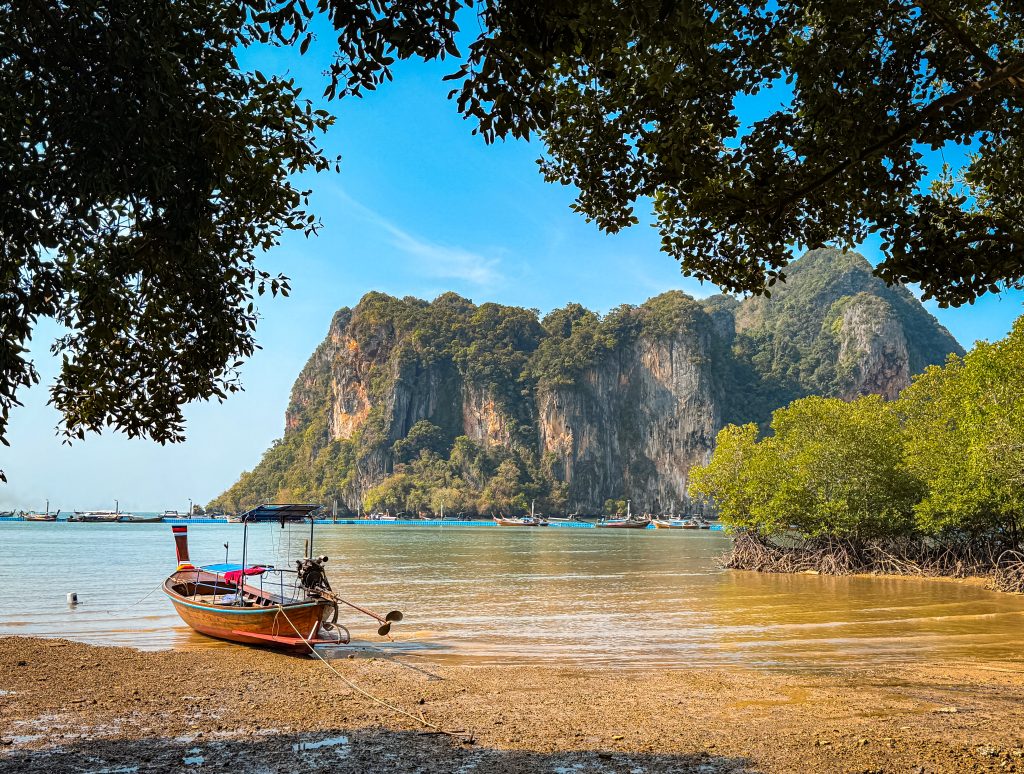
Think of your friends back home miserable in their cubicles at work while you are taking in the sunset over limestone cliffs.
You’ll be glad you took the budget trip.
Read More: 37 Creative Ways To Save Money For Travel
Thailand is one of those rare places where even the cheap moments can feel rich. A local market breakfast. A $9 Thai massage. A longtail boat ride. A temple walk. A sunset. A night market dinner. A 7-Eleven snack before a travel day. A bowl of noodles you ordered mostly by pointing and smiling.
Those are not consolation prizes. Those are the trip.
That said, if you can wait a few more months and save a few hundred extra dollars, your future vacation self may thank you.
Read More: 7 Best Apps To Save Money For Travel
Those extra splurges and comforts can be worth the wait, especially if you are traveling for a shorter amount of time. A private room after a long flight, a domestic flight instead of a full day on a bus, a cooking class, a nicer massage, or one beachfront hotel night can make the whole trip feel easier and more special.
The best Thailand travel budget is the one that lets you actually enjoy the trip you are taking.
Whatever budget you end up choosing, you won’t regret Thailand as your next budget trip destination.
If you’re still planning your trip, check out my 3 Week Thailand Itinerary: Fast and Slow Routes For First Timers. It’ll save you time and make trip planning a breeze.
Happy exploring, and remember to Be Free and Travel! 🌏✈️